Could BMW's Plant Steyr Become the Future of Hydrogen EVs?
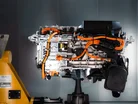
BMW Group is moving another step closer to its hydrogen future as its Plant Steyr prepares for the series production of fuel cell systems.
From 2028, the third generation of the company’s hydrogen drive system will be manufactured in Austria, with prototypes already being developed at BMW competence centres in Munich and Steyr.
Further components will come from BMW’s technology hub in Landshut.

A new generation of hydrogen technology
BMW’s hydrogen journey began in 2014, when Toyota supplied the first generation of fuel cell technology for the BMW 535iA.
A second-generation system followed in the BMW iX5 Hydrogen pilot fleet, with BMW taking over responsibility for the overall fuel cell system design, while Toyota provided the individual fuel cells.
For the third generation, BMW and Toyota are co-developing the powertrain system for passenger vehicles, pooling expertise to create efficiencies in both commercial and passenger applications.
“The launch of the first-ever fuel cell production model from BMW in 2028 will add another exceptionally efficient high-performance drive system with zero emissions to our technology-open product portfolio,” says Joachim Post, Member of the Board of Management of BMW AG, Development.
“The choice of Steyr as the production location clearly demonstrates our commitment to a European innovation footprint.
“The BMW competence centres in Munich and Steyr have a key role to play in the development of pioneering fuel cell systems.”
This collaboration allows both automakers to benefit from shared development and procurement while delivering distinct, brand-specific models.
Key improvements include:
- Compact design: A 25% reduction in system space thanks to higher power density, enabling a more compact construction.
- High integration: Seamless adaptability into future vehicle architectures, supporting a technology-open product strategy.
- Efficiency gains: Optimised components and improved operating strategies lead to greater range, higher output and lower energy consumption compared with the previous generation.
Prototypes from Munich
At BMW’s hydrogen competence centre in Munich, engineers are producing prototypes of the third-generation system.
The technology works by combining hydrogen from the vehicle’s tanks with oxygen from the air in an electrochemical reaction, generating electricity to power the electric motor.
The system includes the cells themselves plus the cooling, hydrogen and air subsystems that ensure safe, efficient operation.
Current prototype production is focused on developing scalable processes, quality assurance, and validating performance at both the system and vehicle level.
These efforts are laying the groundwork for series production, ensuring the drivetrain meets BMW’s standards of safety, reliability and performance.
A production hub for the future
BMW Plant Steyr will begin producing the new fuel cell systems in 2028.
The site has decades of experience in producing drive technologies across the BMW model range, from combustion engines to electric motors.
To prepare, new test rigs and production facilities are being built, and existing buildings are being adapted.
“We are proud to be producing another innovative drive technology at Plant Steyr in future alongside the latest generation of electric motors and combustion engines,” says Klaus von Moltke, Senior Vice President Engine Production at BMW AG and Director of BMW Group Plant Steyr.
“This, together with the development expertise we have available on-site, makes our plant a prime example of the BMW Group’s technology-open approach.”
Supplying critical components
BMW Plant Landshut will manufacture key components for the hydrogen drive, with construction of the production infrastructure starting in 2026.
Central to this is the BMW Energy Master, a control unit that manages power supply across 400–800V and integrates high-voltage battery data.
Specially designed for hydrogen applications, the Energy Master will play a vital role in future hydrogen-powered models.
Prototype production of this control unit will begin at Plant Dingolfing in mid-2026, while Landshut will also manufacture housings and pressure plates, as it did for the BMW iX5 Hydrogen.
BMW’s investment in hydrogen underlines its commitment to a diverse, technology-open approach to sustainable mobility.
By advancing fuel cell technology with Toyota, and anchoring production in European facilities, the company is ensuring that hydrogen-powered vehicles play a role in its long-term zero-emission strategy.