
Batteries & Charging: Why Europe is Investing €200bn in EVs
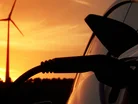
Almost €200bn (US$232.7bn) has been committed to EV ecosystems by countries in the European Economic Area and Switzerland.
The commitments include €109bn (US$127bn) in the battery supply chain, up to €46bn (US$53.5bn) in rolling out public charging networks and €60bn (US$70bn) in manufacturing, research group New Automotive says.
Chinese companies manufacture nearly 70% of the world's EV batteries, supplying battery cells for more than 80% of EVs worldwide, according to the International Energy Agency (IEA).
Led by dominant manufacturers like CATL and BYD, China also controls a significant majority of the refining capacity for essential battery materials like lithium.
New Automotive says: "Europe now produces batteries for roughly one in three EVs sold domestically, and announced capacity could meet future demand if fully utilised."

Where are EVs across Europe?
Nordic countries dominate Europe's EV adoption, with Norway leading the world in percentage of EV sales and Denmark, Sweden and Finland leading the market, according to the European Environment Agency.
Norway accounts for 1.6% of the total investment, Sweden for 3.8%, Finland for 3.6% and Denmark for just 0.8%.
New Automotive's research found that Germany accounted for almost a quarter of the region's investment. France made up 18% and Spain and Portugal together are responsible for 12%.
Germany manufactures half of all EVs made in Europe according to the German Automotive Association.
In December, the European Commission launched a plan to cut back its effective ban on ICE cars from 2035, instead opting for 90% of new cars sold from that date to be zero-emission.
Investments in the battery supply chain
Batteries make up the largest share of capital in the research, covering mining, refining, materials, gigafactories and recycling.
New Automotive's report says that announced capacity could meet future demand if fully utilised.
Europe has strengths in cell manufacturing and downstream integration, but gaps in cathodes, precursors and parts of the mid-stream value chain.
"Battery investments remain capital-intensive and subject to intensive internationally competition, giving them the highest sensitivity to delays, downsizing or cancellation," the report reads.
Asian battery giants like CATL and LG Energy Solution are already set up in the region.
European-owned businesses, like Volkswagen's PowerCo, are beginning to design, develop and produce cells entirely within the continent.
“We are the first European carmaker to establish our own battery cell development and production,” says Oliver Blume, CEO of Volkswagen Group.
“This step strengthens our position and independence in the global competition.”
EV manufacturing investments
Manufacturing of EVs in Europe is centred on converting legacy automotive plants alongside selective new EV-only facilities, the report says.
Battery production is increasingly being co-located to reduce costs and manage supply risk.
This is primarily happening in established automotive regions like Germany and Spain and being carried out by both European OEMs and international manufacturers.
Tesla operates a €5.8bn (US$6.7bn) Gigafactory in Grünheide, Germany with an annual capacity of 375,000 EVs.
Stellantis has confirmed its plans to manufacture the Opel C-SUV BEV with Chinese carmaker Leapmotor at a plant in Spain, “leveraging the Chinese New Energy Vehicle ecosystem”.
Building EV charging infrastructure
According to New Automotive's report, Europe has established a globally leading position in manufacturing high-power charging infrastructure.
More than €3.5bn is being invested across the continent in this manufacturing, with companies across Italy, Germany and the Nordics supplying ultra-fast systems.
Public roll-out of charging infrastructure is estimated to have commitments of between €23bn (US$27bn) and €46bn (US$53.5bn).
More than a million public charge points have been deployed across the region.
EV investments in China
China is by far the world's largest EV market, with 11.3 million EV sales in 2024 according to the IEA. This made up 48% of its total vehicle sales.
According to the Center for Strategic and International Studies, the country invested at least US$230bn in the research and development of EVs between 2009 and 2023.
This funding covers a range of government support, including exemption from 10% sales tax, funding for infrastructure, R&D programmes for manufacturers and government procurement of EVs.
The country has also made regulatory changes, such as the "dual-credit system", that push automakers to grow electrification and make EVs easier for consumers to obtain.






Executives

Oliver Blume
CEO