
Stellantis & Leapmotor Confirm Chinese-European EVs
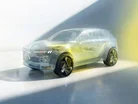
Stellantis has confirmed its plans to manufacture Opel branded EVs with Chinese company Leapmotor.
Stellantis says that it is assessing the addition of a new line to a plant in Spain to manufacture Opel’s C-SUV BEV model.
The company says that it could save costs using Leapmotor International (LPMI) sourced components and “by leveraging the Chinese New Energy Vehicle ecosystem”.
LPMI is a 51% Stellantis, 49% Leapmotor joint venture. Stellantis invested €1.5bn (US$1.75bn) to acquire 20% of Leapmotor in 2023.
EV manufacturing in Zaragoza
In a move to significantly increase production at Stellantis’ Figueruelas plant in Zaragoza, Spain, the two companies are assessing the addition of a new line to manufacture Opel’s new C-SUV BEV model, with a potential start of production in 2028.
Antonio Filosa, Stellantis CEO, says: “This plan to expand our successful partnership with Leapmotor, a trusted peer and one of the fastest-growing, most respected new energy vehicle producers globally, is a true win-win for both of us.
“It is expected to support production and advance localisation in Europe of world-class manufacturing of electric vehicles at affordable prices to meet customers’ real-world needs.
“Today’s announcement reflects our intent to deepen our partnership and take one more step towards even greater collaborations in the future.”
Reuters reported earlier this year that the new Opel model would have a targeted annual output of 50,000 vehicles, citing people familiar with the matter.
Stellantis’ Villaverde plant
In a move to shore up the future of Stellantis’ Villaverde, Madrid plant, the company's expansion “may include the allocation of a new Leapmotor vehicle” to the plant, including “potential timing from the first half of 2028”, according to a press release.
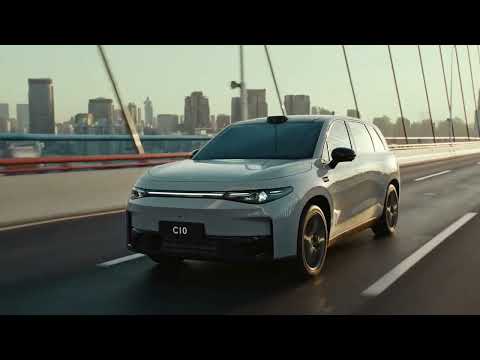
The Citroën C4, currently made at the Villaverde plant, is set to end production. Stellantis says the plant’s ownership is under discussion for potential transfer to LPMI’s Spanish subsidiary.
Stellantis says that manufacturing in Villaverde would be in line with Made-in-Europe upcoming requirements issued by the EU.
The vehicles would be commercialised by LPMI in the European, Middle East and Africa markets.
Leveraging China’s ecosystem
The companies would also cooperate in the area of purchasing through LPMI. Stellantis says the objective would be to boost price competitiveness “by leveraging the Chinese New Energy Vehicle ecosystem”, while using European “supply chain capabilities” to strengthen “resilience and accelerate time-to-market for new models”.
Zhu Jiangming, Leapmotor’s Founder and CEO, says: “Leapmotor’s leading-edge technologies, combined with Stellantis’ global reach, deep regional roots and much-loved automotive brands, would make this a uniquely powerful partnership.
“Our joint venture, Leapmotor International, has quickly shown its benefits for both partners and in less than three years, has seen us launch our brand on five continents and significantly grow our international reach and reputation.”
China’s EV Ecosystem
Long-term planning and government funding has allowed China to dominate critical supply chains in battery production.
Unlike Western countries, China has the capacity to mobilise huge swathes of its economy over multiple years towards its aims.
According to a press release issued by the State Council of the People’s Republic of China, the country plans to make BEVs the mainstream of new car sales by 2035.
In 2021, China accounted for half of global electric car sales; this share grew to almost two-thirds in 2024, according to the IEA.
Leapmotor’s European expansion
On cost, Chinese brands can compete with any EV offerings from European manufacturers, with manufacturing both faster and cheaper than European brands.
In China, EV makers face fierce and intense competition from multiple brands conducting price wars.
Chinese automakers are increasingly expanding into Europe. In March 2026, Leapmotor opened a European Innovation Centre in Munich, its first outside of China.
Leapmotor recently marked its first year in the UK and, in that time, built a 2.2% electric car market share, having registered 7,369 EVs.
Company portals


Executives
Antonio Filosa
Chief Executive Officer

Zhu Jiangming
Founder and CEO