
Top 10: Smart Charging Technologies

The IEA says that large-scale adoption of EVs hinges on the simultaneous roll-out of accessible and affordable charging.
The growth of charging infrastructure is dependent on smart charging technologies that support accessibility, sustainability and grid strain.
EV Magazine has looked at 10 standout smart charging technologies supporting the global EV infrastructure buildout.
10. In-motion wireless charging
Company: Electreon
CEO: Oren Ezer
Headquarters: Beit Yannai, Israel
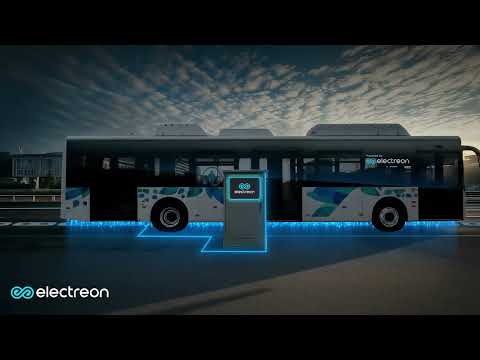
Electreon’s wireless charging uses magnetic induction to transfer power from coils embedded beneath roads or parking areas.
When a vehicle with an Electreon EV receiver parks or drives over a coil, charging activates automatically.
The system supports all types of EVs including buses, trucks, vans and passenger cars.
The company’s technology was deployed in the US for the first time in 2023 in Detroit, Michigan.
9: Battery swapping
Company: CATL
Chairman: Dr. Robin Zeng
Headquarters: Ningde, China
China’s CATL holds the largest market share of the global EV battery market. Battery swapping is an EV technology that allows a depleted battery to be replaced with a fully charged one in minutes, sidestepping how long EVs usually take to charge.
In 2024, CATL launched a battery swapping ecosystem with nearly 100 partners in China called “Cooco-Swap” which was implemented to improve the battery swapping ecosystem.
More recently in 2025, CATL partnered with EV maker NIO for the technology.
Robin Zeng, Founder, Chairman and General Manager of CATL, says: “Leveraging our Choco-Swap and the parallel operations of both CATL’s and NIO’s networks, we are able to build a smart power network that caters to a wide range of needs across multiple levels and dimensions.”
8. Flash charging
Company: BYD
Chairman: Wang Chuanfu
Headquarters: Shenzhen, China
BYD, a Chinese based global leader in the EV market, has been leading on flash charging technology. It launched the Super e-Platform for flash charging in 2025 with a peak charging speed of 2 km per second.
BYD says its new flash charging technology, announced in 2026, can rival refuelling of ICE vehicles. It says its new offering is the world's fastest mass-produced EV charger.
The charger provides 1,500 kW of charging power and a 10% to 97% refill in just nine minutes. BYD says that even in -30 degrees Celsius, a 20% to 97% charge only takes 12 minutes
The company has plans for 20,000 chargers in China by the end of 2026, as well as an added overseas rollout.
7. Buildings-as-a-grid architecture
Company: Eaton
CEO: Paulo Ruiz
Headquarters: Dublin, Ireland
Eaton’s buildings-as-a grid-architecture seeks to turn buildings into energy hubs.
The company does this by turning normal buildings, such as hotels or offices, into energy hubs utilising on-site power generation, energy storage and EV charging infrastructure.
Eaton says that the combined use of onsite renewable generation and energy storage for self-consumption and peak shaving is an efficient way to support the smooth integration of EV charging.
The system was successfully implemented at the Florian Hotel in Amsterdam, who installed solar panels and nine EV charging points.
The hotel, using Easton’s xStorage batteries and renewable energy coupled with the building energy management software, found a reduction in carbon emissions and enhanced energy efficiency.
6. Plug and charge
Company: Motor Fuel Group
CEO: William Bannister
Headquarters: Hertfordshire, UK
Plug and charge is a technology that allows EVs to plug into compatible charging stations and start charging instantly without using apps, RFID cards or manual payments.
The technology was developed as an industry standard rather than by a single company.
Motor Fuel Group is leading in its implementation in the UK. It recently announced it has launched Plug and Charge technology across 95% of its MFG EV Power charging network in the UK, in partnership with Octopus Electroverse.
Martin Symes, EV Director at MFG, said: “By enabling Plug & Charge across almost our entire network, we’re removing frustrating inefficiencies and delivering the seamless, reliable charging experience our customers deserve.
“This is another major step in our ongoing investment to support the UK’s shift to electric vehicles, making MFG the first major UK network to deliver this game-changing convenience at scale.”
5. Home backup power
Company: Ford
CEO: Jim Farley
Headquarters: Michigan, US
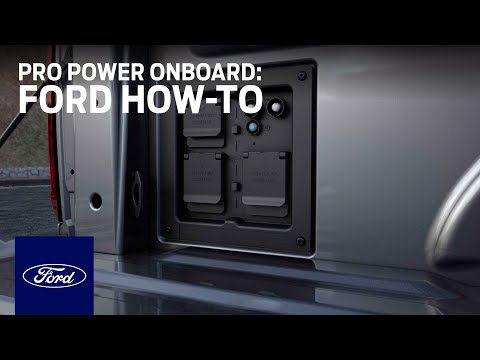
Ford’s home backup power can turn an F-150 Lightning EV into a backup generator for a consumer's home.
It says that with the ability to offload up to 9.6 kilowatts of energy, a fully-charged F-150 Lightning can provide full-home power for up to three days
Ford partnered with GenerLink, a company that manufactures a meter-mounted transfer switch, to bring home backup power to customers.
Home backup power can automatically activate to power a home during a power outage. When power is restored, the truck automatically reverts to its planned charge schedule.
At time of writing, the technology is limited to the F-150 Lightning or F-150 PowerBoost Hybrid with 7.2 kW or 9.6 kW Pro Power Onboard.
4. AI depot fleet energy management
Company: Siemens
CEO: Roland Busch
Headquarters: Munich, Germany
Technology company Siemens launched Depot 360, a charging as a service (CaaS) solution, in 2024 with the aim to reduce barriers in electrifying fleets.
It enables fleet businesses, from bus operators to haulage companies, to outsource the deployment and maintenance of charging infrastructure to a single supplier.
Depot360 CaaS provides customers with consultation and financing to support depot design, construction, commissioning and management, while Depot360 managed services optimises charging, fleet and energy infrastructure through the provision of data-informed management and preventative maintenance.
The core of the managed services is Depot360’s energy management and optimisation platform, Depot360 AI.
Using the platform, a team from the Siemens network can leverage fleet-centric algorithms to monitor and manage the charging infrastructure’s performance.
Bernard Magee, Managing Director for eMobility at Siemens said when announcing the technology: “Depot360 addresses the two main barriers to fleet organisations in achieving electrification: the upfront investment costs and the time and skills to project manage the installation and ongoing maintenance and optimisation of charging infrastructure and operations.”
3. Dynamic load management ecosystems
Company: Schneider Electric
CEO: Oliver Blum
Headquarters: Rueil-Malmaison, France

Designed for use in fast charging hubs that support heavy duty vehicles Schneider Electric’s dynamic energy and load management system (or DELMS), co-ordinates charger load balancing, electrical distribution monitoring, managing infrastructure assets and energy through a single platform.
The digital solution can also communicate with external systems such as fleet and charge point management software, allowing it to handle complex demands efficiently.
The system can assist with reducing peak energy usage while managing diverse energy sources, as operators turn to on-site solar, microgrids and battery storage to improve reliability and efficiency.
As EV fleets are increasingly rolled out in line with regulatory frameworks, solutions like Schneider’s prove effective at optimising energy distribution, operating within grid constraints and ensuring sustainable performance.
2. Megawatt Charging System
Company: ABB
CEO: Morten Wierod
Headquarters: Zurich, Switzerland
ABB has headed up megawatt charging. Its E-mobility arm launched OM X-Series for megawatt-scale charging use cases in 2026.
Its a distributed charging system that replaces isolated clusters with one coordinated site architecture, scaling from 800 kW to 10 MW and beyond, across more than 100 charge points.
The initial X-Series configuration consists of two 800 kW cabinets connected through a DC bus for direct battery storage integration, supporting up to 24 charge outputs. ABB says it will extend the system to multi-megawatt scale on this architecture.
Megawatt charging is a technology that promises super-fast performance.
Larger scale charging use cases are going to be increasingly needed as EV fleets with larger energy needs deploy on global roads, and technologies like ABB’s which provide very high energy needs are likely to prove very effective.
1. V2X
Company: Enel Group
CEO: Flavio Cattaneo
Headquarters: Rome, Italy
V2X, or “vehicle to everything”, is a technological innovation that further integrates renewable energy and battery electric vehicles into society by communicating with infrastructure, other vehicles and networks.
A key part of this technology is Vehicle-to-Grid (V2G) where Enel, which operates a wide range of public and private charging solutions, has emerged as one of the largest players.
In 2016, Enel collaborated with Japanese carmaker Nissan for its V2G project to store and feed back into the grid the energy that has not been used, being an early pioneer of V2G technology.
Enel’s subsidiary company Enel X has worked extensively on V2X in Taiwan where it has collaborated with Gogoro on large scale adoption of the technology with Taiwan Power Company.
Gogoro integrates its electric scooters, charging infrastructure and technology into its collaboration with Enel X, which brings together distributed power resources with its Virtual Power Plant platform to support the local power grid.
When Taiwan Power Company recognises an upcoming supply demand imbalance, it sends a dispatch notification to the energy trading market. Enel X then activates its Virtual Power Plant to respond to the grid need, including Gogoro’s GoStations.
On Enel X's website it says that if the entire network of GoStations was called on, it could power the city of Taipei for roughly 45 minutes.









Executives

Flavio Cattaneo
CEO
Jim Farley
Chief Executive Officer
Morten Wierod
CEO

Olivier Blum
Chief Executive Officer
Paulo Ruiz Sternadt
CEO
Roland Busch
President and CEO of Siemens AG
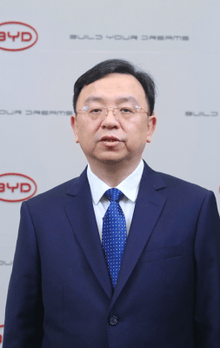
Wang Chuanfu
CEO

Zeng Yuqun (Robin Zeng)
CEO