Volkswagen: Building EV Battery Cells in Europe
Volkswagen Group's bold move to produce its own battery cells in Europe could mean significant improvements for EV drivers by 2030.
The company's PowerCo division has begun manufacturing unified cells at its Salzgitter, Germany gigafactory, marking the first time a major European carmaker has taken complete control of battery cell development and production.
This shift towards self-sufficiency could translate into more reliable supply, better performance and potentially more competitive pricing for owners of Volkswagen, ŠKODA and SEAT electric vehicles.
The company expects these European-made cells to supply around 50% of its unified cell batteries for EVs, with the remainder sourced from external suppliers. For EV enthusiasts, this development represents a significant step towards reducing dependence on battery imports and could mean more consistent vehicle availability and potentially shorter waiting times for new models.
“We are the first European carmaker to establish our own battery cell development and production,” says Oliver Blume, CEO of Volkswagen Group.
“This step strengthens our position and independence in the global competition.”
Breaking free from supply chain constraints
For EV drivers who have experienced frustration with vehicle delivery delays or concerns about long-term battery availability, Volkswagen's strategy could address these pain points.
According to McKinsey, China dominates the battery market with a market share of more than 70% and also has the most emission-intensive production manufacturing processes. This concentration of supply has created vulnerabilities that have directly impacted EV availability across Europe.
China's excess battery capacity has led to lower costs, while European manufacturers face trade barriers, high shipping costs and variations in upstream-material availability.
According to McKinsey, for globally-competitive battery manufacturing industries to emerge outside of Asia over the next ten years, challenges will need to be overcome on multiple fronts spanning supply chains, talent management, operations and technology.
Volkswagen's move to bring production in-house could mean EV owners benefit from more stable supply chains and reduced exposure to geopolitical disruptions. Other manufacturers are following suit, with BMW also choosing Germany for battery production, suggesting this could become an industry-wide shift that benefits all European EV drivers.

What improved performance means for drivers
Production of the unified cell will be gradually ramped up throughout 2026 in Europe. Initially, Salzgitter will build an annual production capacity of up to 20 GWh, which could be expanded to up to 40 GWh. For context, this could power hundreds of thousands of electric vehicles annually.
Salzgitter will serve as the lead plant for PowerCo's following gigafactories in Valencia, Spain and St Thomas, Canada, all of which are based on PowerCo's factory concept.
The first PowerCo unified cell is based on nickel-manganese-cobalt (NMC) technology. Compared to previous cells, it delivers around 10% more energy density, meaning it is one of the most powerful cells by volume segment. For EV drivers, this translates directly into tangible benefits: longer range between charges, improved efficiency and better overall performance from the same-sized battery pack.
The standardised cell architecture enables worldwide use across brands and regions and offers economies of scale, cost advantages and technological flexibility, from lithium iron phosphate (LFP) to NMC and solid state.
It is synchronised with Volkswagen's new cell-to-pack battery system and offers advantages in range, efficiency and performance compared to previous cells.
Thomas Schmall, Group Board Member for Technology at VW Group, says: "With PowerCo, we are consistently expanding our know-how in battery technology.
“In combination with the new battery system, the Unified Cell "made in Salzgitter" brings a real technological leap for our customers. This puts us in the driver’s seat when it comes to a key technology for e-mobility.”
Manufacturing leaders won't want to miss Sustainability LIVE: The US Summit , taking place at Navy Pier, Chicago, on April 21–22.
Co-located with Procurement & Supply Chain LIVE , the event unites senior decision-makers at a time when supply chains, sustainability and business performance are more interdependent than ever.
Secure your place now for The US Summit – group booking discounts available.
Sustainability credentials that matter
For environmentally-conscious EV owners who chose electric vehicles to reduce their carbon footprint, the production methods behind their batteries matter significantly. The Salzgitter gigafactory runs entirely on renewable energy from wind and solar, including its energy-intensive clean and drying rooms.
In total, Volkswagen says the Salzgitter gigafactory emits up to 115,000 tons less CO₂ annually than comparable conventional factories.
This could mean that future Volkswagen Group EVs will have an even lower lifetime carbon footprint, addressing concerns about the environmental impact of battery production that have sometimes undermined the sustainability credentials of electric vehicles.
Frank Blome, CEO of PowerCo, explains: "We are taking the key future technologies into our own hands. PowerCo delivers and is a central component of our strategy as a Global Automotive Tech Driver. The PowerCo gigafactory in Salzgitter sends a strong technological signal for Europe and serves as a cornerstone on our path to becoming a global automotive tech leader."
Since January 2022, at the VW Group research and development laboratory in Salzgitter, testing and development capacities have been strategically expanded. Another test field went into operation in January 2026, suggesting continuous improvement could benefit future generations of EVs.
Frank says: "In just three years, we have built an entirely new company, developed a competitive product, and completed a cell factory along with its upstream supply chain. At the same time, we are already constructing the next cell factories in Spain and Canada. In short: we deliver. This achievement is the result of an outstanding team effort by many colleagues at PowerCo and VW and I'm deeply grateful for that."
For EV drivers and enthusiasts, Volkswagen's investment in European battery production could signal the beginning of a new era: one where vehicles are more readily available, perform better and carry stronger environmental credentials from production through to disposal.
Company portals


Executives
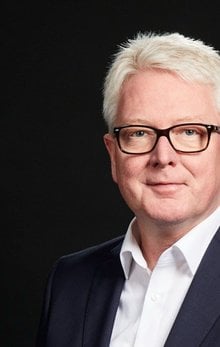
Frank Blome
CEO PowerCo SE
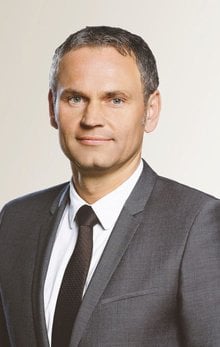
Oliver Blume
CEO
Thomas Schmall
Member of the Board of Management Volkswagen AG, Technology