How Does CATL’s 1,500 km Range Battery Work?

Chinese battery manufacturer CATL announced an array of new battery technology including the a new Qillin Battery, which it says enables a 1,500 km range for sedans.
This offering is competing with BYD’s Blade Battery 2.0, announced in March 2026, which offers more than 1,000 km in range.
CATL is the world's largest lithium-ion battery manufacturer and supplies a variety of automotive businesses, including BMW and Volkswagen.

How does the 1,500 km range battery work?
CATL says that its Qilin Condensed Battery enables a 1,500 km range for sedans and more than 1,000 km for large SUVs. It applies aviation grade technology to passenger vehicles for the first time, achieving 350 Wh/kg cell energy density and 760 Wh/L volumetric energy density.
The battery is built on CATL's electric aviation programme and features a high-nickel cathode and low-expansion silicon-carbon anode, which CATL says boosts energy density by 50 Wh/kg.
It is the company’s first aviation-grade titanium alloy case. This has reduced thickness by 60% and weight by 30%, while tripling unit strength and delivering an additional 20 Wh/kg in energy density.
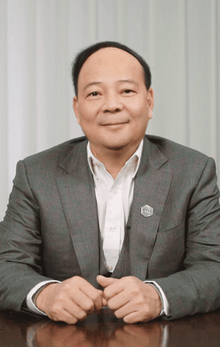
Robin Zeng, Chairman and CEO of CATL, emphasised at the company’s Super Technology Day conference that industrial innovation must be driven by a rigorous scientific spirit.
New battery technology
CATL also announced a third-generation Shenxing Superfast Charging Battery, a third-generation Qilin Battery, the Qilin Condensed Battery and a second-generation Freevoy Super Hybrid Battery. Additionally, the company introduced a Naxtra Sodium-ion Battery and a fully integrated supercharging and battery-swapping solution.
The company says its new technologies are designed to address diverse mobility needs across different usage scenarios.
Its newly announced Shenxing Superfast Charging Battery charges from 10% to 35% in one minute, from 10% to 80% in three minutes and 44 seconds and from 10% to 98% takes six minutes and 27 seconds.
For comparison, BYD’s latest Blade charges 10% to 97% in nine minutes.
China’s battery dominance
As BYD and CATL compete on battery tech, it is clear that China is far ahead of Europe and the US on battery component production. The IEA’s Global EV Outlook 2025 Report says that China has also established a near monopoly on battery components production, supplying almost 85% of cathode active materials and over 90% of anode active material production.
China also supplies most of the world's EV batteries. According to the IEA’s Global Supply of EV Batteries Report, published in 2022, China produces three-quarters of all lithium-ion batteries and is home to 70% of production capacity for cathodes and 85% for anodes.
European manufacturers, like Volkswagen and BMW which are both supplied by CATL, are looking to bring battery manufacturing to Europe.
McKinsey says that Western battery producers face structural disadvantages from upstream minerals to midstream materials to cells. They share common elements of higher capital intensity, greater exposure to commodity and energy costs and limited process know-how, relative to China.
Infrastructure is also rapidly advancing in China. CATL announced in its recent announcement that it also plans to build 4,000 integrated charge–swap stations by the end of 2026, covering nearly 190 cities and a nationwide highway network.
CATL also said it will co-develop a "charge–swap sharing network" with a variety of other Chinese carmakers, including Changan and Chery.