
BMW & Encory: Direct Recycling to Recover Battery Minerals
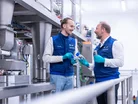
BMW Group together with Encory has commissioned the Cell Recycling Competence Centre (CRCC) in Bavaria, Germany.
The site will use technology developed by BMW Group that eliminates energy intensive thermal processing, aiming to close the resource loop and increase sustainability in battery manufacturing.
Electrified vehicles accounted for 26% of total BMW Group sales worldwide in 2025, with fully-electric vehicles representing around 18%. In Europe, the BMW Group reported a significant growth of 28.2% in fully-electric vehicles.

Direct recycling process
Encory is a 50-50 joint venture between BMW Group and Interzero Group, an environmental services provider, that develops solutions for the recovery, reprocessing and recycling of products, with a focus on vehicle components. In collaboration, Encory and BMW Group announced a CRCC in Salching, Bavaria.
The centre will implement a direct recycling process where valuable raw materials, such as lithium, nickel and cobalt from battery cell manufacturing, as well as complete battery cells, will be mechanically broken down into their components and reintroduced into the production process.
Alexander Maak, Managing Director of Encory, says: “With this competence centre, we are taking a major step toward a circular economy. Through direct recycling, we can efficiently recover the active materials from the battery cells and integrate them directly into the battery cell manufacturing process.
“This avoids complex preparation processes or additional extraction of critical metals such as lithium, cobalt and nickel, creating a true circular economy.”
BMW Group estimates that once fully operational, the CRCC will have an annual volume of recycled battery cell material in the mid-double-digit tonne range.
How it differs from other battery recycling methods
Current commonly used recycling methods are hydrometallurgical processing and pyrometallurgical processing. Both involve “black mass” mechanical pre-treatment. The direct recycling process differs from other methods in that the raw materials from the battery cells do not need to be broken down into their individual components before new active material is produced.
The raw materials are not entirely converted to their original state, but are instead fed back into the cell production cycle. The direct recycling methodology eliminates the conventional, energy-intensive chemical or thermal processing previously required. The method was developed by the BMW Group.
Markus Fallböhmer, Senior Vice President of Battery Production at BMW AG, says: “Our direct recycling process puts us at the forefront of the industry.
“This technology has tremendous potential to further optimise battery cell production.”
The recovered raw materials will be directly reused in pilot production of battery cells at the BMW's Group's Cell Manufacturing Competence Centre (CMCC) in Parsdorf, Bavaria.
EV leaders won't want to miss Sustainability LIVE: The US Summit , taking place at Navy Pier, Chicago, on April 21–22.
Co-located with Procurement & Supply Chain LIVE , the event unites senior decision-makers at a time when supply chains, sustainability and business performance are more interdependent than ever.
Secure your place now for The US Summit – group booking discounts available.
A bigger role in battery cell recycling
McKinsey estimates that over 100 million EV batteries are expected to be retired in the next decade.
McKinsey says that innovative recycling processes such as direct recycling aim to increase material recovery rates, decrease energy and reactant consumption and decrease emissions and wastewater.
Direct recycling is likely to play a key role in battery cell manufacturing in the coming years, reducing dependence on primary resources and offering a more sustainable alternative to other options.



Executives
Alexander Maak
Chief Executive Officer
Dr. Markus Fallböhmer
Bereichsleiter Produktion Hochvoltspeicher, Energiemodul