
Top 10: Electric Aircrafts
Electric aviation is entering a phase as pioneers turn engineering breakthroughs into practical aircraft for training, logistics and regional travel.
These programmes blend electric motors, high energy batteries and hybrid range extenders with advanced software and manufacturing to deliver quieter operations, lower costs and zero CO₂ on short routes.
From CTOL commuters to VTOL platforms and experimental demonstrators, they are opening city pairs, shortening turnarounds and reshaping certification pathways.
EV Magazine examines 10 flagship projects ranked on speed that are defining the move to sustainable flight, from prototype to everyday service.
10. Wright 1
Company: Wright Electric
CEO: Jeff Engler
Top speed: N/A
Wright aims to cut fuel logistics and boost energy security by making regional single-aisle flights zero-emissions.
Single-aisle aircraft account for 45% of aviation CO₂ and have no zero-emissions option.
The 100-passenger Wright Spirit targets one-hour routes from 2027 on busy routes like London–Paris and San Francisco–Los Angeles.
Wright is integrating its propulsion system with partners including NASA, US Department of Energy and US Department of Defense.
By 2032, Wright 1 is planned as a zero-emissions single-aisle aircraft at fossil-parity cost.
9. Pipistrel Velis Electro
Company: Pipistrel
CEO: Gabriel Massey
Top speed: 112mph
Pipistrel’s Velis Electro is the first type-certified all-electric aircraft, approved for Day VFR pilot training in more than 30 countries.
Powered by the type-certified E-811 engine (57.6 kW, 345 VDC) with a liquid-cooled dual-battery system, it cruises at 88 KTAS with 50 minutes’ endurance.
Charging to 98% takes around 1 hour 20 minutes and its useful load is 380 lb (172 kg).
Producing zero operational emissions and just 60 dBA, it offers simple four-switch start-up, low maintenance and cost-effective quiet training operations.
8. X-57 Maxwell
Company: NASA
Administrator: Sean Duffy
Top speed: 172mph

NASA’s X-57 Maxwell is an all-electric experimental aircraft proving high-power distributed electric propulsion can be efficient, quiet and cleaner than piston types.
Converted from a Tecnam P2006T, it progresses through four modifications to a final layout with a slim high-aspect-ratio wing, two wingtip cruise motors and 12 folding high-lift propellers for take-off and landing.
A 460-volt system powers 14 motors from lithium-ion batteries.
Target performance includes 172 mph cruise at 8,000 ft, 58-kt stall and 14,000 ft ceiling.
7. ALIA CX300
Company: Beta Technologies
CEO: Kyle Clark
Top speed: 176mph
Beta’s ALIA CX300 is an all-electric aircraft offered in VTOL and CTOL variants.
Both feature a 50 ft wingspan, five-passenger capacity or 200 ft³ cargo volume and sub-one-hour charging.
The CX300 flies up to 153 knots with a demonstrated 336 nm range, is single-pilot, IFR and night capable with dual-pilot training.
VTOL adds four V600A lift motors to the H500A cruise motor.
Energy costs and emissions are lower than comparable turbine types, supporting roles from passenger transport to medical logistics.
6. ES-30
Company: Heart Aerosapce
CEO: Anders Forslund
Top speed: 207-230mph
Heart Aerospace’s ES-30 promises zero CO₂ on short routes, substantially lower operating cost and better connectivity via short runways and low noise.
The Reserve Hybrid design seats 30 with 25 kg luggage, offers 200 km all-electric range and up to 800 km hybrid range with 25 passengers.
It targets 1,100 m runways, 30 minute charging and type certification in 2029.
Heart’s analysis suggests electrified regional aviation could cut industry emissions by 22% by 2050 and make previously unprofitable routes viable.
5. Joby Aviation S4
Company: Joby Aviation
CEO: JoeBen Bevirt
Top speed: 200mph (predicted)
Joby’s S4 is evolving into a gas turbine hybrid VTOL designed for low-altitude missions and optional piloting, enabling crewed or fully autonomous operations.
Flight testing is expected in autumn 2025, with operational demonstrations planned for 2026.
Joby is actively developing a hybrid powertrain for the S4 and has demonstrated aircraft-level autonomy following the June 2024 acquisition of Xwing’s autonomy division.
Under government contract in June 2024, the S4 platform showcased longer-range potential with an industry-first 561-mile hydrogen-electric hybrid flight capability.
4. Cassio 330
Company: VoltAero
CEO: John Botti
Top speed: 207mph

VoltAero’s Cassio 330 leads a 5–12 seat family with safe, efficient and eco-friendly electric-hybrid propulsion.
The production series-hybrid uses twin aft-fuselage pusher electric motors with a thermal engine as a range extender to recharge batteries.
It taxis, takes off and climbs on all-electric power, then recharges in cruise.
The change from a parallel-hybrid layout reflects work with the European Union Aviation Safety Agency (EASA).
Operational redundancy includes two Safran ENGINeUS motors and independent battery strings for greater safety and reliability.
3. Eviation Alice
Company: Eviation
CEO: Andre Stein
Top speed: 300mph
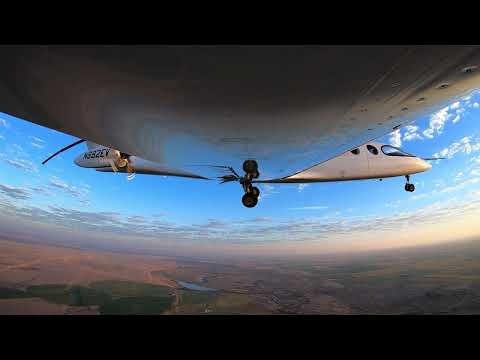
Eviation’s all-electric Alice is an environmentally, financially and socially sustainable aircraft.
Its advanced digital flight deck prioritises performance, workload reduction and pilot comfort with touch-screen displays and intuitive controls.
Propulsion is provided by magniX electric engines delivering zero emissions, lower maintenance for more time in revenue service and significantly quieter operation than combustion, flight-proven on five platforms.
magniX has been selected by NASA to demonstrate electric propulsion technologies and recognised by the FAA through special certification conditions.
The commuter cabin seats nine with a 32-inch pitch, panoramic windows with electrochromic shades and generous storage including a spacious baggage hold.
The cargo variant offers 450 cubic feet of temperature-controlled volume and swift turnarounds via forward and aft doors.
Target figures include a length of 67.1 ft, span of 65.9 ft, speed of 260 KTAS, day VFR range of 250 nm, take-off and landing distance of 3,280 ft, climb of 2,000 ft/min, MTOW of 18,400 lbs and payload of 2,500 lbs.
2. Bye eFlyer 800
Company: Bye Aerospace
CEO: Rod Zastrow
Top speed: 368mph (predicted)
Bye Aerospace has unveiled the eFlyer 800, an eight-seat all-electric twin turboprop-class aircraft targeting air-taxi, cargo, regional and charter markets at one-fifth of legacy twins’ operating cost.
Performance estimates include up to 320-knot cruise, 35,000-ft ceiling and 500-nm range with 45-minute IFR reserves at a 280-knot cruise.
Safety features span twin wing-mounted electric motors with dual redundant windings, quad-redundant battery packs and a parachute, with options such as emergency auto-landing, AI, solar cells and in-wheel electric taxi.
The cabin seats up to seven passengers plus one or two pilots.
Bye Aerospace and Safran are assessing an integrated electric powertrain using Safran’s ENGINeUS motors and GENeUSGRID distribution and protection, building on their eFlyer 2 and eFlyer 4 collaboration.
Deposit agreements are being developed with operators.
In parallel, Bye Aerospace is progressing FAA Part 23 certification for eFlyer 2 and eFlyer 4, aiming for zero CO₂ emissions, lower noise and reduced costs.
1. Spirit of Innovation
Company: Rolls-Royce
CEO: Tufan Erginbilgic
Top speed: 387mph
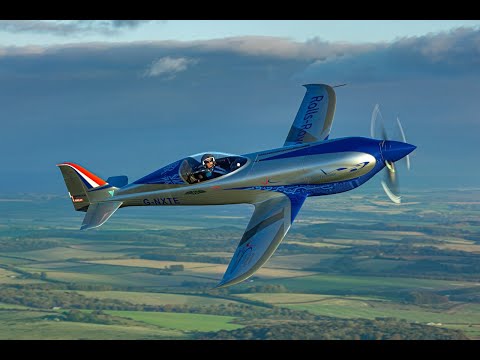
Rolls-Royce believes its all-electric Spirit of Innovation is the world’s fastest all-electric aircraft, having submitted three records to the Fédération Aéronautique Internationale (FAI).
According to data filed with the World Air Sports Federation, at 15:45 GMT on 16 November 2021 the aircraft reached 555.9 km/h (345.4 mph) more than 3 kilometres, surpassing the previous mark by 213.04 km/h (132 mph).
Further runs at the Ministry of Defence’s Boscombe Down experimental test site recorded 532.1 km/h (330 mph) more than 15 kilometres, 292.8 km/h (182 mph) faster than the earlier record and a climb to 3,000 metres in 202 seconds, beating the prior best by 60 seconds.
During the record campaign the aircraft also registered a peak speed of 623 km/h (387.4 mph), which Rolls-Royce believes makes Spirit of Innovation the world’s fastest all-electric vehicle.
Company portals










Executives

Anders Forslund
CEO

Andre Stein
CEO

Gabriel Massey
CEO

Jeff Engler
CEO

JoeBen Bevirt
CEO

Kyle Clark
Founder and CEO

Sean Duffy
Administrator

Tufan Erginbilgic
CEO