
Top 10: EHGV Charging Innovations
Voice user interfaces (VUI) and biometric authentication are redefining the way EHGV fleets manage charging, combining convenience with advanced security.
This week’s ranking spotlights 10 charging innovations, with VUI and biometrics leading the shift towards hands-free access, faster verification and seamless fleet operation.
From facial recognition and fingerprint sensors to behavioural biometrics and voice commands, these tools reduce downtime and boost resilience in demanding environments.
Adopted by global leaders like Tesla, ABB and Siemens, these systems support secure charging across weather extremes, depot types and vehicle models.
In this week's rundown, EV Magazine explores the next generation of safe, smart and scalable EHGV charging.
10. Voice User Interface (VUI) & Biometric Authentication
First Explored: 1950's
Top companies: Tesla, Siemens and ABB
Tesla CEO: ELon Musk
Tesla founded: 2003
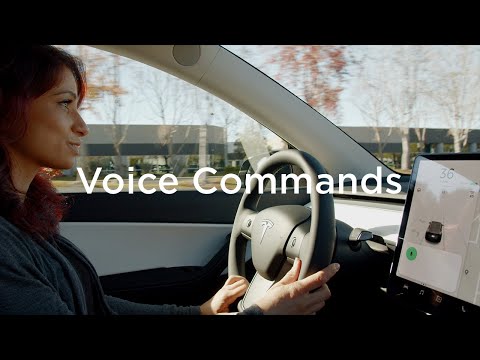
VUI and Biometric Authentication are a top EHGV charging innovation, offering secure, hands-free access and faster authentication.
Tesla, Paravision and ABB lead in integrating biometrics like facial recognition and fingerprint sensors, while ChargePoint and Rocsys explore VUI for seamless operation in harsh weather.
Siemens, Hubject and Virta support secure protocols and Plug&Charge systems.
The University of Oxford’s CableAuth, is pioneering behavioural biometrics, such as detecting how a cable is unhooked, adding a new layer of security to commercial fleet operations.
9. Solar-Powered Charging Stations (SPCSs)
First explored: Late 20th century
Top companies: Tesla, ABB and ChargePoint
ABB CEO: Morten Wierod
ABB founded: 1988
SPCSs are transforming EHGV operations by enabling fleets to charge with clean, renewable energy.
Ideal for depots with high energy demands, they cut emissions and boost energy independence.
Tesla, Beam Global and ChargePoint offer solar-integrated charging with battery storage, while Siemens, ABB and Ztric develop scalable systems for fleet use.
These solutions reduce grid reliance, lower costs, support off-grid operations and enhance resilience, especially with solar-plus-storage setups, making them a critical innovation for sustainable, cost-effective heavy-duty vehicle electrification.
8. Interoperable Charging Platforms (ICPs)
First explored: 2010's
Top companies: ChargePoint, TotalEnergies and Allego
ChargePoint CEO: Rick Wilmer
ChargePoint founded: 2007
ICPs are vital for EHGVs, allowing trucks to charge across multiple networks using one account or app.
This eliminates proprietary barriers, reduces downtime and supports long-distance logistics.
Companies like EV Connect, ChargePoint and TotalEnergies lead efforts by using open standards and cross-network roaming.
Greenlots, BTC Power and Allego provide compatible hardware and seamless user experiences, while EVgo promotes best practices.
ICPs ensure EHGV fleets operate efficiently, flexibly and future-proof across regions, making it a cornerstone of scalable electric freight infrastructure.
7. Smart Charging & Energy Management
First explored: 2010's
Top companies: Siemens, ABB and ChargePoint
Siemens CEO: Roland Busch
Siemens founded: 1847

Smart charging and Energy Management are essential EHGV innovations, helping fleets cut costs, optimise power use and scale sustainably.
Systems from Driivz, Siemens, ABB and ChargePoint balance loads, avoid peak tariffs and prevent grid overload.
EVBox, GreenFlux and enjoyelec enable integration with solar and storage, while Equans supports large infrastructure rollouts.
For depots with high power demand, smart charging improves readiness, reduces utility penalties and avoids costly upgrades, making it central to efficient, future-ready EHGV operations.
6. Mobile charging solutions (MCSs)
First explored: Late 19th century
Top companies: RAC, Heliox and SparkCharge
RAC CEO: Dave Hobday
RAC founded: 1897
MCSs are revolutionising EHGV, offering flexible, on-demand power wherever it’s needed.
Ideal for remote routes, emergencies or unexpected detours, they ensure trucks stay charged without relying on fixed infrastructure.
SparkCharge, ZAPME and Heliox provide scalable, rapid mobile units for fleet depots and roadside use.
EVmobile and RAC deliver emergency services, while BP Pulse supports flexible operations across geographies.
MCSs reduce upfront costs, support Charging-as-a-Service models and electric truck adoption, making them vital for reliability and resilience during the transition to zero-emission freight.
5. Battery swapping & five-minute pit stops
First explored: 1890's
Top companies: Mitsubishi, BYD and SAIC
Mitsubishi CEO: Katsuya Nakanishi
Mitsubishi founded: 1870

Battery swapping and five-minute pit stops are redefining EHGV charging, enabling trucks to exchange depleted batteries for fully charged ones in minutes.
CATL, U Power and others leading large-scale deployments in China, while Tual Technology pioneers modular swaps in the UK.
Ample and Mitsubishi Fuso are trialling rapid swaps in Japan, with NIO expanding to Europe.
BYD, SAIC, Sinopec and CNPC are building infrastructure for heavy-duty use.
These systems support Battery-as-a-Service models, reduce upfront costs and allow long-haul electric freight to have faster, more flexible recharging.
4. Robotic charging arms
First explored: 1950's
Top companies: Hyundai, Huawei and Rocsys
Hyundai CEO: José Muñoz
Hyundai founded: 1967
Robotic charging arms automate high-power EHGV charging, improving speed, safety, reliability and fleet efficiency.
Ideal for heavy cables and autonomous trucks, they reduce manual labour, lower wear and cut downtime.
Hyundai, Huawei and Rocsys lead with AI-powered systems for fleets, ports and logistics hubs.
EVS Robot and TU Graz’s ARTI robot offer mobile, automated solutions. VOLTERIO, backed by FAULHABER, is also innovating in this space.
These systems enable 24/7, hands-free charging—critical for scalable, electric and autonomous heavy-duty transport.
3. Ultra fast & high power dc charging
First explored: 2010's
Top companies: Cavotec, Virta and Volvo
Volvo CEO: Martin Lundstedt
Volvo founded: 1927
Ultra-fast and high-power DC charging enables EHGVs to recharge in less than 45 minutes, making electric logistics and long-haul operations viable.
Cavotec, Kempower, Virta and Flooxpower provide scalable systems up to 4.5 MW, while Nyobolt develops fast-charging battery tech.
CharIN’s MCS standard, backed by Daimler, Volvo, MAN and Scania, ensures interoperability.
Features like dynamic load sharing and modular chargers support large depots, reduce wait times and future-proof fleets.
This innovation is key to electrifying freight at scale with speed, efficiency and reliability.
2. Wireless & Dynamic wireless charging
First explored: 1890's
Top companies: Ideanomics, Electron and InductEV
Ideanomics CEO: Alf Poor
Ideanomics founded: 2004

Wireless and dynamic wireless charging are game-changing EHGV innovations, enabling trucks to charge without cables, either while parked or in motion.
Static charging simplifies depot operations, while dynamic wireless charging allows vehicles to recharge while driving, minimising downtime and enabling near-continuous logistics.
This reduces battery size and weight, improves cargo capacity and supports route flexibility.
WAVE (Ideanomics), Electreon and InductEV lead real-world deployments of high-power systems (up to 500 kW), while WiTricity and Electric Green advance efficient, bidirectional technologies.
Cummins and Purdue University are piloting heavy-duty use cases in the US, with Siemens and Swinburne leading trials in Australia alongside ACE Infrastructure, SEA Electric and others.
Wireless systems also cut infrastructure clutter, enhance safety, support real-time energy management and improve access for drivers.
These technologies are especially valuable in ports, depots and high-traffic hubs, making hands-free, grid-integrated charging more scalable and practical for the future of electric heavy-duty transport.
1. Vehicle-to-Grid (V2G) Integration
First explored: 1990's
Top companies: Virta, ABB and Siemens
Virta CEO: Christian Girardeau
Virta founded: 2013

Vehicle-to-grid (V2G) integration turns EHGVs into mobile energy assets, allowing their large batteries (250–600 kWh) to store and return power to the grid.
This supports grid stability, cuts costs and enhances renewable integration.
EHGVs can absorb surplus solar or wind power, discharge during peak demand and reduce reliance on fossil-fuel backup.
Fleet operators can lower energy bills, sell electricity back to the grid and avoid infrastructure upgrades.
V2G also boosts resilience by powering buildings during outages and aids decarbonisation goals.
Virta, Nuvve and Fermata Energy are leading V2G software and deployment, while SWARCO, ABB and Siemens supply V2G-ready hardware.
Truck OEMs including Daimler, Volvo, MAN and Scania are trialling V2G in commercial fleets. UK Power Networks and EDF are backing utility-scale rollouts.
Together, these companies are making V2G a core innovation in EHGV electrification, unlocking new value streams, improving grid efficiency and advancing clean, profitable freight transport.