Why are Tesla’s Robotaxis are Under Federal Investigation?
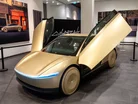
Tesla’s new robotaxi service is under scrutiny after video clips posted online show the EVs appearing to violate traffic rules during their first public runs in Austin, Texas.
The US National Highway Traffic Safety Administration (NHTSA) confirms it is “in contact with the manufacturer to gather additional information” following reports of erratic driving behaviours.
Tesla’s autonomous taxi rollout, long promoted by Chief Executive Elon Musk as central to the company’s future, begins with limited trials.
But early signs suggest the debut may be anything but smooth.

Launching Tesla’s robotaxis with eyes watching
On Sunday, Tesla’s autonomous taxi service makes its public debut in Austin, Texas, using a handful of vehicles and a select group of invited riders including influencers, analysts and shareholders.
Tesla uses safety drivers seated in passenger positions as the self-driving system takes the lead.
Musk marks the moment on X, formerly known as Twitter, calling it the “culmination of a decade of hard work”.
He praises the company’s AI and chip teams in particular.
But videos filmed by onlookers and posted to social media appear to show robotaxis making basic driving mistakes.
One widely-shared video appears to show a robotaxi stopping abruptly while passing by a parked police car.
A number of additional incidents were reported in TechCrunch, including instances of the driverless cars speeding and swerving into the wrong lanes.
These early missteps prompted the NHTSA to begin dialogue with Tesla.
The regulator adds that it continues to assess the situation and will require further information from the company as part of its safety monitoring duties.
Boundaries and limitations define Tesla’s trial run
Tesla’s launch appears deliberately cautious. The test fleet includes only a dozen cars and operates with strict limitations in place.
These vehicles are not permitted to drive in poor weather, navigate complex junctions or carry passengers under the age of 18.
The limited rollout reflects the technology’s early stage of development.
Tesla’s robotaxis remain far behind rival services from Waymo and Zoox, owned by Google’s parent Alphabet and Amazon respectively.
Those firms already operate commercial driverless services in several American cities.
Waymo, in particular, has amassed millions of miles of autonomous driving data from real-world scenarios.
That data helps refine its driving algorithms and reduces the likelihood of on-road errors.
Tesla’s approach, by contrast, is newer to the public road space and has a comparatively smaller dataset for machine learning.
Outside the US, autonomous vehicles are further ahead in cities like Singapore, Dubai and those across China.
These regions are already hosting large-scale deployments of driverless technology, many of which involve no safety driver presence at all.
Tesla pursues autonomy its own way
Tesla’s strategy for vehicle autonomy differs from others in one key area: hardware.
While Waymo and Zoox rely on a combination of radar, ultrasonic sensors and LiDAR (Light Detection and Ranging) systems, Tesla’s vehicles use only cameras for environmental sensing.
This camera-first method is less expensive than LiDAR-based alternatives and may make large-scale deployment more economically viable in the future.
The NHTSA clarifies that it “does not pre-approve new technologies or vehicle systems”, instead requiring carmakers to confirm that they meet existing safety standards.
Tesla, like other manufacturers, is expected to report any safety issues and submit to federal investigations as needed.
This places Tesla’s robotaxi programme at the intersection of commercial ambition and public safety regulation.
For now, it remains in a tightly controlled test phase, with scrutiny from authorities likely to continue as testing expands.
Explore the latest edition of EV Magazine and be part of the conversation at our global conference series, Sustainability LIVE.
Discover all our upcoming events and secure your tickets today.
EV Magazine is a BizClik brand