Why Toyota, Daimler & Volvo are Making Hydrogen Fuel Cells
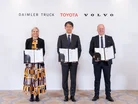
Daimler Truck, Volvo Group and Toyota Motor Corporation have signed an agreement to cooperate in producing fuel cell systems for commercial heavy-duty vehicles.
The new agreement sees Toyota, known for its fuel cell Mirai car, partner with Daimler and Volvo’s joint venture, cellcentric.
This comes as Toyota reports a comparatively strong financial year, despite its competition struggling with lower than anticipated EV demand, tariffs and geopolitical turmoil.

Hydrogen technology
The agreement between the companies centres around fuel cell technology, which is powered by hydrogen.
Fuel cell electric vehicles (FCEVs) are more efficient than conventional internal combustion engine vehicles and produce no harmful tailpipe pollutants, they only emit water vapor and warm air.
FCEVs, and the hydrogen infrastructure that fuels them, are in the early stages of implementation despite being a concept for a long time.
The first commercially available FCEV was made by Toyota and Honda and available for leasing in 2002.
More vehicles have followed, but without widely available refuelling infrastructure consumers face challenges in using them regularly or over long distances.
Daimler Truck, Volvo and Toyota have positioned hydrogen as one of the key energy sources to decarbonise transport and aim to advance technological innovation in fuel cell systems through cellcentric.
Andreas Gorbach, Daimler Truck Board Member responsible for Truck Technology and former cellcentric CEO, says: "Joining forces with the world's largest automotive manufacturer and fuel cell pioneer is a privilege for us, and a game changer in making hydrogen in transportation a reality and cellcentric the go to place for fuel cell technology in commercial vehicles worldwide."
cellcentric and heavy-duty trucks
Founded in March 2021 as a 50:50 joint venture between Daimler and Volvo, cellcentric’s purpose is to to develop, produce and commercialise fuel cell systems for use in heavy-duty trucks.
cellcentric argues that while BEVs are most efficient over short and medium distances, fuel cell systems are best suited for long-haul trucks.
Long haul trucks generally require longer journeys, are inconvenient to charge frequently and have the capacity to store large amounts of fuel.
Nicholas Loughlan, Managing Director and CTO of cellcentric, says: "We are extremely proud that Toyota intends to join as a shareholder of cellcentric, a great sign of trust in our company from one of the world's leading automotive companies.
“Together, in this new set-up, we look forward to seizing the opportunity to significantly improve our company across the entire value chain."
By combining Daimler Truck and Volvo's commercial vehicle expertise with Toyota's fuel cell development, production technology and manufacturing experience, the companies aim is to further strengthen cellcentric's technology.
Toyota’s fuel cell expertise
Toyota manufactures the Mirai, a FCEV that takes its name from the Japanese word for future, with a driving range of up to 400 miles.
Toyota and cellcentric intend to jointly manage the development and production of fuel cell unit cells, the core component of fuel cell systems.
They will also work together on directly linked architecture and control elements with the aim of creating competitive products based on the technologies of both companies.
Toyota specifies in a press release that it is a non-binding agreement to cooperate with cellcentric.
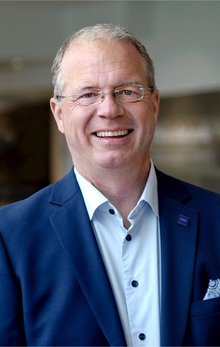
Martin Lundstedt, President and CEO of Volvo Group, says: "We are thrilled to explore this collaboration with Toyota, so that we through cellcentric can accelerate and create critical mass for hydrogen applications. This is an important signal to customers, suppliers, and others in the ecosystem.
“Given the importance of accelerating the transformation into net-zero transportation, the need of great companies coming together and collaborating is more important than ever. Welcoming Toyota onboard will be a big leap towards realising decarbonisation of our industries."
EV leaders won’t want to miss Sustainability LIVE: The US Summit, taking place at Navy Pier, Chicago, on April 21–22.
Co-located with Procurement & Supply Chain LIVE, the event unites senior decision-makers at a time when supply chains, sustainability and business performance are more interdependent than ever.
Secure your place now for The US Summit – group booking discounts available.
Toyota’s positing in the EV market
The news comes as Toyota has reported a relatively strong financial year, with Toyota setting a financial year 2026 forecast for operating income of JP¥3.8tn (US$23.79bn).
This is unlike other companies who have struggled due to tariffs, less than anticipated demand for EVs and geopolitical turmoil.
Toyota has also signed an agreement with Sumitomo Mining to develop all-solid-state batteries, which sees the company expand its FCEV research and technology.
Toyota's vehicle sales in 2025 totalled approximately 7,302,000 units, which is an increase of approximately 302,000 units compared to the same period last fiscal year.
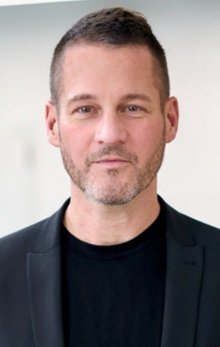
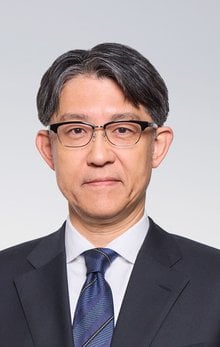
Koji Sato, President and CEO of Toyota, says "We are deeply grateful for the opportunity to soon be joining Daimler Truck and Volvo Group as partners in building a hydrogen society.
“cellcentric, which possesses deep expertise in commercial fields together with Toyota's over 30 years of fuel-cell development in the passenger car sector, can combine their strengths to deliver one of the world-leading fuel cell systems for heavy commercial vehicles. Toyota will continue to contribute to realising a hydrogen society alongside like-minded partners."
Company portals


Executives
Dr. Andreas Gorbach
Head of Truck Technology and Member of the Board of Management Daimler Truck AG
Koji Sato
CEO
Martin Lundstedt
President and Chief Executive Officer
Nicholas John A. Loughlan
Chief Technology Officer