
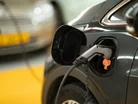
Major carmakers are scrapping EVs en masse. The list of manufacturers who have revised plans, altered timelines or scrapped EVs has continued to grow through 2026.
Those who went all-in on EVs in the early 2020s have faced a range of challenges, including regulatory changes, environmental rollbacks, competition from China, US tariffs and lower than anticipated sales.
Ford, Rolls-Royce, Porsche, Sony Honda, Kia, Lamborghini are some of the manufacturers who have written off plans for EVs amid huge financial write-downs.

EV Models cancelled
Many manufacturers have revised EV strategies by cancelling production of selected EVs or revising timelines for electrification strategies.
Ford revised production of F-150, a top selling electric pickup in the US, from all-electric to EREV, meaning it also uses a fossil fuel generator.
This was during a wider scale back of its EV plans.
Jim Farley, Ford President and CEO, says: “This is a customer-driven shift to create a stronger, more resilient and more profitable Ford.”
The AFEELA, a joint venture between Sony and Honda, was scrapped during a wider shakeup of Honda’s policy towards EVs. Honda also scrapped the 0 SUV, 0 Saloon and Acura RSX as it posted its first ever annual loss.
BMW Group owned Rolls-Royce Motor Cars abandoned plans to to stop producing ICE vehicles by 2026. CEO of Rolls-Royce, Chris Brownridge told The Times: “The legislation has changed. That prediction was based on a different set of circumstances.”
Volkswagen owned Lamborghini also abandoned plans to produce luxury EVs. Stephan Winkelmann, President and CEO of Lamborghini, told The Times that the market for fully electric supercars had effectively stalled.
A McKinsey survey found that the top reason why consumers were not choosing luxury EVs was related to the car's unclear residual values when compared to ICE vehicles.
Volvo scrapped plans to only produce electric vehicles by 2030 in 2024, and in 2026 discontinued the EX30 and EX30 Cross Country in the US.
Other brands who have altered, halted, discontinued or shifted EV policies include Nissan, Kia and BMW.
Write downs for EV manufacturers
According to the Financial Times, a reversal in EV ambitions has resulted in a hit of US$65bn for the global car industry.
Stellantis, with brands including Alfa Romeo, Jeep, Dodge, Vauxhall, Peugeot, Chrysler and Ram, announced a US$26bn write-down related to electrification.
This resulted in a US law firm launching an investigation into potential breaches of federal securities laws.
Porsche also altered its EV product plans following lower-than-anticipated demand, contributing to a 98% fall in operating profit compared to the previous year.
In its financial results for year ending March 31 2026, Honda recorded estimated EV related losses of up to JP¥2.5tn (US$15.69bn).
Ford expects to record US$19.5bn in loss, with the majority in the fourth quarter of 2025 and the remainder in 2026 and 2027. This is partly due to its shift in EV policy.
General Motors recorded a US$6bn charge to close some EV related investments in January 2026.

Deregulatory measures and tariffs
US President Donald Trump, in his Executive Order titled “Unleashing American Energy”, vowed to “eliminate the electric vehicle mandate”.
The US market for EVs has slowed significantly, impacted by several factors including fossil fuel regulations.
In January 2026, Lee Zeldin, US Environmental Protection Agency Administrator, announced the single largest deregulatory action in US history alongside President Trump.
The announcement ended the 2009 Greenhouse Gas Endangerment Finding and all subsequent federal greenhouse gas emission standards for all vehicles and engines of model years 2012 to 2027 and beyond.
The New Clean Vehicle Credit, Previously-Owned Clean Vehicle Credit and Qualified Commercial Clean Vehicle Credit measures all expired in September 2025. These incentives offered potential buyers of EVs a hefty incentive over an ICE vehicle.
President Trump's consideration of a 25% US tariff on car imports from Europe and Mexico has created obstacles for all European carmakers seeking to sell in the US market.
This comes at a time when Chinese competitors are manufacturing EVs faster and cheaper than competitors in Europe or the US.
Additionally, China has an oversupply of batteries, while other regions including Europe and the United States are undersupplied.
Some carmakers, including Volkswagen, are looking to move EV battery production to Europe.
Company portals











Executives
Jim Farley
Chief Executive Officer
Stephan Winkelmann
Chairman and CEO
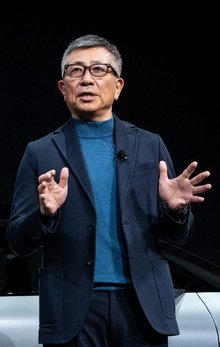
Yasuhide Mizuno
CEO