
Toyota and Sumitomo's Plans for All-Solid-State Batteries
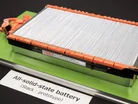
Toyota and Sumitomo Metal Mining have entered a joint agreement for the mass production of cathode materials for all-solid-state batteries for BEVs.
Toyota says it expects the deployment of the higher performing all-solid-state batteries in its BEVs between 2027 and 2028.

All-solid-state batteries
All-solid-state batteries are primarily composed of a cathode, anode and solid electrolyte.
They differ from traditional lithium-ion batteries that use liquid electrolytes.
All-solid-state batteries offer higher output and have a longer life compared to traditional liquid electrolyte batteries.
Toyota expects all-solid-state batteries to offer BEVs longer range, shorter charging times and a higher output.
Toyota is also looking at their application in HEVs as well as and PHEVs.
Sumitomo’s technology
Sumitomo has more than 20 years of experience in supplying cathode materials for a wide range of EVs.
Since around 2021, Toyota and Sumitomo have been conducting joint research on cathode materials for all-solid-state batteries, focusing on challenges such as cathode material degradation during repeated charging and discharging cycles.
With Sumitomo’s proprietary powder synthesis technology, the companies have developed a durable cathode material suitable for all-solid-state batteries.
Sumitomo aims to supply Toyota with the newly developed cathode material for a mass production line.
The companies aim to achieve the world's first use of an all-solid-state battery in a BEV.
EV leaders won’t want to miss Sustainability LIVE: The US Summit, taking place at Navy Pier, Chicago, on April 21–22.
Co-located with Procurement & Supply Chain LIVE, the event unites senior decision-makers at a time when supply chains, sustainability and business performance are more interdependent than ever.
Secure your place now for The US Summit – group booking discounts available.
Toyota’s BEV plans
Highly optimised and competitive batteries are poised to be a core part of car manufacturers' strategy for producing a wider range of BEVs as the market expands.
Takero Kato, President of the Toyota BEV Factory, says: “We will need various options for batteries, just like we have different variations of engines.
"It is important to offer battery solutions compatible with a variety of models and customer needs."
Toyota Europe posted all-time record sales of 1,229,000 vehicles in 2025, with electrified sales up 5% at 948,042.
In 2025, Toyota started production of a new BEV at an expanded plant and battery production facility in the Czech Republic.
According to the RAC, global electric vehicle sales surpassed 20 million units in 2025, up from 17.3 million in 2024.
Within EV sales, BEVs typically see higher sales than PHEVs or HEVs.
Toyota predicts that by 2030 it will offer at least 30 BEV models and it expects to sell around 3.5 million BEVs a year globally.
Company portals

Executives
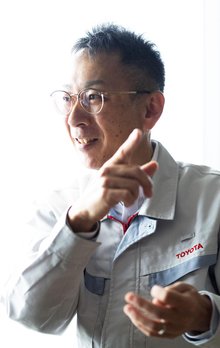
Takero Kato
BEV Factory President