Semi-Solid-State & Sodium Ion: Top EV News This Week

27 April
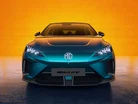
MG Motor, owned by Chinese SAIC Motor, is the first manufacturer globally to achieve mass production of semi-solid-state batteries.
It plans to bring these to the European market inside the MG4 EV Urban range by the end of 2026.
Semi-solid-state batteries are a step towards all-solid-state batteries. Other carmakers, such as Toyota, have plans to make all-solid-state EV batteries, which offer longer range, higher output and longer life compared to traditional liquid electrolyte batteries.
28 April
CATL, the world's largest manufacturer of lithium-ion EV batteries, has signed an agreement with HyperStrong to build sodium-ion batteries.
This comes alongside the company's announcement with Changan of the first mass-production passenger vehicle equipped with sodium-ion batteries.
Sodium-ion batteries are an emerging battery technology with potential cost, safety, sustainability and performance advantages over current commercialised lithium-ion batteries.
27 April
Chinese EV maker NIO is developing its own custom AI chips to reduce dependence on suppliers like NVIDIA.
The company is building its chips for EVs under a subsidiary company Shenji, NIO CEO William Li said according to Reuters.
Shenji received an additional US$330m in funding from Chinese investors earlier this year.
NIO’s custom chips are used in its EV models on technology like advanced vehicle assistance, with NIO’s NX9031 chip set to launch in the Onvo L90.
28 April
Rivian CEO RJ Scaringe earned US$403m in total compensation during the past year, according to a company filing.
This places him among the highest paid auto executives in the US.
RJ received more than US$373m in stock options and US$26.6m in stock awards as part of a board-agreed deal in 2025, in addition to his US$1.1m salary and US$1m bonus, according to the filing.
His salary is set to double to US$2m in 2026 and his maximum bonus will rise to US$1.7m, the filing states.
Directors at Rivian justified the package by saying it was "entirely at-risk" and that the shares would only be unlocked following the "achievement of significant stock price and financial improvements".
29 April
Polestar has cut emissions per vehicle sold by 31% since 2020 as the Swedish carmaker pursues a goal to manufacture a net zero car without offsets by 2035.
The reduction comes amid growing attention to a persistent challenge in electrification.
While EVs produce lower lifecycle emissions than internal combustion engines, their manufacturing processes still generate substantial carbon output.
Steel and lithium extraction ranks among the most carbon-intensive activities in automotive supply chains.