
How has Polestar's SUV Broken an EV Guinness World Record?
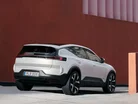
Polestar’s long range single motor Polestar 3 has set a Guinness World Record by travelling 935.44 km (581.3 miles) on a single battery charge across public roads in the UK.
The fully electric SUV achieved this in unmodified production form.

Endurance behind the wheel
The record-setting journey took 22 hours and 57 minutes, with professional efficiency drivers Sam Clarke, Kevin Booker and Richard Parker sharing driving duties in three-hour rotations to remain alert throughout the distance.
Despite encountering mixed weather including periods of rain, the Polestar 3 recorded an energy consumption rate of 12.1 kilowatt-hours per 100 km (19.5 kWh per 100 miles).
The electric SUV surpassed its own official WLTP (Worldwide Harmonised Light Vehicle Test Procedure) range figure of 706 km (438 miles), reaching 935.44 km with 20% of its battery still intact.
Even after the battery display showed 0%, the vehicle covered an additional 12.8 km (8 miles) before stopping at a charging point.
The record was adjudicated by Paulina Sapinska, a Guinness World Records judge, with independent verification provided by Webfleet.
Tyres fitted were standard Michelin Sport 4 EVs on 20-inch wheels.
“We are very proud to say we have a world record holder in the Polestar family,” says Michael Lohscheller, CEO of Polestar.
“This official Guinness World Record for range is another proof point that Polestar 3 is setting new standards.
“We will continue to push the boundaries of technology and electric performance.”
Battery range meets sustainability targets
“While the drivers pushed the Polestar 3 to the boundaries of its range capability, it goes to show how battery range has improved exponentially over the past few years,” explains Matt Galvin, Managing Director at Polestar UK.
This outlook ties into the broader Polestar mission, which aims to reduce environmental impact across the full lifecycle of its vehicles.
The company's Polestar 0 Project, launched in 2021, seeks to produce a completely climate neutral car by 2030.
Unlike conventional offsetting schemes that compensate for emissions, the Polestar initiative focuses on removing them entirely, spanning raw materials, production and end-of-life treatment.
Polestar also embeds principles of circular design into its engineering.
More than 85% of the materials used in the Polestar 2 and Polestar 4 are recyclable.
The brand uses carpets made from fishing nets, textiles from recycled PET bottles and upholstery called MicroTech, created from bio-attributed materials.
Transparency and traceability in EV production
Polestar aims to maintain transparency around environmental impact by publishing Life Cycle Assessments (LCAs) for each vehicle model.

These reports allow customers to see cradle-to-gate emissions, from production to point of sale, along with how recyclable components are and suggestions for reducing impact via renewable charging.
The Polestar 4 Long range Single motor model currently holds the company’s lowest cradle-to-gate footprint at 19.8 tonnes of CO₂ equivalent (tCO₂e).
The Polestar 2’s lifecycle emissions have also been reduced by 3 tonnes since its release, aided by a production facility powered entirely by solar energy.
To improve raw material sourcing, Polestar uses blockchain technology to trace components such as cobalt, lithium, nickel and mica, which are essential in battery manufacturing.
Supplier audits and the use of renewable energy during battery production form part of its strategy to uphold environmental and ethical standards.