
BYD: How AI Is Driving EV Manufacturing Success
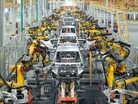
AI is increasingly becoming a cornerstone of the electric vehicle manufacturing industry, enabling companies to scale production and enhance efficiency at a remarkable rate.
Chinese manufacturer BYD serves as a prominent case study in this technological transformation, using AI-powered systems to underpin its rapid global expansion and solidify its position in competitive markets like the United Kingdom.
This approach has supported BYD’s growth from producing 500,000 vehicles in 2017 to a projected four million by 2024.
BYD's performance in the UK, where it sold 11,271 vehicles in September, a substantial increase from the 1,150 units in the same month last year, could show the effectiveness of its strategy. This growth has given BYD a 3.6% market share in the UK.
"We want to see steady growth, and we want people to see we are a technology company," says Bono Ge, Country Manager for the UK & Ireland at BYD. Bono has also stated BYD's intention to introduce its ultrafast charging technology to the UK and Europe next year.
AI-powered quality control
A key factor in BYD's manufacturing process is the extensive deployment of AI for quality control, particularly in battery production.
BYD has reported a 40% reduction in battery defects and a 20% improvement in average battery lifespan.
These gains are attributed to AI-powered systems that analyse real-time sensor data from production lines.
Advanced neural networks monitor for microscopic deviations in material composition and electrode alignment, which are often missed by manual inspection methods.
At plants like BYD's Xi'an facility, operations are approximately 97% autonomous, utilising AI-powered robotics, automated guided vehicles and intelligent warehousing.
Furthermore, BYD has developed digital twins of its battery manufacturing environments, allowing engineers to simulate and optimise production without physical testing.
Vertical integration and in-house components
BYD’s competitive edge is sharpened by its vertical integration strategy.
BYD manufactures about 75% of its vehicle components internally, including its Blade Batteries, electric motors and power electronics.
This contrasts with an estimated 46% in-house component share for Tesla's China-produced Model 3, according to analysis by investment bank UBS.
"The battery is up to 40% of an EV's cost,” says Wang Chuanfu, CEO of BYD. “Our in-house control over this is our competitive edge."

This strategy extends to the development of bespoke AI hardware. BYD's subsidiary BYD Semiconductor is creating AI chips designed to compete with offerings from Nvidia and Horizon.
These chips reportedly achieve 80 trillion operations per second, potentially moving BYD closer to purely domestic production.
To support this, BYD has also partnered with semiconductor manufacturers TSMC and MediaTek to develop a 4-nanometre smart cockpit chip.
An internal analysis of the firm’s manufacturing processes suggests that "a BYD car comparable to the Model 3 costs 15% less than production in Tesla's Shanghai gigafactory."
Data ecosystem and intelligent driving
Beyond the factory floor, AI is integral to the vehicles themselves. In February, BYD launched its ‘Intelligent Driving for All’ initiative, which equips all new vehicles with advanced driver assistance systems as standard.
The strategy uses the ‘God's Eye’ system, a three-tiered platform that is deployed across all vehicle price points.
This approach differs from competitors like Tesla, whose Full Self-Driving system is an optional extra. By making these features standard, BYD can gather vast amounts of data from its entire fleet.
"If the data from one car is a drop of water, BYD possesses an ocean," Wang said at the technology's launch event.
Despite its technological advancements and market growth, BYD faces regulatory hurdles in Western markets.
The EU has imposed a 17.4% tariff on all BYD vehicles on top of existing duties on Chinese goods.
Meanwhile, some legacy automakers in Europe face challenges. "Europe has opened the door to cheap and impressive Chinese vehicles that, if we're not careful, are going to take over", says Lynn Calder, CEO of Ineos Automotive.
Her comments highlight the pressure that AI-powered manufacturing and competitive pricing from companies like BYD are placing on the established automotive industry.
Company portals





Executives
Bono Ge
Country Manager for the UK & Ireland
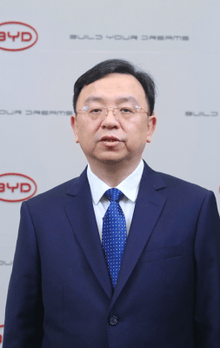
Wang Chuanfu
CEO