
ID. Buzz: Volkswagen and Uber Roll Out Autonomous EV taxis
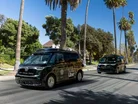
Volkswagen is expanding its role in electric mobility with the autonomous version of its ID. Buzz — a fully electric minivan designed for urban ride-hailing.
In partnership with Uber, the company is already rolling out the robotaxi for pilot testing in Hamburg and preparing for a 2026 commercial launch in Los Angeles.
This marks a new phase for Volkswagen’s electric vehicle strategy. Rather than adapting existing platforms, the ID. Buzz autonomous vehicle (AV) is being built directly on the company’s Modular Electric Drive (MEB) architecture. The result is a purpose-designed EV for shared, autonomous urban transport.
The vehicle pairs a 91-kWh battery with up to 234 miles of range and rapid charging that takes it from 10% to 80% in just 26 minutes.
With both rear-wheel and all-wheel drive variants producing up to 335 horsepower, the minivan is built for performance and practicality.
Its construction includes recyclable materials and a drag-reducing design, consistent with Volkswagen’s low-emissions goals.
Building a robotaxi safe for the streets
The ID. Buzz AV is already operating in Hamburg with around 30 vehicles on the road under Volkswagen’s mobility brand Moia. These units are supervised by safety drivers, helping test real-life scenarios before full autonomy is introduced.
“Autonomous driving is no longer a dream of the future – by 2030, it will change the everyday lives of millions of people in Europe,” says Christian Senger, Member of the Board for Fully Autonomous Mobility and Transport at Volkswagen Commercial Vehicles & CEO of ADMT GmbH. “At the same time, our solution opens up a new business area for the German automotive industry: physical AI applications used for the common good.”
Volkswagen’s approach includes a full suite of in-house technology supported by Mobileye’s autonomous driving platform. The ID. Buzz AV is equipped with 13 cameras, 9 LiDARs and 5 radars, feeding five gigabytes of data per second into its perception system. Unlike many other AV solutions, it operates without GPS dependence, allowing greater flexibility in complex or signal-poor areas.
By producing the AV version on its main manufacturing lines, Volkswagen improves both cost-efficiency and sustainability. It avoids the retrofitting practices used by many competitors and keeps emissions lower through integrated design and production.
“The ID. Buzz is Volkswagen’s next iconic vehicle for North America,” says Pablo Di Si, Former President and CEO of Volkswagen Group of America. “It serves as our brand halo in the US and Canada and embodies the best of Volkswagen: distinctive design, fun to drive, loaded with technology, incredibly spacious and sustainable.
“It also honors the past by evoking the classic Minibus while embracing the future of our industry. I’d like to thank the leaders and employees throughout North America and Europe for all their hard work in getting this exciting new vehicle to market.”
Rolling out in Los Angeles
In 2026, Volkswagen and Uber will launch the ID. Buzz AV in Los Angeles. The service will offer on-demand ride-pooling as well as solo ride options, allowing customers to tailor their experience. Volkswagen plans to operate the vehicles without safety drivers by the end of that year, with similar plans for European cities in 2027.
The shared Uber-Moia platform is designed to make autonomous EV transport accessible and secure. Features include:
- Smartphone-based, NFC keyless entry
- Cabin cameras for passenger and object monitoring
- AI-assisted safety features with remote communication
- Passenger-accessible emergency stop functions
These additions are aimed at making rides safer, particularly for women and vulnerable passengers travelling at off-peak hours.

Lower emissions, shared costs
By deploying the ID. Buzz AV, Volkswagen is reducing emissions and expanding its EV footprint.
The shift from combustion-powered taxis to battery-powered robotaxis supports city-level sustainability goals while addressing demand for cleaner, more flexible mobility.
Through its partnership with Uber, Volkswagen is also able to share infrastructure and development costs across its wider brand portfolio — including Audi and Porsche — strengthening the economic case for autonomous EVs.
This collaboration demonstrates how autonomy and electrification can work in tandem to meet both environmental and operational targets. Volkswagen’s decision to invest in a fully electric, factory-built robotaxi marks a tangible step toward mass-market EV adoption in public transport.