
A Look at Toyota’s New Range of Sustainable Vehicles
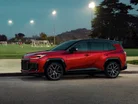
Toyota is pursuing an ambitious rollout of electrified vehicles across hybrid, plug-in hybrid and fully electric platforms.
The Japanese automotive giant, long synonymous with hybrid technology through its iconic Prius, is now hoping to position itself as the industry's most comprehensive provider of alternative powertrains.
With 32 electrified models currently available across its Toyota and Lexus brands in the US, the company claims to offer more electrified options than any other manufacturer.
Hybrid heritage meets modern demands
Toyota's hybrid credentials stretch back more than two and a half decades, with the Prius serving as the brand's sustainable flagship since its introduction in 1997.
This extensive experience in hybrid technology has given Toyota a big head start as the industry at large begins to pivot towards cleaner alternatives to internal combustion engine vehicles.
In the first quarter of 2025, Toyota sold 112,608 EVs, representing nearly half of the company's total sales in the US market.
With fuel prices fluctuating and environmental consciousness increasing, Toyota’s sustainable range is appealing to customers more and more each year.
Toyota’s belief in plug-in hybrids
One of Toyota's biggest focuses has been expanding its plug-in hybrid electric vehicle (PHEV) offerings, which it sees as being the ideal bridge between conventional hybrids and fully electric vehicles.
The company wants PHEVs to account for approximately 20% of US sales by 2030, which would be a substantial increase from its current proportion at 2.4%.
This expansion reflects Toyota's belief that PHEVs offer the perfect compromise for consumers concerned about range anxiety whilst still wanting to reduce their environmental impact.
The recently updated RAV4 PHEV now offers 50 miles of zero emission driving, compared to 42 miles in the previous generation.
However, this incremental improvement does raise questions about whether the speed of Toyota's development will be able to satisfy increasingly demanding consumers.
Toyota’s grand plan
Alongside its PHEV expansion, Toyota is also preparing to launch a comprehensive range of battery electric vehicles in the US market.
The updated bZ electric SUV (previously known as the bZ4X) will arrive at car dealerships later in 2025, promising bigger range, a new style and compatibility with Tesla's Supercharger network through an NACS port.
The more compact C-HR and the rugged bZ Woodland are also scheduled for a 2026 launch around the world.
By mid-2027, Toyota plans to offer seven fully electric vehicles across its Toyota and Lexus brands, including an electric version of the Lexus ES saloon and a three-row electric SUV.
“We’ll sell a little bit more every year and grow with the market,” says Cooper Ericksen, Senior Vice President at Toyota Motor North America.
“But we have to think about how many Canada will use, how many the US will use, and we can then export to other global destinations.”
Manufacturing, infrastructure, investment
Manufacturing is a huge part of Toyota’s plans going forward.
The company's new North Carolina battery facility, which spans seven million square feet (equivalent to 121 football pitches), will be Toyota's first in-house battery production plant outside of Japan.
Once it is fully operational, the facility will produce more than 30 GWh every year – enough for around 800,000 hybrid, 150,000 PHEV and 300,000 EV batteries.
The factory features 14 production lines, with 10 dedicated to EV batteries and four for hybrid applications, with hybrid production expected to commence next month.

The strategic gamble
Toyota's is taking a calculated risk. Spreading development resources across multiple technologies rather than focusing exclusively on battery electric vehicles (BEVs).
David Christ, Vice President of Toyota Motor North America, told CNBC that Toyota’s approach was like a baseball game, where it had its “bases loaded”.
“We’ve got ICE, we’ve got hybrid, we’ve got plug-in hybrid, we’ve got EV. So, our chances of being successful in scoring runs is just a lot better than if you’re really overly committed to any one of those power trains,” he explained.
Right now, Cooper believes that BEVs are “cannibalising” the Toyota’s volume, but by having multiple different offerings, the company has something akin to strength in numbers.
However, this strategy can also swing the other way.
It risks diluting focus and resources at a time when competitors are making substantial investments in pure EV technology.
Explore the latest edition of EV Magazine and be part of the conversation at our global conference series, Sustainability LIVE.
Discover all our upcoming events and secure your tickets today.
EV Magazine is a BizClik brand