
This Week's Top 5 Stories in EV

24 June
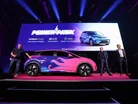
Octopus Energy and BYD have launched the UK's first vehicle-to-grid (V2G) bundle, combining a BYD Dolphin EV, a Zaptec Pro bi-directional charger and Octopus Energy’s smart Kraken tariff.
Unveiled at the 2025 Energy Tech Summit, the "Power Pack Bundle" allows EVs to store and return electricity to the grid, enabling free home charging and potential annual savings of up to £1000 (US$1,400).
This innovation supports grid resilience by reducing peak demand and promotes cleaner, more affordable transport.
Previously hindered by costly equipment, V2G is now more accessible thanks to BYD’s built-in technology and Octopus’s leasing offer.
The partnership also includes Motability Operations to ensure inclusion for disabled drivers.
Leaders from Octopus, BYD and Motability have hailed the scheme as a significant step in democratising EV and energy access.
The initiative positions EVs as active players in the renewable energy system, redefining their role beyond transportation.
23 June
General Motors (GM) is accelerating its EV strategy, narrowing the gap with Tesla as US consumers increasingly opt for larger, more affordable EVs.
With new leadership under Chief Sustainability Officer Cassandra Garber and a rapidly expanding model lineup across Chevrolet, Cadillac, GMC Hummer and Buick, GM has become the second-largest EV manufacturer in the US.
EV sales rose 183% year-on-year in Q1 2025, driven by popular models like the luxury Cadillac Escalade IQ and the affordable Chevrolet Equinox EV.
GM is leveraging price advantages and brand appeal as Tesla faces declining sales and reputational challenges linked to CEO Elon Musk.
The company’s battery innovation, led by Kurt Kelty, is also key to its growth, with Ultium Cells and a North American supply chain helping reduce costs and improve range.
GM now offers full-size electric trucks with up to 492 miles of range and invests US$7bn annually in US R&D.
With strong momentum, GM is emerging as a serious competitor in the global EV race.
26 June
Electric heavy goods vehicles (HGVs) took centre stage during London Climate Action Week 2025, highlighting their crucial role in achieving net zero and transforming freight transport.
While electrification of heavy-duty vehicles still lags behind light-duty ones by 6–8 years, companies like Amazon are accelerating the shift with major EV truck orders, driven by improving performance and falling battery costs.
Think tank Carbon Tracker projects the market for new battery electric HGVs could reach US$300bn by 2035, suggesting a tipping point is approaching for mass fleet transitions.
However, traditional manufacturers face mounting pressure, particularly from Chinese firms like BYD, which are already dominating the sector.
Regulatory pressures, supply chain capacity and pricing will determine the speed of adoption.
As Ben Scott of Carbon Tracker explains, HGVs make up just 3% of vehicles on the road but contribute 30% of road transport emissions, making them a strategic focus for decarbonisation.
For fleet operators, the transition hinges on the total cost of ownership and practical functionality – once these align, the economic case for electric HGVs becomes clear.

26 June
Tesla's new robotaxi service has drawn scrutiny after footage emerged of the autonomous vehicles appearing to break traffic rules during their public debut in Austin, Texas.
The US National Highway Traffic Safety Administration (NHTSA) is in contact with Tesla to investigate reports of erratic behaviour, including abrupt stops, lane swerves and speeding.
The launch features a small fleet with safety drivers, restricted to select routes and weather conditions and excludes under-18 passengers.
Compared to rivals like Waymo and Zoox, Tesla’s robotaxi rollout is limited in scope and technological maturity.
While competitors use LiDAR and radar for sensing, Tesla relies solely on cameras, making its approach more cost-effective but potentially less robust.
The company is still far behind in autonomous mileage and public road testing, raising concerns about safety and readiness.
Regulatory oversight is expected to intensify as Tesla attempts to scale its driverless ambitions.
25 June
Electric vans are fast becoming the backbone of modern fleets, combining zero-emission performance with practical features tailored for business.
This week’s ranking spotlights 10 standout commercial electric vans of 2025, evaluated across five key areas: payload, towing capacity, charging speed, design versatility and fleet readiness.
From city-friendly compact models to long-range workhorses, these vans offer serious capability with lower running costs and environmental impact.
Whether optimised for parcels, passengers or tools, these vehicles show how electric mobility is transforming commercial transport across industries.
In this week's run down, EV Magazine highlights the top commercial electric vans powering the shift to cleaner logistics in 2025.
Explore the latest edition of EV Magazine and be part of the conversation at our global conference series, Sustainability LIVE.
Discover all our upcoming events and secure your tickets today.
EV Magazine is a BizClik brand