Tesla Faces EV Sales Dip as Rivals Close the Gap
Tesla’s grip on the electric vehicle (EV) market is loosening.
For a company that once delivered quarterly numbers that sent shockwaves through the auto industry, the Q2 2025 figures paint a different picture.
Tesla delivered 384,112 vehicles – just shy of expectations and marking its largest drop in quarterly deliveries on record.
But even as the numbers fell, Tesla’s share price climbed.
The market, it seems, is more interested in what comes next: solar panels, energy storage, robotaxis and even humanoid robots.
But while Tesla chases its multi-sector ambitions, rivals are rapidly closing in on its lead in the EV space.
Tesla’s shifting focus leaves space for rivals
In early 2022, Tesla dominated the US EV market with nearly 75% share.
Fast-forward to 2025, and that number has dropped to 43.5%.
While still in the lead, the gap has narrowed dramatically. Companies like General Motors (GM) are taking advantage.
“We’re now the #2 EV company in the US, thanks to the dozen EV models we offer across the Chevrolet, Cadillac, GMC Hummer and Buick brands,” says Cassandra Garber, Chief Sustainability Officer at General Motors.
“I love our vehicles! You need to experience GM’s incredible advancements in design and technology.”
GM’s expansion in EV offerings shows the broader shift across the industry.
What was once a niche product line for traditional manufacturers is now front and centre.
Chinese companies are also accelerating.
BYD led the global EV market in 2024 with a 22.2% share, leaving Tesla behind at 10.3%.

Solar, batteries and automation in the spotlight
While competitors push out EVs at scale, Tesla appears more focused on building a wider ecosystem of energy and AI solutions.
Its solar and battery ventures now carry increasing importance.
After acquiring SolarCity in 2016 for US$2.6bn, Tesla moved to become a vertically integrated sustainable energy firm.
In 2024, Intersect Power signed a 15.3GWh battery storage deal with Tesla to support its solar and storage project portfolio.
According to Mike Snyder, Vice President of Energy and Charging at Tesla: “Intersect continues to be an exceptional partner and their development expertise combined with the plug-and-play nature of Tesla’s vertically integrated technology enables the speed and scale needed to enhance grid resilience and support greater renewables integration.”
This infrastructure work complements Tesla’s broader sustainability mission but also signals a pivot from direct EV competition to a wider technology platform.
Energy generation, storage and mobility are being bundled together under the Tesla brand – but whether that comes at the cost of EV leadership is an open question.
Robotaxis and humanoid bots turn heads – and raise eyebrows
Tesla’s move into autonomous driving has also been watched closely.
In June 2025, it launched its own robotaxi fleet in Austin, Texas.
Unlike competitors such as Waymo (Google) and Zoox (Amazon), Tesla relies primarily on in-vehicle cameras rather than radar or LiDAR to guide its cars.
The result? Mixed reception.
Social media videos surfaced of Tesla robotaxis appearing to disobey traffic laws.
The US National Highway Traffic Safety Administration (NHTSA) has stepped in to evaluate.
It said it "does not pre-approve new technologies or vehicle systems", instead requiring that manufacturers certify their own compliance with safety regulations.
Meanwhile, Tesla’s ambitions don’t end with EVs or robotaxis.
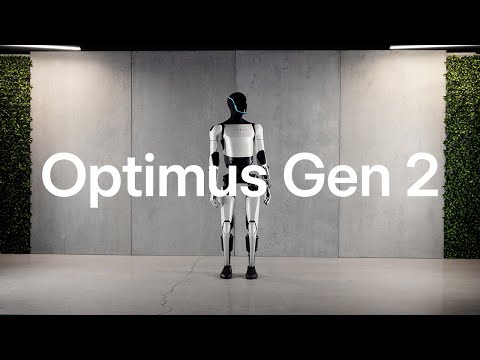
Enter Optimus – the Tesla Bot. When announced in 2021, the humanoid robot was pitched as a machine designed to take on tasks that are unsafe, repetitive or just plain boring.
The robot is powered by the same AI system Tesla is developing for its cars.
Elon Musk, Tesla’s CEO, claims the robot may one day surpass the company’s vehicle business in value.
It’s a bold claim, especially at a time when core vehicle sales are under pressure. But Tesla continues to bet that its advantage lies in AI and integration, rather than sheer EV volume.
A turning point in EV leadership
Tesla’s identity has always been tied to the electric car revolution.
But the latest drop in deliveries, paired with a surge of competition at home and abroad, suggests a shifting dynamic.
Whether the company can retain its edge while diversifying so widely remains to be seen.
What’s clear is that the rest of the industry is catching up – and fast.
As Tesla reaches further into autonomy, solar energy and robotics, the race for EV leadership is no longer a one-horse contest.