
Ferrari's First BEV & Toyota's CEO: This Week's Top EV News

9 February
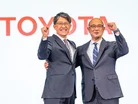
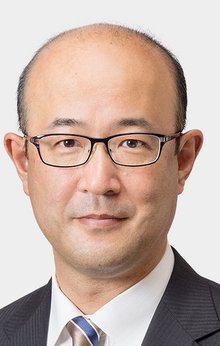
Toyota's CFO Kenta Kon has been named as the company's next President and CEO, set to take on the role from 1 April 2026.
The announcement comes as the Japanese automotive giant navigates a period of significant transformation, with evolving market conditions and shifting industry dynamics at play.
According to the company, the changes are “intended to accelerate management decision-making in response to changes in the internal and external environment and to establish a structure that will enable Toyota to fully carry out its mission of contributing to society through industry."
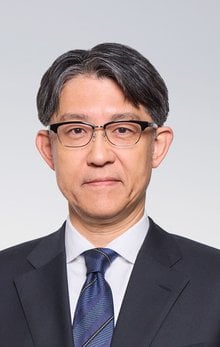
Koji Sato, who has held the CEO position since February 2023, will transition to Vice Chairman and take on the newly created role of Chief Industry Officer.
10 February
Ferrari has revealed the interior of its first all-electric vehicle, named the Luce.
In collaboration with LoveFrom, a firm led by Sir Jony Ive of Apple fame and industrial designer Marc Newson, work on the car has been ongoing for five years.
In Italian, “luce” means light or illumination, which the company says “signifies the brand’s unwavering focus on the future” and is a new naming strategy for an “important addition” to its range.
The interior is packed with aluminium, made using 100% recycled alloy, and glass.
While the car’s exterior will not be revealed until May, its insides say a lot about Ferrari’s vision for EVs.
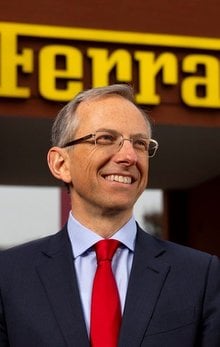
Benedetto Vigna, Ferrari’s CEO, says in a video: “If you want to be a leader, you have to be bold. You don’t have to be afraid to explore new paths."
11 February
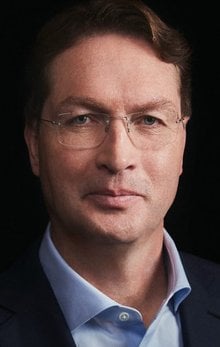
Mercedes-Benz CEO and ACEA President Ola Källenius is urging EU leaders to address the disconnect between ambitious climate goals and the current state of the global EV market.
In a letter to European policymakers, Ola indicated that while the industry remains committed to an electric future, the existing regulatory-only approach could be failing to generate consumer demand.
Addressing the European Commission and Parliament, Ola drew a comparison between the emergence of the automobile and today's transition to electrification.
He observed that in the 1880s, the car replaced the horse not through state mandates, but because it offered a superior solution.
11 February
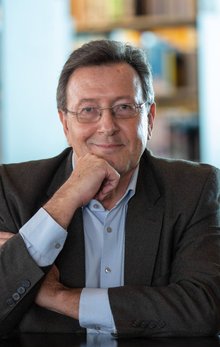
When Carlos Duarte, Chief Scientist at E1 and Distinguished Professor of marine science at King Abdullah University of Science and Technology, was first approached about helping to build a new powerboat series, his instinct was to say no.
"I never thought that I would be working on sports, particularly motor sports, because I do not really enjoy much noise and fumes and actually burning fuel for fun," Carlos says.
Electric propulsion changed the equation for him. "Electric motor sports have a different value proposition," he says, because they allow boats to operate "without introducing chemical pollution and noise that comes from combustion engines".
While electric vehicles have already become a familiar part of the energy transition on land, the marine sector tells a different story. Carlos points out that electric mobility on water is "lagging behind 15 years" and still routinely cedes rivers, lakes and coasts to internal combustion.
12 February
Each EV on the road, every boiler being replaced by a heat pump and every AI search contributes to growth in electricity demand that is beginning to challenge the capacity of the world's ageing power infrastructure.
The IEA's Electricity 2026 report says that global electricity demand could expand by more than 3.5% annually in the next five years.
This rate of growth could mean electricity demand expands at least 2.5 times faster than overall energy demand during this timeframe.
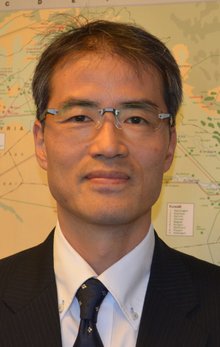
"At a moment of significant uncertainty across energy markets, one certainty is that global electricity demand is growing much more strongly than it did over the past decade," says Keisuke Sadamori, the IEA's Director of Energy Markets and Security.
Company portals





Executives
Benedetto Vigna
CEO
Carlos Duarte
Chief Scientist
Keisuke Sadamori
Director of Energy Markets & Security
Kenta Kon
Chief Financial Officer and Operating Officer at Woven by Toyota
Koji Sato
CEO
Ola Källenius
CEO