
IEA: Power Grids Need 50% More Investment to Handle EVs
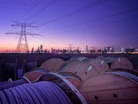
Each EV on the road, every boiler being replaced by a heat pump and every AI search contributes to growth in electricity demand that is beginning to challenge the capacity of the world's ageing power infrastructure.
The IEA's Electricity 2026 report says that global electricity demand could expand by more than 3.5% annually in the next five years.
This rate of growth could mean electricity demand expands at least 2.5 times faster than overall energy demand during this timeframe.
"At a moment of significant uncertainty across energy markets, one certainty is that global electricity demand is growing much more strongly than it did over the past decade," says Keisuke Sadamori, the IEA's Director of Energy Markets and Security.
"In this Age of Electricity, the increase in global power consumption through 2030 is set to be equivalent to adding more than two European Unions."
According to the IEA, the increase in electricity consumption can be linked to several major developments across the global economy.
The organisation identifies three primary drivers of growth:
- The EV sector: ongoing uptake of electric vehicles
- Industrial electrification: the widespread adoption of electric technologies in industry
- The AI sector: the expansion of artificial intelligence and data centres.
While emerging and developing economies remain the principal driving force behind demand growth, the world's largest economies are witnessing rising consumption following 15 years of stagnation.
These developed markets could contribute to a fifth of the total increase in power demand through to 2030.
Investment needed in grids
The IEA says that investments in electricity grids must increase by 50% by the turn of the next decade to address this demand.
The transformation faces a considerable infrastructure challenge, however.
More than 2,500 gigawatts (GW) worth of projects, including renewables, storage and data centres, are currently stalled in connection queues across the globe.
"This surge in demand and shift in the power mix underscores the urgent need for expanded grid infrastructure and greater system flexibility to integrate capacity and maintain reliable, resilient systems," says Brendan Reidenbach, Energy Analyst at the IEA.
The IEA says deploying grid-enhancing technologies and implementing regulatory reforms could unlock up to 1,600 GW of queued projects in the near term.
These measures could enable more flexible grid connections and usage, allowing existing infrastructure to be used more efficiently.
Renewables and nuclear expansion
The IEA's report identifies potential in the rapid growth of renewables.
By 2030, renewables and nuclear are together set to generate 50% of global electricity, up from 42% in 2025.
Solar PV growth is driven by record deployment of capacity, nuclear output has risen to a new record level and coal-fired generation could lose ground, returning to 2021 levels by the end of the decade.
However, natural gas-fired output is expected to grow, supported by rising demand in the US and a shift from oil to gas in the Middle East
Consequently, global carbon dioxide emissions from electricity generation are expected to remain roughly flat between 2026 and 2030.

System flexibility
"Meeting this demand will require annual investment in grids to rise by 50% by 2030," Keisuke says.
"Expanding flexibility will also be crucial as power networks continue to evolve – so will a strong focus on security and resilience."
Markets including California, Germany, Texas, South Australia and the UK have all experienced strong growth in capacity deployment.
However, the report highlights continuing challenges.
Household electricity prices in many countries have risen faster than incomes since 2019, placing pressure on industries and businesses
Power systems face rising risks from ageing infrastructure, extreme weather events, cyberthreats and other emerging vulnerabilities
Company portals

Executives

Brendan Reidenbach
Energy Analyst
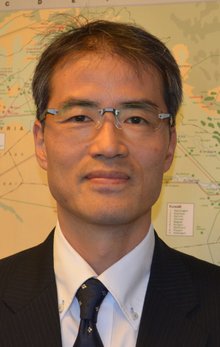
Keisuke Sadamori
Director of Energy Markets & Security