

Electric cars have long battled a reputation of being worthy but dull.
For lots of old school motorheads, the electronic hum of an EV just doesn't feel the same as the roar of a gas-fired engine, while many drivers believe that EVs simply cannot replicate the acceleration and raw power of an internal combustion engine.
In reality, today’s best electric sports cars deliver the same heart‑thumping speeds and razor sharp handling as their petrol‑burning predecessors, only with instant torque and a silent ferocity.
The drama is still very much there – what has changed is the context. These machines channel their excess through cleaner drivetrains, smarter aerodynamics and batteries that grow more efficient every year.
From affordable thrills to otherworldly hypercars, this week's Top 10 proves that you can have sustainability and speed, responsibility and ridiculous performance – and that the future of driving passion is very much electric.
10. MG4 XPower
CEO: Xinyu Liu
HQ: Shanghai, China
Year launched: 2023 (XPower variant)
Notable feature: Dual‑motor “hyper‑hatch” all‑wheel‑drive performance at an accessible price
Price: From around US$42,000
The MG4 XPower is the people’s electric sports car, squeezing dual‑motor, all‑wheel‑drive punch into a compact hatchback that costs about the same as many humdrum family EVs.
With power to humble classic petrol hot hatches and a playful chassis, it proves that accessible performance did not die with the manual gearbox.
Keen pricing and everyday practicality mean it can moonlight as a sensible commuter during the week, then deliver serious back‑road thrills the moment the road opens up.
9. Alpine A290
CEO: Philippe Krief
HQ: Dieppe / Boulogne‑Billancourt, France
Year launched: 2025
Notable feature: Lightweight, driver‑centric hot‑hatch EV philosophy
Price: From around US$41,000
Alpine built its reputation on light, agile sports cars, and the A290 is its compact electric love letter to that heritage.
Instead of chasing silly power figures, it focuses on low mass, crisp steering and playful balance, channelling the spirit of a classic hot hatch into a battery‑powered future.
Its compact footprint makes it ideal for twisty European roads, while its distinctive styling and motorsport‑inspired cabin remind drivers that fun in an EV comes from feel as much as speed.
8. Audi RS e‑tron GT
CEO: Gernot Döllner
HQ: Ingolstadt, Germany
Year launched: 2021
Notable feature: Grand‑touring luxury with supercar‑rivalling pace
Price: From around US$145,000
The Audi RS e‑tron GT is a four‑door coupé that blurs the line between luxury GT and out‑and‑out sports car.
Sharing much of its hardware with the Porsche Taycan, it delivers colossal straight‑line shove wrapped in Audi’s trademark refinement and interior quality.
Air suspension and sophisticated torque vectoring mean it can cross continents in comfort, yet still hunker down and carve corners with real authority. For drivers who want long‑legged electric performance rather than a track toy, it hits a very sweet spot.
7. Tesla Roadster (second generation)
CEO: Elon Musk
HQ: Austin, Texas, USA
Year launched: Announced 2017, expected 2026
Notable feature: Headline‑grabbing sub‑2‑second 0–60mph claims and extreme range targets
Price: From around US$200,000
Tesla’s second‑generation Roadster has become something of an electric legend before it even reaches full production, thanks to outrageous performance promises and eye‑catching design.
Claimed figures for acceleration and range border on science fiction, reinforcing Tesla’s talent for using numbers to redefine what a sports car can be.
While delays have turned it into a moving target, the very concept of a four‑seat EV that can rival the world’s quickest hypercars speaks volumes about how far electric performance has come – and where it might go next.
6. Hyundai Ioniq 5 N
CEO: José Muñoz
HQ: Seoul, South Korea
Year launched: 2024
Notable feature: Playful software‑driven “ICE‑like” sound and shift simulation layered onto serious chassis tuning
Price: From around US$75,000
The Ioniq 5 N takes Hyundai’s retro‑cool EV and turns it into a full‑blown performance icon.
Engineers have given it stiffer underpinnings, stronger brakes and elaborate software tricks, including simulated gearshifts and engine sounds to deliver the theatre some enthusiasts miss.
Crucially, it is not all gimmickry: the car grips hard, responds sharply and feels at home both on a B‑road and a circuit. It shows how software can inject character into an EV, rather than sanding it away.
5. Nissan Ariya Nismo
CEO: Ivan Espinosa
HQ: Yokohama, Japan
Year launched: 2024
Notable feature: Nismo‑tuned dual‑motor powertrain and aero package in a practical crossover body
Price: From around US$50,000
The Ariya Nismo represents Nissan’s attempt to bring its Nismo performance brand into the electric age, fusing crossover practicality with serious dynamic intent.
Using beefed‑up motors, a sport‑tuned chassis and more aggressive bodywork, it offers a far sharper driving experience than the standard Ariya.
While taller and heavier than a traditional coupé, it still serves up strong acceleration and impressively tidy handling, hinting at what a dedicated electric sports coupé from the marque could become in the near future.
4. Lotus Eletre R
CEO: Feng Qingfeng (Lotus Group)
HQ: Hethel, Norfolk, UK (engineering) with global operations in Wuhan, China
Year launched: 2023
Notable feature: Active aerodynamics and advanced chassis tech delivering supercar‑level thrust in an electric SUV
Price: From around US$150,000
Purists might raise an eyebrow at a Lotus SUV, but the Eletre R bends physics and expectations alike. This is a high‑riding EV with supercar thrust, aided by sophisticated active aero and chassis systems that fight mass and height at every turn.
The cabin is plush and tech‑laden, yet the steering and body control still whisper “Lotus” when the pace rises. It stands as proof that the brand’s legendary focus on driver engagement can survive electrification and the shift towards larger, heavier vehicles.
3. Tesla Model S Plaid
CEO: Elon Musk
HQ: Austin, Texas, USA
Year launched: 2021 (Plaid version)
Notable feature: Tri‑motor all‑wheel‑drive layout delivering four‑figure horsepower and brutal acceleration
Price: From around US$90,000
The Model S Plaid is the car that made supercar owners glance nervously at silent family saloons.
With a tri‑motor setup delivering four‑figure horsepower and sub‑3‑second 0–60mph runs, it has redefined straight‑line performance in a package that can still haul kids and luggage.
Yet it is more than a drag‑strip party trick: low‑mounted batteries and all‑wheel drive give it secure, confident handling, while over‑the‑air updates continue to refine its dynamics.
Interior quality and steering feel divide opinion, but as an expression of EV firepower offered at prices far below hypercars, it remains a landmark machine.
2. Porsche Taycan Turbo GT
CEO: Oliver Blume (Porsche AG)
HQ: Stuttgart, Germany
Year launched: 2024
Notable feature: Track‑honed GT package with extreme performance and circuit‑ready cooling and chassis hardware
Price: From around US$260,000
The Taycan Turbo GT distils Porsche’s GT philosophy into an all‑electric four‑door, prioritising lap times and driver connection over mere straight‑line bragging rights.
It features uprated motors, clever cooling, aggressive aerodynamics and a chassis honed on some of the world’s toughest circuits.
The result is an EV that feels genuinely at home on track, with consistent braking, precise steering and repeatable performance rather than one‑shot glory runs.
It shows that electric sports cars can chase endurance, feedback and nuance – the qualities enthusiasts prize in the greatest petrol GTs – while still delivering ferocious pace.
1. Rimac Nevera
CEO: Mate Rimac
HQ: Sveta Nedelja, Croatia
Year launched: 2021
Notable feature: Quad‑motor torque‑vectoring hypercar platform with around 1,900hp and ultra‑low production run
Price: Around US$2.1m
The Rimac Nevera sits at the apex of electric performance, a hypercar that uses four individual motors and a massive battery to deliver staggering power and mind‑bending torque vectoring.
Its price, around US$2m, and tiny production run make it a technological halo rather than a common sight, but its influence is global: major manufacturers now partner with Rimac for EV know‑how.
The Nevera demonstrates how electric architecture enables levels of control and acceleration no combustion layout can match, turning raw data into a driving experience that feels almost beyond analogue comprehension – yet still points the way for future sports cars to follow.
The best part? It even makes the kinds of noises you'd expect from a traditional sports car.








Executives

Elon Musk
Tesla CEO

Gernot Döllner
CEO

Ivan Espinosa
CEO

José Muñoz
CEO
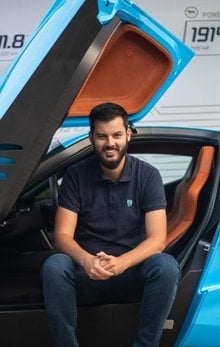
Mate Rimac
CEO

Oliver Blume
CEO

Philippe Krief
CEO

Qingfeng Feng
Director & CEO

Xinyu Liu
CEO