
Sony Honda Mobility: Analysing Why the AFEELA Was Scrapped
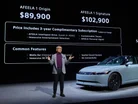
Established in 2022 to produce EVs, Sony Honda Mobility, has announced its flagship vehicle the AFEELA 1, has been scrapped.
Both the AFEELA 1 and its second prototype model that had been under development have been discontinued, following discussion between parent companies Sony and Honda.
The move comes as carmakers globally, including Ford and Rolls-Royce Motor Cars, have revised or altered plans to produce EVs.

The AFEELA
The AFEELA 1 was scheduled for a California launch in 2026, with deliveries in Arizona and Japan set for 2027.
It was scheduled to be released with a high-end sound system and optimised display capable of showing a variety of apps and entertainment content.
The vehicle was due to feature advanced driver assistance technology. Earlier models were set to be equipped with Level 2 driver assistance, intended to support travel from the departure point to the destination.
The company aimed to achieve Level 4 equivalent capabilities, transforming the in-vehicle space into a “drive-less” environment where occupants could enjoy entertainment.
Yasuhide Mizuno, Chairperson and CEO of Sony Honda Mobility, said when announcing the AFEELA 1: "Sony Honda Mobility strives to evolve relationships with people through intelligent mobility and revolutionise the travel experience."
Sony Honda Mobility had also partnered with Microsoft for the AFEELA for the creation of a personal agent to assist with mobility, using the Microsoft Azure OpenAI Service.
A prototype for a second generation vehicle, the AFEELA Prototype 2026, announced at the beginning of 2026, is also set to be scrapped.
Honda scraps North American EVs
The recent announcement follows Honda’s earlier announcement to scrap EV development and market launch for three EVs that had been planned for production in North America.
Honda described the move as a reassessment of its electrification strategy, in line with recent changes in the business environment.
Honda now expects to record losses in its consolidated financial results for the fiscal year ending March 2026.
Key issues Honda cites facing its business in the US are the unfavourable impact of changes in US tariff policies and the slowed expansion of the EV market.
The EV market
The US Market for EVs has slowed significantly, leading to multiple car manufacturers to cancel or revise plans for the release of EVs.
EV manufacturers have faced tariffs, revised fossil fuel regulations and the expiry of tax credits, which made EVs appealing to potential customers.
In his Executive Order “UNLEASHING AMERICAN ENERGY”, US President Donald Trump vowed to “to eliminate the ‘electric vehicle mandate’ and promote true consumer choice, which is essential for economic growth and innovation.”
In China, EV producers face competition from newer manufacturers who can leverage shorter production cycles.
According to the IEA, China remains the world’s electric car manufacturing hub, accounting for more than 70% of global production in 2024.
EV leaders won’t want to miss Sustainability LIVE: The US Summit, taking place at Navy Pier, Chicago, on April 21–22.
Co-located with Procurement & Supply Chain LIVE, the event unites senior decision-makers at a time when supply chains, sustainability and business performance are more interdependent than ever.
Secure your place now for The US Summit – group booking discounts available.
The future of Sony Honda Mobility
As a result of the decision, Sony Honda Mobility will issue full refunds of the reservation fees received for current holders of reservations for AFEELA 1 in California.
Honda and Sony say in a joint statement that they “intend to jointly announce SHM’s future direction, mid to long-term positioning as well as contributions to the future of mobility at the earliest possible opportunity.”