
Amazon, BYD and Volvo Face off in Heavy EV Fleet Race
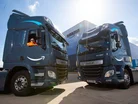
Electric heavy goods vehicles (HGVs) are at the centre of conversation during London Climate Action Week 2025, with attention turning to the role they play in reaching net zero targets and reshaping sustainable logistics.
As major companies weigh up both environmental and commercial gains, the shift from diesel to electric in freight transport is becoming harder to ignore.
The challenge is clear: how fast can the sector transition and who stands to gain or lose?

Electrification gap closing for heavy vehicle fleets
Electrification of heavy duty vehicles remains behind that of light duty ones, but the direction of travel is becoming clearer.
Think tank Carbon Tracker, based in London, reports that the heavy duty market trails light vehicles by six to eight years in electrification progress.
Still, this lag does not mean nothing is happening.
Amazon, for example, placed its largest ever order of electric trucks in early 2025.
That 200-truck deal is expected to help deliver 350 million packages per year once the vehicles are operational.
This reflects growing confidence in EV performance, range and reliability.
As battery costs fall and more companies start to weigh the total cost of ownership, industry experts suggest the commercial vehicle sector is heading toward a tipping point. Fleets may soon switch to electric en masse.
Carbon Tracker projects that by 2035, the global market for new battery electric heavy duty vehicles will reach around US$300bn.
The scope of refleeting, from replacing diesel trucks to adopting entirely new electric models, could be vast.
Fleet-wide transitions are increasingly attractive to logistics providers.
The prospect of regional regulation targeting emissions is only adding pressure.
Manufacturers that cannot decarbonise product lines may lose access to certain markets altogether.
Pressure builds on traditional manufacturers
One of the biggest risks in this transformation is to incumbent original equipment manufacturers (OEMs), particularly in Europe and the United States.
While longstanding players have dominated commercial vehicle production for decades, they face a serious challenge from new entrants, especially Chinese firms.
In 2024, BYD sold more than five times as many heavy duty electric vehicles as its closest competitor.
Most of these sales were within China, but expansion into Europe and other regions is expected.
This has the potential to reshape the global heavy vehicle market.
If OEMs in Europe and the US fail to increase their investment in this space, the growing lead held by manufacturers like BYD could be impossible to close.
The rate of adoption will hinge on pricing, supply chain capacity and the availability of viable models for diverse use cases.
Ben Scott, Head of Energy Demand at Carbon Tracker, says this sector offers both real emissions impact and a clear commercial route.
“The heavy duty vehicle sector doesn't get as many headlines as the passenger pathways, but it's certainly a sector that needs to rapidly decarbonise,” he says.
“It’s a sector which contributes around 30% towards road transport emissions, but only constitutes about 3% of vehicles on the road.
"So in terms of moving the needle for sustainability, you don't actually have to replace or remove that many vehicles to really have a meaningful impact on greenhouse gas emissions.”
Refleeting decisions come down to economics
While the long-term environmental case is compelling, short-term decisions remain tightly linked to economics.
Ben highlights that for most fleet operators, the main concerns are simple: cost and usability.
“Let's think about the customers here,” he says.
“It's fleet operators, and they can be anyone from a small family business who might own just a single truck, all the way up to the large logistics companies which are household names.
“Ultimately, when these businesses are making the decision to buy new trucks, they only really care about two things.

"One, what's the total cost of ownership of the vehicle over its life? And two, can they even use it? Does it have the same functionality as the diesel vehicle they’re used to?”
Right now, many battery electric trucks are still two to three times more expensive than comparable diesel models, which makes the initial investment a sticking point.
However, Ben believes this will not last forever.
“Once we see the total cost of ownership equation solved – it will be a no brainer for making the transition from diesel to electric trucks.”
Explore the latest edition of EV Magazine and be part of the conversation at our global conference series, Sustainability LIVE.
Discover all our upcoming events and secure your tickets today.
EV Magazine is a BizClik brand