Software-Driven Mobility: The Key to Recovery for Bosch

Bosch has identified software-defined mobility as the primary driver for its future growth, despite a challenging 2025 financial year.
The company reported mobility sales of US$63bn, a marginal increase of 0.3%. However, the transition to electric powertrains has created significant financial pressure, resulting in an annual cost gap of approximately US$2.9bn in the mobility sector.
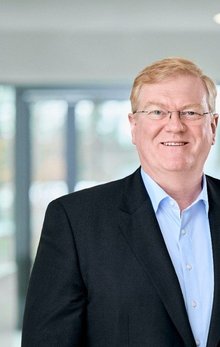
Stefan Hartung, Chairman of the Board of Management and CEO, said that while market momentum for software-driven mobility is currently restrained, it is expected to accelerate significantly in the coming decade.
Integrating motion management and vehicle dynamics
A core pillar of this strategy is Vehicle Motion Management, a software layer that provides central control for brakes, steering, the powertrain and the chassis.
This technology ensures that hardware components no longer operate in isolation but move harmoniously to improve safety and precision.
“The Vehicle Motion Management software for the central control of brakes, steering, powertrain and chassis is already being very well received on the market,” said Stefan, who added that this integration is vital for the next generation of electric and automated vehicles.

Investment in sensors and automated driving
The company is also doubling down on automated driving and high-performance computing.
Last year, the firm secured customer orders for automated driving solutions and sensors worth US$10.9bn. To support this, Bosch is investing US$2.9bn in AI by the end of 2027.
At the recent CES trade show, it unveiled an AI-enabled high-performance computer designed to power future car cockpits. This digital brain consolidates computing power into a central architecture, acting as a nervous system that interprets data from cameras and radars to support drivers in complex traffic situations.
Addressing energy efficiency and range optimisation
Software is also being used to solve the "range anxiety" often associated with EVs. Through intelligent control systems, Bosch optimises energy flows and reduces losses within electric powertrains.
This energy management software ensures that battery capacity is used as efficiently as possible, extending the range of the vehicle without requiring larger, heavier batteries.
Stefan said that these innovations are essential for maintaining a competitive edge in an increasingly crowded market. The company remains focused on its Strategy 2030, which aims to position Bosch as a top-three provider in key global markets.
All sustainability, net zero and sustainable supply chain leaders should attend:
- Sustainability LIVE: The Net Zero Summit - QEII Centre, London, March 4-5
- Sustainability LIVE: The US Summit - Navy Pier, Chicago, April 21-22
Co-located with Procurement & Supply Chain LIVE, these events brings together CSOs, ESG leaders and senior decision-makers at a moment when sustainability, supply chains and commercial performance are increasingly interconnected.
Tickets can be booked online today for The Net Zero Summit and The US Summit. Group discounts available.
Navigating structural shifts and job cuts
The shift toward software and electric mobility has resulted in painful structural adjustments. Bosch announced it would need to cut 13,000 jobs globally to reduce personnel expenses and streamline its organisation.
This restructuring is intended to secure the company’s investment capacity in future-facing technologies. “The economic reality is reflected in our results – 2025 was a difficult and sometimes painful year for Bosch,” said Stefan.
He added that the board is taking associates’ concerns seriously but must ensure the company remains economically robust. Significant improvements in the automotive market are not expected to materialise until at least 2027.
Competitive and price pressure continues rising
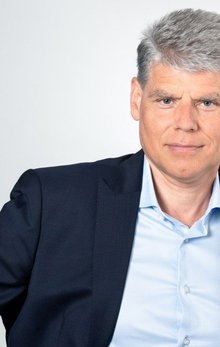
Markus Forschner, Member of the Board of Management and Chief Financial Officer, said that Bosch was able to hold its own in most markets despite trade barriers.
However, the situation remains tense across all global regions, and Europe in particular. “Competitive and price pressure are likely to increase further and the increased tariffs will have their full impact for the first time,” said Markus.
Company portals

Executives
Dr. Markus Forschner
Member of the Board of Management (CFO)
Stefan Hartung
Chairman of the Board of Management