
Lithium-Ion, Mining & Chips: This Week's Top EV Stories

16 February
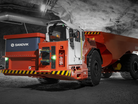
Atlas Salt has announced a significant expansion of its strategic relationship with Sandvik Mining, moving the Great Atlantic salt project in Newfoundland and Labrador toward a major electrification milestone.
The development, building on a September 2024 memorandum of understanding, secures the advanced EV technology required to significantly increase the volume of salt mined for North American road safety.
The updated agreement targets a steady-state production capacity of 4 million tonnes per year. This represents a substantial shift from the 2.5 million tonnes originally planned, made possible by the integration of high-capacity electric mining systems.
16 February
The lithium-ion battery sector has seen a sixfold expansion in global deployment since 2020, driving the market to a valuation of US$150bn, the IEA says.
Yet beneath this figure lies a more nuanced picture of the technology that is rapidly transforming transport and energy systems worldwide.
The IEA's analysis found that the battery market's expansion is predominantly driven by surging EV demand, which represents more than 70% of deployment.
In 2015, devices such as laptops, tablets and smartphones represented nearly half of worldwide battery manufacturing.
Today, that proportion has plummeted to under 5%.
16 February
The global electric vehicle market is currently experiencing a period of contraction due to a combination of shifting government policies, economic headwinds and evolving consumer psychology.
A cooling of the EV market has resulted in a hit of at least US$65bn for the global car industry in the past year as executives warn of more pain ahead in resetting their strategies.
Carmakers began to overhaul their EV product and investment plans following a reversal in climate policy in the US, with companies that had made the biggest transition from petrol hit the hardest by these industry-wide changes.
17 February
BYD, the world's leading manufacturer of EVs, has announced an agreement to be the Official Automotive Partner of Manchester City Football Club.
The partnership will see the global technology company and the iconic football brand working together on their "shared vision for a more sustainable future".
BYD says the agreement's "360-degree approach reflects BYD Group's multi-faceted innovation".
17 February
The automotive industry is accelerating its transition toward electrification and software-defined vehicles, driving an unprecedented demand for resilient semiconductor supplies.
To address this, GlobalFoundries and Renesas Electronics Corporation have expanded their strategic collaboration through a multi-billion-dollar manufacturing partnership. This deal ensures that Renesas can access advanced chip manufacturing technologies to support the production of essential semiconductors for electric vehicles.
These chips are no longer just for basic processing; they enable sophisticated radar for driver assistance and manage the high-voltage battery systems that are the heart of modern electric transport. First designs are expected to begin production in mid-2026.
Company portals




Executives
Peter Corcoran
Vice President Sandvik Mining and Rock Technology Canada, MD Sandvik Canada Inc