
What is Behind the $65bn Slump in the Global EV Market?
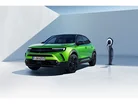
The global electric vehicle market is currently experiencing a period of contraction due to a combination of shifting government policies, economic headwinds and evolving consumer psychology.
A cooling of the EV market has resulted in a hit of at least US$65bn for the global car industry in the past year as executives warn of more pain ahead in resetting their strategies.
Carmakers began to overhaul their EV product and investment plans following a reversal in climate policy in the US, with companies that had made the biggest transition from petrol hit the hardest by these industry-wide changes.
Radical reversal in climate policy
This month Stellantis took a $26bn charge to scrap some fully electric models and revive the popular 5.7-litre “Hemi” V8 engine in the US.
It also recently decided to revive diesel engines for several European models.
The write-off triggered a share sell-off that cut its market value by about US$6bn.
The owner of the Peugeot, Fiat and Jeep brands had previously set a goal that electric vehicles would account for all of its European passenger vehicle sales by 2030 and half the total in the US.
However, executives now expect these vehicles to account for 5%.

Cancelling major EV projects
Rival automaker Ford recently disclosed a US$19.5bn writedown as it cancelled its electric F-150 pick-up truck, while Volkswagen, Volvo Cars and Polestar have all suffered hits to their electric vehicle programmes over the past year.
In addition to sweeping regulatory changes in the US, Bernstein analyst Stephen Reitman said Stellantis and other carmakers left consumers behind as they tried to replicate the early success Tesla had when it revolutionised the market.
He said that their shortcoming was failing to offer vehicles that met drivers’ price and range expectations, while charging infrastructure was also lacking.
Since then, Tesla too has suffered a significant sales decline.
All sustainability, net zero and sustainable supply chain leaders should attend:
- Sustainability LIVE: The Net Zero Summit - QEII Centre, London, March 4-5
- Sustainability LIVE: The US Summit - Navy Pier, Chicago, April 21-22
Co-located with Procurement & Supply Chain LIVE, these events brings together CSOs, ESG leaders and senior decision-makers at a moment when sustainability, supply chains and commercial performance are increasingly interconnected.
Tickets can be booked online today for The Net Zero Summit and The US Summit. Group discounts available.
Failure to meet consumer expectations
“Everyone got caught up in the kind of euphoria of ‘look at the valuations Tesla was getting’ . . . and they didn’t bring the customers with them,” said Stephen.
Analysts warned there could be more writedowns for Stellantis ahead as the group aims to improve its US market share with a renewed focus on hybrid and petrol models.
“The EV market is dramatically changing,” said Noriya Kaihara, Honda’s Executive Vice President. “So we would need to monitor our sales volume trends and then we might have to take some [further] actions if needed.”
General Motors has written down US$7.6bn on its electric operations, though chief executive Mary Barra said its “end game” would remain electric vehicles.
Ford chief Jim Farley told investors last week that the regulatory environment globally was the “wildcard” as the carmaker refined its strategy. “There’s enough choice around the world on electrification for us to cherry-pick customers’ choices,” said Jim.

Subsidies end as used sales surge
Major markets have recently cut subsidies for EVs. Germany phased out purchase subsidies at the end of 2023 and the US ended a US$7,500 federal tax credit in September 2025, causing a 47% drop in market share.
China also introduced a purchase tax for electric vehicles in early 2026.
While the new car market is struggling, there is a notable boom in the used market, with sales surging nearly 46% year-on-year. Rapid depreciation has created a mistrust of valuation forecasts for leasing companies, while manufacturers have heavily promoted future models with solid-state batteries, causing consumers to delay purchases of current technology.







Executives
Jim Farley
Chief Executive Officer