
IEA: EVs Supported 500% Growth for Lithium-Ion Batteries
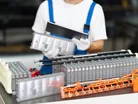
The lithium-ion battery sector has seen a sixfold expansion in global deployment since 2020, driving the market to a valuation of US$150bn, the IEA says.
Yet beneath this figure lies a more nuanced picture of the technology that is rapidly transforming transport and energy systems worldwide.
The IEA's analysis found that the battery market's expansion is predominantly driven by surging EV demand, which represents more than 70% of deployment.
In 2015, devices such as laptops, tablets and smartphones represented nearly half of worldwide battery manufacturing.
Today, that proportion has plummeted to under 5%.
In 2024 alone, battery-powered vehicles accounted for a quarter of all car sales globally.

Declining costs
Reduced costs accelerated lithium battery uptake, but also uncovered some challenging realities about the market's long-term viability.
During 2024, average battery prices decreased by 8%, driven down by manufacturing efficiency and intense competition among producers.
Grid storage system prices fell to one-third of their 2020 levels, rendering batteries equally competitive with gas peaker plants in certain markets.
However, these reductions have arrived with clear geographical implications.
The IEA found that Chinese battery packs were sold at approximately 30% below their American counterparts and 35% cheaper than European pricing.
Additionally, lithium iron phosphate (LFP) batteries experienced price drops exceeding 15%, while nickel-rich alternatives saw reductions below 5%.
Consequently, LFP batteries now cost 40% less than nickel-manganese-cobalt variants and dominate more than half the EV market, alongside more than 90% of grid storage worldwide.
While procurement teams may welcome this development, the IEA cautions that these reduced prices could prove unsustainable, with numerous producers operating at a loss.
China's manufacturing dominance
China produced more than 80% of all batteries in 2024, while Chinese, Korean and Japanese companies accounted for virtually all global cell manufacturing in 2024.
The EU and US made modest contributions to the balance, yet both import the majority of their battery components from China, indicating that dependency runs throughout the supply chain.
The IEA says that 70% of EVs manufactured outside China contain batteries or components obtained from Chinese suppliers, while more than 90% of battery storage systems globally rely on LFP cells manufactured in China.
Beijing's export restrictions on essential battery components, initially introduced in 2023, have started to highlight these vulnerabilities by targeting the most fragile elements in non-Chinese supply chains.
Korean manufacturers are rushing to establish LFP production capabilities as an alternative, yet they face formidable competition from established Chinese producers in an oversupplied marketplace.
Higher production costs
Production capacity in Europe and the US has been growing.
Both regions have attracted battery sector investments over the past three years, leveraging the expanding EV sector to ensure demand.
However, the IEA found that production expenses in the EU and US can exceed Chinese costs by as much as 50%.
Replicating the efficiency of Chinese manufacturing, where yields regularly surpass 90%, will demand years of sustained investment.
This is because emerging producers typically generate far more material waste than established operations, making profitability challenging until processes fully develop.
The IEA says that regions without industrial foundations will require patient capital and collaborations with experienced manufacturers to achieve global competitiveness.
Company portals

Executives
Fatih Birol
Executive Director