
CATL and Ellen MacArthur's Effort for EV Battery Circularity
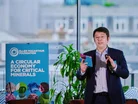
Contemporary Amperex Technology Co. Limited (CATL), one of the largest battery manufacturers globally, is looking to make EV batteries more circular with the Ellen MacArthur Foundation.
Unveiled during London Climate Action Week 2025, the shared plan focuses on shifting battery production away from reliance on virgin materials, instead building a circular battery economy.
Circular goals for EV battery systems
At the centre of the announcement is a directional goal: to halve the dependence on virgin raw materials in new battery production within the next 20 years.
This vision was introduced by Jiang Li, Vice President and Board Secretary of CATL, who say that half of all new battery production could be independent of virgin raw materials within 20 years.
“Now is the time to double down on specific macro areas that are going to see scale-up and circular economy in action. One of those areas is critical minerals,” wrote Jonquil Hackenberg, CEO of Ellen MacArthur Foundation, on LinkedIn.
“We’re focusing on critical minerals to understand how circularity can play a role in times where politics is polarising the world and material security is more critical than ever and this is an apolitical discussion about keeping materials in circulation.
“What the Foundation does best is to convene people, to understand the research and unlock insights so we can help investment flow in terms of infrastructure, innovation and technology.
“I’m really excited to see so many of you in the room to collaborate moving forward.”

Four actions for a battery loop
The Foundation outlines four guiding principles for the shift:
- Rethink systems: calls for the integration of circular design into mining, manufacturing and battery use
- Redesign products: urges manufacturers to create batteries built for easy disassembly and reuse
- Rethink business models: supports moves away from traditional ownership—offering leasing or second-life schemes that extend battery utility
- Recycle materials: focuses on developing high-quality processes to recover lithium, nickel and cobalt from spent batteries.
Each offers a route to decouple economic activity from virgin resource extraction.
CATL is already applying these principles in practice through its Carbon Chain Management System to track emissions across its supply chain.
On the product side, it has developed energy storage batteries capable of 18,000 cycles, helping reduce waste and material use.
In mobility, CATL is installing more than 10,000 battery swap stations to simplify end-of-life collection. In 2024 alone, it recovered 17,000 tonnes of lithium salts from 130,000 tonnes of spent batteries.
The firm now runs the world’s largest battery take-back network.
Jiang Li said: “The circular battery system won’t be built in a lab or a boardroom — it will be shaped through collaboration, testing and shared effort.”
This includes open engagement across industries and geographies, with CATL launching the Global Energy Circularity Commitment (GECC) to support this collaboration. The GECC functions as an international platform, connecting industry, academia and local governments to scale circular projects through shared knowledge and infrastructure investment.

A circular future for EV battery supply
As EVs become central to net zero targets, battery production volumes continue to rise. Global demand for battery cells and packs puts pressure on material sourcing and waste handling, so shifting to a circular economy offers a way to reduce this pressure while supporting job creation and regional development.
Estimates suggest the global battery recycling market will exceed RMB 1.2 trillion (US$165bn) by 2040 and generate more than 10 million jobs, with more than half in developing economies.
The ambition shared by CATL and the Ellen MacArthur Foundation is a challenge to how battery manufacturing has operated to date — and a proposal for how it might change.
“What the Foundation does best is to convene people, to understand the research and unlock insights so we can help investment flow in terms of infrastructure, innovation and technology,” concludes Jonquil.