
Global Trade Shaken by Trump's Reciprocal EV Tariffs
On 2 April 2025, US President Donald Trump announced sweeping reciprocal tariffs targeting imported vehicles and auto parts, including electric cars and their components. The tariffs, ranging from 10% to as high as 49%, are expected to have profound implications for global trade and the EV industry.
Overview of the tariffs
The newly implemented tariffs include a 25% levy on all vehicles assembled outside the US, with additional duties on auto parts such as lithium-ion batteries, engines and transmissions. Notably, countries like China face a cumulative tariff rate of 54% on automotive imports. At the same time, the European Union (EU), Vietnam, Taiwan and India are subject to significant tariff hikes ranging from 20% to 46%. The measures aim to encourage domestic production and protect US industries but have sparked concerns about rising costs and trade tensions.
Regional impacts
North America
- United States: The tariffs are projected to increase the cost of new vehicles by thousands of dollars, including EVs that rely heavily on imported components. Automakers like General Motors (GM) and Tesla may face mixed outcomes. While Tesla's US-based production facilities will shield it from some tariffs, GM's reliance on imported parts for models like the Chevrolet Equinox could raise production costs. Analysts predict a decline in consumer demand for new cars due to higher prices, potentially driving up used car prices as an alternative.
- Mexico and Canada: Although partially exempt due to USMCA agreements, vehicles with non-compliant parts will still face tariffs starting 3 May. Automakers like Toyota and Stellantis have localised production in Mexico to mitigate risks. Still, companies relying on European or Asian components—such as BMW and Mercedes-Benz—are at a disadvantage. The long-term impact could include reduced North American vehicle sales by up to 10%, with Canada seeing up to 15% decline.
Europe
The EU faces a 20% tariff on auto imports into the US, which has drawn criticism from leaders like Italian Prime Minister Giorgia Meloni. She warned that escalating trade barriers could weaken Western economies in favour of global competitors. European automakers such as Volkswagen and Porsche are particularly vulnerable due to their reliance on exports to the US, potentially leading to higher vehicle prices for American consumers.
Asia
China is hit hardest with a combined tariff rate of 54%, effectively pricing many Chinese-made EVs out of the US market. The move could disrupt supply chains for companies like Apple and Tesla, which depend on Chinese manufacturing. Meanwhile, other Asian nations like Vietnam (46%) and Taiwan (32%) face significant challenges in maintaining competitiveness in the US market.
United Kingdom
The UK, subject to a baseline 10% tariff, has called for negotiations to mitigate the impact. Business Secretary Jonathan Reynolds highlighted the importance of avoiding a trade war while protecting national interests. British automakers could see reduced US exports, further straining an already competitive market.
Electric vehicle market
The EV sector is particularly vulnerable due to its dependence on imported lithium-ion batteries and other critical components. For instance:
- Vehicles like the Toyota Prius or Porsche EVs assembled overseas will face steep tariffs, making them less affordable for American buyers.
- Domestically produced EVs incorporating foreign parts will see cost increases, though models with higher local content—like Tesla's—may remain competitive.
"It's unrealistic to assume businesses won't pass this on."
Automaker strategies
To adapt:
- Automakers may shift production closer to the US, though it would increase labour costs and disrupt existing supply chains.
- Companies are likely to conserve inventory and limit discounts to maintain profitability during this period of uncertainty.
Consumer impact
Higher vehicle prices will reduce affordability for many consumers:
- Analysts predict rising costs for both new and used cars.
- Insurance premiums may climb due to increased repair expenses.
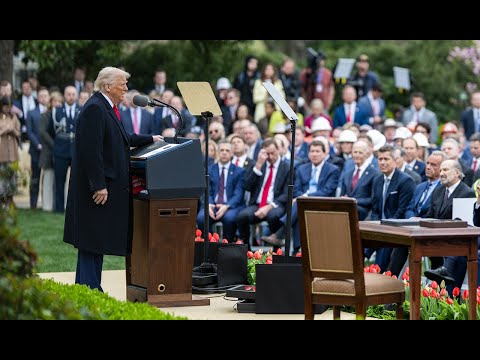
President Trump defended the tariffs as necessary for restoring fairness in global trade: "Taxpayers have been cheated for more than 50 years... Jobs and factories will surge back into our nation". However, industry leaders have expressed scepticism about these claims.

The Jonathan Reynolds highlighted negotiation over retaliation: "No one wants a trade war... Our aim is to secure a deal". Similarly, Italian Prime Minister Giorgia Meloni stressed collaboration over conflict: "We will exert every effort to reach an agreement... Trade wars favour global competitors".
The reciprocal tariffs announced by President Trump mark a turning point in global trade dynamics, with far-reaching consequences for automakers and consumers alike.
While they may incentivise some domestic production, they risk disrupting supply chains, increasing costs and straining international relations. As negotiations unfold, stakeholders across regions must navigate these challenges carefully to minimise economic fallout while fostering innovation in the EV sectors.
Explore the latest edition of EV Magazine and be part of the conversation at our global conference series, Sustainability LIVE.
Discover all our upcoming events and secure your tickets today.
EV Magazine is a BizClik brand