
Trump's 'Liberation Day' Leaves Global Trade At a Crossroads
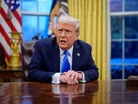
President Donald Trump's declaration of April 2, 2025, as "Liberation Day" signals a seismic shift in US trade policy. The planned implementation of widespread reciprocal tariffs, particularly those targeting the automotive industry, is causing ripples of concern throughout the global economy.
The aim: American automotive supremacy?
The cornerstone of "Liberation Day" is a 25% tariff on all imported vehicles and parts. As Trump said, "We'll effectively be charging a 25% tariff, but if you build your car in the US, there's no tariff."
The White House claims the measure is designed to revitalise domestic manufacturing, promising to generate US$100bn in new tariff revenue and create jobs for American workers.
Analysts, however, paint a far less rosy picture. The move threatens to disrupt global automotive trade and supply chains. Last year, the US imported roughly eight million cars, representing about US$240bn in trade and roughly half of overall sales.
Major players like Mexico, South Korea, Japan, Canada and Germany stand to be heavily impacted. Shares in car manufacturers worldwide immediately slumped, with Vauxhall maker Stellantis seeing a 6.4% drop and Toyota falling by 2%.
Potential fallout: Higher prices and economic strain
Experts warn that the tariffs could increase prices for a range of consumer goods, potentially fueling inflation and slowing economic growth. The Anderson Economic Group estimates that tariffs on car parts alone could add US$4,000 to US$10,000 to the cost of a vehicle, depending on the model. As one analysis suggests, "April 2 is shaping up to be an economic milestone with actions that will reverberate globally for decades to come," reversing decades of US economic integration with the world.
UK caught in the crossfire
The UK is in a vulnerable position. The US is the second-largest car export market for British manufacturers, accounting for 16.9% of UK car exports last year. It also represents the largest sales market for iconic British brands like Jaguar Land Rover.
Mike Hawes, Chief Executive of the Society of Motor Manufacturers and Traders (SMMT), has urged a collaborative solution: "The UK and US auto industries have a long-standing and productive relationship… Rather than imposing additional tariffs, we should explore ways in which opportunities for both British and American manufacturers can be created as part of a mutually beneficial relationship... The industry urges both sides to come together immediately and strike a deal that works for all."
Chancellor Rachel Reeves has also expressed concern, stating that the new tariffs would be "bad for the UK and bad for the US as well" and that the UK was involved in "extensive" talks to avoid imposition in the UK.
Industry braces for impact
While precise details of the tariffs remain uncertain, the automotive industry is already feeling the pressure. Elon Musk acknowledged that Tesla would be affected and major car firms have urged Trump to exempt the industry from further duties. The industry is also grappling with existing tariffs on steel and aluminium, adding to the complexity.

Reactions and retaliation
"Liberation Day" has been met with criticism and threats of retaliation from key trading partners. Canadian Prime Minister Mark Carney called Trump's announcement a "direct attack" on his country and its car industry. Japanese Prime Minister Kishida stated that Japan would put "all options on the table". European Commission President Ursula von der Leyen said car tariffs were "bad for businesses, worse for consumers".
Trump, however, has warned that he could impose "far larger" tariffs on the EU and Canada if they work together "to do economic harm to the US."
A tumultuous road ahead
The global economy holds its breath as April 2, 2025, approaches. The long-term consequences of Trump's "Liberation Day" remain to be seen, but analysts predict it marks a decisive shift in trade relations.
With prices expected to increase, retaliations from key trading partners likely and disruption of the global car trade, consumers have little certainty.
The impending tariffs on the "Dirty 15" countries, set to be implemented on April 2, 2025, are poised to impact global trade significantly. Here's an overview of the potential consequences:
Disruption of Major Trade Relationships
The "Dirty 15" is expected to include some of the United States' largest trading partners. While the exact list hasn't been officially released, it's likely to encompass nations such as China, the European Union, Mexico, Vietnam, Japan and South Korea. These countries account for a substantial portion of US trade, with Treasury Secretary Scott Bessent noting that they represent "a huge amount of our trading volume".
Global economic ripple effects
The tariffs are likely to have far-reaching consequences beyond just the US and the targeted countries:
- Downward pressure on US economic growth due to increased costs for importing businesses
- Potential deterrence of private sector investment due to uncertainty
- Risk of weakened consumer spending, which accounts for about two-thirds of US economic activity
Retaliation and trade war escalation
Implementing these tariffs may provoke retaliatory measures from affected countries, potentially escalating global trade tensions. However, it could lead to a cycle of reciprocal tariffs, further disrupting international trade flows.
The uncertainty surrounding the tariffs has already caused fluctuations in stock markets. While recent suggestions of a potentially narrower approach have led to some recovery in US stocks, the full implementation could lead to further market volatility.

Shift in global trade patterns
Countries affected by the tariffs may seek to diversify their trade relationships, potentially leading to new trade agreements and altered global supply chains. This could reshape international economic relationships.
In conclusion, the tariffs on the "Dirty 15" are set to have wide-ranging impacts on global trade, affecting prices, economic growth, market stability and international trade relationships. The full extent of these effects will likely become clearer after the April 2 implementation date.
Stay informed and inspired with the EV Magazine community by signing up for our free weekly newsletter. Each week, receive in your inbox the latest industry news and in-depth insights into the world of electric vehicles, sustainability and cutting-edge innovations
Subscribe now, don’t miss the opportunity to stay ahead in the fast-evolving EV industry.
EV Magazine is a BizClik brand.