Davos: What Did Tesla’s Musk Say About Self-Driving Cars?

The world’s richest man, Elon Musk, made a high-profile, last-minute debut at the World Economic Forum in Davos.
It is a significant shift for the billionaire, who previously dismissed the event as "elitist" and "unelected".
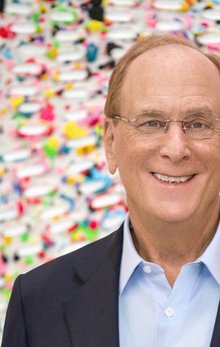
Interviewed by BlackRock CEO Larry Fink, Elon addressed a room of global leaders and professionals, discussing his vision for a future defined by radical technological growth.
He used the platform to outline aggressive targets for his companies, including Tesla and SpaceX, while asserting that his primary goal is to "maximise the probability that civilisation has a great future".
Self-driving cars and robotaxi expansion
The business leader is predicting big things for autonomous transport, despite early problems in the US with Tesla’s Cybercab.
The product was put under federal investigation after footage showed traffic rules being broken during public trials in Austin, Texas.
All sustainability, net zero and sustainable supply chain leaders should attend:
- Sustainability LIVE: The Net Zero Summit - QEII Centre, London, March 4-5
- Sustainability LIVE: The US Summit - Navy Pier, Chicago, April 21-22
Co-located with Procurement & Supply Chain LIVE, these events brings together CSOs, ESG leaders and senior decision-makers at a moment when sustainability, supply chains and commercial performance are increasingly interconnected.
Tickets can be booked online today for The Net Zero Summit and The US Summit. Group discounts available.
At Davos, Elon claimed that "self-driving cars is essentially a solved problem at this point”.
He said that Tesla has already rolled out robotaxis in several American cities and anticipates "very widespread" deployment across the US by the end of this year.
Looking toward international markets, he announced that Tesla is seeking regulatory approval for "supervised full self-driving" in Europe, saying, "we hope to get... approval in Europe, hopefully next month".
He indicated that a similar timeline is being targeted for China, as the company pushes for a global rollout of its autonomous vehicle technology.
Solar energy and tariff barriers
Elon spoke of the potential for solar energy to power the US – but flagged up how it is being hindered by trade tariffs.
He said the US possesses the natural resources to be entirely self-sufficient through solar power. "You could take a small corner of Utah, Nevada or New Mexico... to generate all of the electricity that the US uses," he said.
"Unfortunately, the tariff barriers for solar are extremely high and that makes the economics of deploying solar artificially high."
He argued that these barriers hinder the rapid deployment of clean energy required to power the massive, energy-hungry data centres currently being built for AI.

Policy differences with Donald Trump
The interview highlighted a clear divergence between Elon and his once staunch ally, US President Donald Trump, on renewable energy policy.
While Elon remains a proponent of solar power, Trump has been openly critical of clean energy and has encouraged oil and gas expansion.
His remarks break rank with the President, particularly regarding the freeze on solar project approvals.
Elon emphasised that securing enough power is "critical" as the U.S. rushes to meet the soaring requirements driven by the AI revolution.
Rapid growth of artificial intelligence
Elon provided a striking timeline for the evolution of artificial intelligence, predicting that AI will soon surpass human capabilities.
"I think we might have AI that is smarter than any human by the end of this year," he said, adding that it would likely happen "no later than next year”.
Looking further ahead, he predicted that by "2030 or 2031, call it five years from now, AI will be smarter than all of humanity collectively".
He described this progression as a fundamental shift, suggesting that the rapid rate of AI development would eventually "saturate human needs" and trigger an unprecedented economic expansion globally.
Future of robots outnumbering humans
Central to Musk’s address was the prediction that "there will be more robots than people" in the future.
He argued that the combination of robotics and AI represents "the path to abundance for all," offering a solution to global poverty.
Elon told Larry: "The only way to do this is AI and robotics."
He sees a world where robots are "ubiquitous," leading to "an explosion in the global economy" that exceeds current industrial scales.
According to Elon, this transition will transform the nature of labour, as "everyone on Earth" will eventually seek robotic assistance for domestic and industrial tasks.
Optimus humanoids launching next year
Tesla's humanoid robot, Optimus, is expected to move from factory prototype to consumer product shortly.
Elon revealed that Optimus is currently performing "simple tasks in the factory," but he expects more sophisticated capabilities soon.
"By the end of this year, I think they will be doing more complex tasks, and probably by the end of next year, I think we'd be selling humanoid robots to the public," he said.
He expressed confidence that by late 2026, the robots would have "very high reliability" and be capable of performing almost any task requested by a human owner.

Robots assisting in daily life
Elon highlighted the potential for humanoid robots to address social challenges, such as elder care in ageing populations.
He suggested that robots could provide essential support in societies where there are insufficient young people to care for older citizens.
"Who wouldn't want a robot to, assuming it's very safe, watch over your kids, take care of your pets?" he asked the audience.
He framed the technology as a domestic utility, predicting that the demand for robots to care for "older parents or children" would make them a staple in households worldwide, fundamentally reducing the burden of manual work.
Avoiding a Terminator-style future
Despite his optimism, Elon issued a warning regarding the safety of advanced robotics.
He said: "We need to be very careful with robotics. We don't want to find ourselves in a James Cameron movie.
“Love his movies, but we don't want to be in Terminator, obviously."
Elon emphasised that safety remains a prerequisite for the public adoption of humanoid robots.
This caution comes as his own AI startup, xAI, faces scrutiny from international regulators over "sexually explicit content" generated by its Grok chatbot, leading to demands for tighter safeguards.
Solving the problem of ageing
In his concluding remarks, the business leader touched upon human biology, describing ageing as "a very solvable problem".
He predicted that once the biological cause of ageing is fully identified, the solution will be "incredibly obvious" to the scientific community.
When asked about his personal ambitions and his well-known goal of colonising Mars, Musk joked about his mortality on the Red Planet.
"People ask me ‘do I want to die on Mars? and I'm like: 'yes, but not on impact'."



Executives
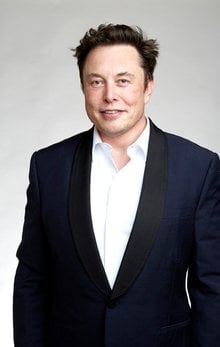
Elon Musk
Tesla CEO
Larry Fink
Chairman and Chief Executive Officer