As companies look to transition from ICE vehicles to EVs, the recycling of batteries remains one of the largest hurdles. EV battery recycling is costly and labour intensive.
If conducted improperly at landfill sites, it can trigger difficult-to-extinguish thermal runaway fires or cause substantial harm to local communities and workers.
However, battery recycling brings benefits to companies who invest in it. McKinsey argues recycled content for EV batteries can help close significant capacity gaps in the European Union and North America.
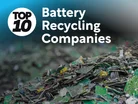
EV Magazine has ranked the 10 of the top battery recycling companies looking at scale, technological innovations and capacity.
10. American Battery Technology Company
CEO: Ryan Melsert
Headquarters: Nevada, US
Founded: 2011

The American Battery Technology Company provides sustainable sourcing of critical battery materials through lithium-ion battery recycling and battery metal extraction technologies. Its materials power EVs and grid storage applications as well as consumer electronics.
The Nevada based company is capable of 20,000 mt/year of processing at its lithium-ion battery recycling plant. It plans to scale up to 100,000 mt/year processing in the future.
Ryan Melsert, CEO of American Battery Technology Co, says: “On an elemental basis, nothing is really consumed in the way we use things. And having that mindset from the beginning instead of an afterthought is what I would change about our industry.”
9. Cirba Solutions
CEO: David Klanecky
Headquarters: North Carolina, US
Founded: 1991
With six facilities, Cirba Solutions has the largest battery recycling operation footprint in North America. The company was the first lithium processor in North America.
By using advanced shredding and hydrometallurgical material recovery processes for recycled end-of-life and scrap lithium-ion batteries, it achieves a 95% recovery rate on critical minerals.
David Klanecky, CEO of Cirba Solutions, says: “We are servicing the needs of today and supporting our future generations with sustainable solutions for the planet.”
8. SK Tes
CEO: Jin Mo Lee
Headquarters: Jurong, Singapore
Founded: 2005

Previously called TES-AMM and then TES, SK Tes now operates in more than 40 sites with upwards of 2,500 employees.
As well as a variety of other services, such as energy storage systems and data centre services, SK Tes is a leader in closed-loop battery recycling. It has a 90% recovery rate on batteries.
Its commercial battery recycling facility in Singapore can handle 14 tonnes of lithium-ion batteries.
In 2025, SK Tes partnered with BMW Group for a recycling program that recovers critical raw materials including cobalt, nickel and lithium from end-of-life EV batteries.
7. Ascend Elements
CEO: Linh Austin
Headquarters: Massachusetts, US
Founded: 2015
Ascend Elements operates at four sites in the US and one site in Poland, with an up to 98% recovery rate on critical minerals from used lithium-ion batteries.
The company operates a Hydro-to-Cathode direct cathode precursor synthesis process which improves the cost-effectiveness of battery recycling.
It says that its patented technology results in up to 50% less costs compared to traditional battery recycling and up to 90% fewer emissions.
6. Ecobat
CEO: Tom Slabe
Headquarters: Texas, US
Founded: 1938
Ecobat has a long history, operating on sites dating back centuries, but the name Ecobat first appeared in 1938.
The company works with global OEMs to recycle lithium-ion batteries. It manages battery recall work, prototypes, end-of-life batteries and damaged packs. Ecobat also works extensively in lead recycling.
It operates three lithium-ion recycling plants today in the US and Europe. Together, the three plants are capable of processing up to 10,000 tons of lithium-ion batteries annually, with plans to scale capacity to 25,000 tons.
5. Brunp Recycling
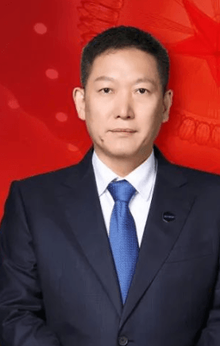
CEO: Li Changdong
Headquarters: Guangdong Province, China
Founded: 2005
With a 50.4 % proportion of battery recycling volume in China and seven global production bases, Brunp Recycling is the largest battery recycling company in China. Brunp is a subsidiary of CATL.
With 10,000 employees globally, Brunp has bases in China, the Democratic Republic of Congo and Indonesia as well as planned projects in Europe and South America.
Through its original directional recycling technology, Brunp has set technological benchmarks for the entire battery recycling industry in China.
In 2025, Brunp achieved a cumulative shipment volume of a million tons of ternary precursors, which can provide battery materials for 14 million new vehicles.
4. Umicore
CEO: Bart Sap
Headquarters: Brussels, Belgium
Founded: 2001
Umicore was founded in 2001 with a focus on recycling, though the company has a history dating back more than 100 years in both mining and smelting.
Now, with more than 11,000 employees, Umicore develops recycling technology, clean mobility solutions, metal-based technology and advanced materials needed for energy, electronics and space exploration. Its annual battery recycling capacity is 7,000 tonnes.
Its pyro-hydro technology delivers recovery yields of more than 95% for cobalt, copper and nickel. The technology delivers recovery yields of more than 90% for lithium from a wide variety of battery chemistries.
Wouter Ghyoot, Vice President Government Affairs at Umicore, says: “Closed loop systems for CRM recycling, for example with end-of-life EV batteries, create a significant supply of battery metals that can stay in Europe.
“Think of the huge numbers of EVs driving on Europe’s roads. That’s a dynamic and high-volume stock of CRMs that can eventually be recycled.’’
3. Redwood Materials
CEO: JB Straubel
Headquarters: Nevada, US
Founded: 2017

Founded by Tesla’s former CTO JB Straubel, Redwood produces lithium, nickel, cobalt, copper and cathode active material at scale.
Its processes involve recycling batteries at end-of-life, refining their critical minerals and manufacturing critical materials for the US supply chain.
With 95% critical minerals recovery rate in lithium, nickel, cobalt and copper and recovering more than 20 GWh lithium-ion batteries each year, Redwood Materials is a key player in the US, producing more than 60,000 tons of critical materials annually.
Redwood Materials has a list of partners that includes Volkswagen Group of America, Panasonic, BMW North America, Ultium Cells, Southern Company, Volvo, Toyota and Lyft.
In 2025, Redwood announced that it was using repurposed EV battery packs to power AI data centres. At Redwood Materials' Nevada site, a 12 MW / 63 MWh microgrid, the company combines 12 megawatts of solar with second-life EV battery storage to power multiple megawatts of modular data centres operated by Crusoe, an AI factory company.
2. Fortum
CEO: Markus Rauramo
Headquarters: Espoo, Finland
Founded: 1998
Fortum is the only battery recycling company entirely in Europe, providing a solution for every stage of the battery life cycle from waste collection through pre-treatment to refining.
It uses a combination of mechanical and hydrometallurgical technologies to recycle the battery materials in an industrial scale, low CO₂ process.
Fortrum operates the largest recycling plant in Europe in terms of recycling capacity. It is also the first commercial-scale facility in Europe for hydrometallurgical recycling, located in Harjavalta, Finland.
Tero Holländer, Head of Business Line, Batteries at Fortum Battery Recycling, said: “With our new low CO₂ hydrometallurgical plant in Harjavalta, we are able to sustainably produce the materials urgently needed for new EV lithium-ion and industrial-use batteries.
“Thanks to our cutting-edge hydrometallurgical technology, 95% of the valuable and critical metals from the battery's black mass can be recovered and returned to the cycle for the production of new lithium-ion battery chemicals.”
1. Glencore
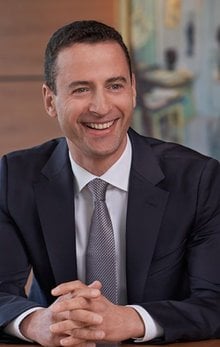
CEO: Gary Nagle
Headquarters: Baar, Switzerland
Founded: 1974

With more than 140,000 employees and contractors Glencore are a large company operating in a variety of business sectors focussed on recycling, metals and energy markets.
In recycling, the company operates a diversified portfolio of services, spanning electronics, copper bearing metals, scrap and batteries, including lithium-ion batteries used in EVs.
The company states its goal is to support the circular economy, with recycled metals and minerals to flow back into the battery supply chain. Its recycling facilities are located in North America, South America and Europe.
In 2022, Glencore and ACE Green Recycling entered a long-term supply agreement for recycled lead, as well as key battery metal based end products from recycled lithium-ion batteries. ACE estimates they will cumulatively produce 1.6 million tons of recycled metals containing lead, lithium, nickel and cobalt.
In 2025 Glencore acquired Li-Cycle, a lithium-ion battery recycling company, in a deal that included facilities in Germany, Arizona, Alabama, New York and Ontario.
Company portals





Executives
Bart Sap
Chief Executive Officer
David Klanecky
CEO at Cirba Solutions
Gary Nagle
CEO
JB Straubel
founder, CEO
Jin Mo Lee
Chief Executive Officer
Li Changdong
Chairman
Linh Austin
President and Chief Executive Officer
Markus Rauramo
President and Board Member
Ryan Melsert
Chief Executive Officer
Thomas Slabe
President & CEO