
Kuehne+Nagel & Milence: Proving the Power of Electric Trucks
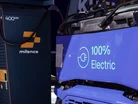
Electric trucks can now come with rechargeable batteries, zero emissions and lower noise levels.
These features make them well suited to both city streets and country roads.
A partnership between global logistics operator Kuehne+Nagel and Milence, the company developing Europe’s largest public charging network for trucks, aims to move attention away from what electric freight cannot yet do and towards what it already can.

Electric trucks in the UK
Electric heavy goods vehicles are now working as part of Kuehne+Nagel’s operations.
The trucks are collecting cargo at Able Humber Port, supported by Milence’s first UK-based public charging hub at Immingham.
“Alongside supportive measures to scale depot charging – such as faster access to grid connections and enabling policy measures – we also need high-performance, reliable and cost-effective public charging hubs,” says Kate Broome, Sustainability and Social Impact Director at Kuehne+Nagel UK.
“We’re proud to be among the early adopters using Milence’s hub, proving that electric heavy trucks are not just the future – they’re already here.”
The hub in Immingham is fitted with 400 kilowatt Combined Charging System (CCS) chargers.
These allow for a full charge in between one and 2.5 hours depending on the vehicle.
Plans are already in place to install a MegaWatt charging unit, which could bring charge times down to between 30 and 45 minutes.
Charge times depend on the size of the battery, the design of the vehicle and truck specifications.
Kuehne+Nagel and Milence are also working together on data-sharing initiatives. These help decide where best to build charging hubs, based on actual truck operations and routes.
“Electric road transport is no longer a future ambition, it’s happening now,” explains Roel Vissers, Chief Commercial Officer at Milence.
“With more than 20 operational hubs across Europe, our first green corridors are emerging and the shift to sustainable logistics is gaining momentum.
“To scale this transformation, utilisation is key. At Milence, we collaborate closely with key stakeholders across the transport sector.”
Bringing policy and infrastructure together
The collaboration also extends to national policy.
Both companies work alongside government programmes to shape what the future of road freight will look like.
Kuehne+Nagel is part of eFREIGHT 2030, a UK Government-backed scheme under the 'Zero Emission HGV and Infrastructure Demonstrator Programme'.
Since early 2025, the logistics firm has been contributing real-world data from its own electric fleet.
“Partnerships with pioneers like Kuehne+Nagel are essential to shaping the infrastructure and services our industry needs,” says Roel Vissers.
“Our hubs are designed as safe, comfortable charging stops that support both drivers and fleets on their electric journeys.”
“The transition won’t happen overnight but by working together, we’re moving closer to a road transport system that is not only sustainable but also economically viable.”
Challenges ahead for electric freight
Electric trucks bring key environmental gains by eliminating tailpipe emissions.
Wide-scale adoption, however, comes with a range of technical and practical barriers.
The lithium-ion batteries used today offer lower energy density than diesel, which results in shorter range and heavier vehicles.
This can mean smaller payloads and higher wear on infrastructure like roads and bridges.
Charging infrastructure is another major concern.
Without enough high-capacity public charging sites, the value of electric trucks is undermined.
Long charge times can disrupt freight schedules and battery costs, including replacement, making the initial investment high.
The environmental impact of battery production is also under scrutiny.
Mining for lithium and cobalt raises ethical questions and creates hazardous waste, while battery disposal remains a developing area.
The source of electricity matters, too.
If the grid is powered by fossil fuels, the emissions benefits of electric vehicles are reduced.
Battery lifespan, reliability in tough weather and performance consistency remain unresolved compared with diesel alternatives.
Still, the joint effort from Kuehne+Nagel and Milence shows that electric freight is already part of day-to-day logistics.
Explore the latest edition of EV Magazine and be part of the conversation at our global conference series, Sustainability LIVE.
Discover all our upcoming events and secure your tickets today.
EV Magazine is a BizClik brand