
IEA: How Global EV Sales Are Soaring Despite Challenges
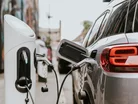
Electric vehicles (EVs) in Europe now pay off their carbon debt after about 11,000 miles (18,000km), according to The International Council on Clean Transportation.
While critics point to signs of slowing demand, data suggests the worldwide shift to EVs is still firmly on course.
The International Energy Agency (IEA) confirms this in its Global EV Outlook 2025, which shows record-setting growth across global markets.

Strong start to 2025 for EV sales
The first quarter of 2025 shows global EV sales up 35% compared to the same period in 2024.
Sales passed 4 million units in the first three months alone, led by China, which delivered more than 2.5 million of those vehicles.
In total, 2024 saw more than 17 million EVs sold, pushing electric cars to more than 20% of all global new vehicle sales.
“Our data shows that, despite significant uncertainties, electric cars remain on a strong growth trajectory globally,” says Fatih Birol, Executive Director of the IEA.
“Sales continue to set new records, with major implications for the international auto industry.
“This year, we expect more than one in four cars sold worldwide to be electric, with growth accelerating in many emerging economies.
“By the end of this decade, it is set to be more than two in five cars as EVs become increasingly affordable.”
Both BEVs and PHEVs contribute to this rise.
Combined, these categories are expected to make up more than 25% of global new car sales by the end of 2025.
Regional patterns in EV adoption
China continues to dominate EV adoption.
Electric cars made up almost half of all car sales in 2024, and by 2025 are expected to account for 60% of new vehicle sales.
More than 11 million EVs were sold in China in 2024, exceeding total global EV sales from 2022.
One in 10 cars on Chinese roads is now electric.
Factors behind this include government incentives, declining battery prices and a strong domestic market.
China also handles more than 70% of global EV manufacturing.
The United States is experiencing steady growth, despite some policy uncertainties.
EV sales are forecast to grow nearly 10% in 2025, maintaining a double-digit market share.
More than one in 10 new cars sold is now electric, supported by state-level incentives and a widening choice of models.
Emerging markets are seeing sharp rises.
In Latin America and Southeast Asia, the availability of lower-cost Chinese EVs has helped to fuel adoption.
EV sales in emerging markets jumped more than 60% in 2024 to around 600,000, a volume similar to Europe's 2019 levels.
Brazil more than doubled its EV sales to 125,000 last year, reaching a 6% market share.
Southeast Asia's sales rose by nearly 50%, with Thailand and Vietnam leading the growth.
One in 10 cars sold across Southeast Asia is now electric.
By 2030, EVs could reach a quarter of the market, with two and three-wheelers accounting for nearly one in three vehicles.
Africa has seen sales double, particularly in Egypt and Morocco, although EVs still make up less than 1% of all cars sold.
In these markets outside China, Chinese EV imports were responsible for 75% of the increase in electric car sales during 2024.
Challenges to wider EV transition
In Europe, EV sales have levelled off slightly, driven in part by the withdrawal of purchase subsidies.
However, infrastructure expansion and regulatory targets remain strong.
EVs still make up 20–25% of new car sales. New CO₂ regulations taking effect in 2025 are expected to re-energise demand.
Countries such as the United Kingdom, Norway and Denmark remain leaders in terms of EV policy and infrastructure.
The European Union and the UK will soon require higher proportions of zero-emission vehicle sales, pushing the region towards a target of nearly 60% EV sales by 2030.
“Based on today’s policy settings alone, almost one in three cars on the roads in China by 2030 is set to be electric and almost one in five in both the United States and European Union,” says Fatih.
“This shift will have major ramifications for both the auto industry and the energy sector.”
Still, affordability continues to be an issue.
In Europe and the US, BEVs remain 20–30% more expensive than petrol equivalents.
While battery prices are falling, the cost gap remains too wide for many lower-income drivers.
Charging access is another problem.
Urban flats without private charging options and rural areas still lag behind in infrastructure development.
Trade and supply issues are also a concern.
Tariffs on Chinese EVs, volatile mineral prices and changing trade rules could affect costs and availability.
The IEA has also raised questions over the real-world emissions of PHEVs.
If not charged regularly, their environmental benefit can be much lower than test data suggests.
Despite these hurdles, electric mobility is set to cut global oil demand by more than five million barrels a day by 2030—with half of those savings coming from China.
Explore the latest edition of EV Magazine and be part of the conversation at our global conference series, Sustainability LIVE.
Discover all our upcoming events and secure your tickets today.
EV Magazine is a BizClik brand