
Is EV Growth Testing The National Grid’s Energy Transition?
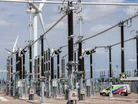
National Grid is investing heavily in transforming its electricity networks across the UK and US, directing US$76bn over five years towards clean energy systems.
The aim is to enable the shift to renewables, electrified transport and low-carbon power.
But despite this large investment, the group sees a rise in emissions across all three main reporting categories.
This increase raises questions, particularly for those looking at the move to EVs, about the readiness of infrastructure and the environmental impact of delivering such rapid change.
The company’s 2024–2025 annual report details this progress and the challenges it faces in reducing emissions while enabling decarbonisation.

Emissions rise despite climate alignment
National Grid aligns its targets with the Science Based Targets initiative (SBTi), a global framework that helps companies set emissions reduction goals consistent with climate science.
But despite this alignment, its Scope 1 and Scope 2 emissions rise to 7.4mt CO₂ equivalent during 2024/25.
Scope 1 emissions come directly from owned or controlled sources.
Scope 2 covers indirect emissions from the generation of purchased electricity.
National Grid attributes the increase to "exceptional fossil fuel use in Long Island".
Its Scope 3 emissions, covering the indirect emissions throughout its value chain, also increase, due to what the company describes as higher capital activity.
As grid infrastructure expands to meet the demand of electrified transport and renewable power connections, the embedded carbon from such expansion becomes a growing issue.
Still, National Grid returns US$113m to UK customers from interconnector revenues, with plans to return US$546m in total over four years.
These interconnectors are high-voltage cables that allow electricity to flow between countries, improving grid resilience and supporting renewable imports and exports.
Grid expansion to power EV future
A large part of the capital plan (US$64.7bn) is classed as “green investment” and aligns with the European Union’s sustainability classification system, the EU Taxonomy.
This funding supports new infrastructure needed for both renewable power and EV deployment.
In the UK, a US$47.3bn business plan has been submitted to Ofgem for the 2026–2031 period.
This includes 700km of high-voltage subsea cables as part of the ASTI (Accelerated Strategic Transmission Investment) programme.
These cables help connect offshore wind farms to the grid, allowing power to reach EV charging networks and homes.
In the US, modernisation efforts mirror these ambitions.
National Grid’s Electric Sector Modernisation Plan in Massachusetts and a US$4bn upgrade in New York will help supply clean energy to data centres, manufacturing facilities and EV fleets.
"The UK Government’s bold mission to achieve clean power by 2030 requires a once-in-a-generation ‘rewiring’ of the country’s infrastructure," says Paula Rosput Reynolds, Chair at National Grid.
"The US, by contrast, is focused on energy as a key enabler of economic growth, with an emphasis on driving the AI revolution and reshoring of manufacturing.
"Both approaches will require substantial new energy supplies and infrastructure."
The company is clear that expanding capacity and digitalising the grid are essential for future energy demand, especially as the EV sector grows and relies increasingly on resilient and low-carbon electricity networks.
Affordability, innovation and future security
With economic pressure shaping public opinion, National Grid positions affordability alongside climate action.
Its networks support Britain’s largest EV battery factory, which is expected to deliver half of the country’s battery capacity needs by 2030 and create 4,000 jobs.
To support those most impacted by energy costs, National Grid launches a US$17.5m Grid for Good Energy Affordability Fund and continues to operate fuel poverty programmes.
These initiatives help 21,000 customers save US$28m on bills in a year.
The company also pursues efficiency.
Technologies such as dynamic line ratings and digital substations improve use of existing assets.
These tools reduce the need for new builds when alternatives offer more value, speeding up grid readiness for EV charging points and electrified transport networks.
“It’s a year since we announced our £60 billion five-year investment plan and refocused our strategy on energy networks,” says John Pettigrew, CEO at National Grid.
“I’m hugely proud of all we’ve achieved at National Grid in that time.”
Innovation comes through its venture arm, National Grid Partners, which has invested US$600m into startups.
This includes US$100m in AI, now used across operations from predictive maintenance to customer service.
AI also supports grid optimisation, an essential capability for integrating variable renewables and managing increased EV loads.
One of its standout projects is the LionLink interconnector, a hybrid offshore link with Dutch transmission system operator TenneT.
Once operational, it will reinforce renewable capacity and secure energy flows between the UK and Europe.
Explore the latest edition of EV Magazine and be part of the conversation at our global conference series, Sustainability LIVE.
Discover all our upcoming events and secure your tickets today.
EV Magazine is a BizClik brand