Top 10: EV Battery Factories
Electrification is one of the largest industrial and economic shifts of the 21st century, and global demand for batteries is set to increase 20 times by 2040, according to McKinsey.
To provide for this demand, more than 200 gigafactories will be required around the world.
The term gigafactory was coined by Tesla CEO Elon Musk in 2013 on the announcement of its Nevada facility, with the prefix "giga" referring to production capacity measured in gigawatt-hours.
EV Magazine has ranked 10 of the top EV battery factories by capacity.
10. Gotion Nanjing Base
Company: Gotion High Tech
CEO: Li Zhen
Location: Nanjing, China
Capacity: 30 GWh
Gotion’s Nanjing facility operates as an intelligent factory with high levels of automation and digitalisation.
It produces lithium iron phosphate and ternary lithium batteries.
The site covers approximately 480 acres and includes a total building area of more than 220,000 square metres.
To support supply, Gotion broke ground on a 200,000 tonne cathode material project in Lujiang in January 2026, ensuring the Nanjing facility maintains a stable supply of LFP materials.
9. Samsung SDI Göd
Company: Samsung SDI
CEO: Joo-Sun Choi
Location: Göd, Hungary
Capacity: 40 GWh

Samsung’s Göd facility produces stacked prismatic battery cells that deliver higher energy density and improved thermal management.
The plant originally produced plasma display panels before it was transformed into the company’s first battery facility in 2017.
It now produces enough batteries to power roughly 600,000 EVs every year.
In response to demand from partners like BMW, the site is expanding to include 46-phi cylindrical cells for better performance and faster charging.
8. Gigafactory Nevada
Company: Tesla
CEO: Elon Musk
Location: Nevada, US
Capacity: 43 GWh
Tesla’s Gigafactory Nevada produces 2170 cylindrical battery cells used in the Model 3 and Model Y in North America.
Panasonic occupies around half of the factory floor space and is responsible for chemistry and production of cells.
Tesla assembles these finished cells into battery packs.
In July 2024, Panasonic marked the production of its 10 billionth cell at the Nevada plant.
“Reflecting on our journey from humble beginnings to this momentous milestone of delivering 10 billion cells is profound,” says Allan Swan, President of Panasonic Energy of North America.
7. Ultium Cells Warren
Company: Ultium Cells
CEO: Injae Pahk
Location: Ohio, US
Capacity: 45 GWh

The Ultium Cells facility in Warren, Ohio, was the first gigafactory created through the joint venture between General Motors and LG Energy Solution.
The facility spans 2.8 million square feet with total investment of more than US$2.3bn.
It uses NCMA chemistry with 70% less cobalt than earlier General Motors batteries.
These cells power the Ultium Platform used in vehicles including the Cadillac LYRIQ, GMC Hummer EV, Chevy Silverado EV and BrightDrop electric vans.
6. Xi'an FinDreams Battery
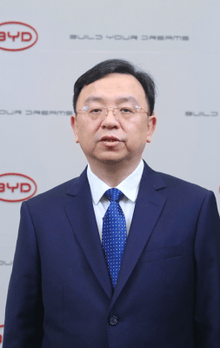
Company: BYD
CEO: Wang Chuanfu
Location: Xi’an City, China
Capacity: 50 GWh.
Part of the Xi’an Industrial Park, this facility supports output of more than a million vehicles.
It follows a lights-out philosophy across many sections, where manufacturing continues around the clock with minimal human intervention.
The site produces the second-generation Blade Battery using AI quality control.
Neural networks monitor production in real time, scanning for deviations in electrode alignment or material composition.
Before a batch of cells runs, the full process is simulated using digital twins.
5. CALB Xiamen Base
Company: CALB
CEO: Liu Jingyu
Location: Xiamen, China
Capacity: 60 GWh

Batteries from CALB’s Xiamen facility support EV models from XPeng, NIO and Leapmotor.
The site uses AI-driven quality control and big data to track each cell from chemical mixing through to final assembly.
Beyond passenger vehicles, the base has increased production of 314Ah high-capacity cells designed for the global energy storage market.
Rooftop solar arrays and closed-loop water recycling systems are used to reduce environmental impact.
4. SK On Yancheng
Company: SK On
Co-CEOs: Lee Seok-hee and Lee Young-wook
Location: Yancheng, China
Capacity: 60 GWh
The SK On Yancheng plant is located near Kia’s manufacturing facilities and acts as a primary supplier for its EV range.
In late 2025, SK On exited its joint venture in Huizhou to take full control of Yancheng Plant 1.
While originally built for high-nickel NCM batteries, the company is retooling parts of the site for LFP.
The facility uses the Z-folding stacking method, where the separator folds in a zigzag pattern between the anode and cathode.
3. EVE Energy Jingmen
Company: EVE Energy
Chairman: Liu Jincheng
Location: Jingmen, China
Capacity: 73 GWh

The EVE Energy Jingmen gigafactory holds Lighthouse Factory status from the World Economic Forum, recognising leadership in Fourth Industrial Revolution technologies such as AI and automation.
The factory uses an AI vision inspection system that checks every cell in 0.3 seconds, achieving 100% inspection coverage with zero missed defects and maintaining a first-pass yield above 97%.
IIoT sensors track gas levels and temperature in real time during formation and ageing phases.
2. LG Energy Solution Wrocław
Company: LG Energy Solution
CEO: Dong Myung Kim
Location: Wrocław, Poland
Capacity: 86 GWh
Since production began in 2016, LG Energy Solution’s Wrocław facility has produced millions of batteries while operating on 100% carbon-neutral electricity.
The factory exists within a digital metaverse environment, allowing engineers to use AI-driven simulations to predict how changes affect battery lifespan.
Wrocław focuses on pouch-type cells, which are lightweight, flexible and deliver high energy density, and has expanded into energy storage systems.
Jangha Lee, President of LG Energy Solution Wrocław, explains: “Previously, we focused on expansion—building new facilities and production lines on site.
“Now, with this extensive infrastructure in place, we must concentrate on perfecting what we have created, and that is much more difficult.
“This facility was created through hard work. It is not just advanced machines and equipment—above all, it is the experience and engineering expertise of our employees that make this laboratory what it is.”
1. CATL Liyang
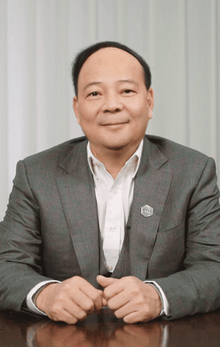
Company: CATL
CEO: Robin Zeng
Location: Liyang, China
Capacity: 126 GWh

CATL’s Liyang facility has moved from mass production to what it calls “extreme manufacturing”.
Since gaining Lighthouse Factory status, it has achieved a 320% increase in output and a 33% reduction in manufacturing costs.
While industry defects are measured in parts per million, Liyang operates at parts per billion.
The site uses computer vision for micron-level inspection, where every cell is photographed using high-speed 3D cameras and assessed with AI edge computing to inspect welds.
In some advanced lines, a single battery cell is produced every one second, and a full battery pack is assembled in under three minutes.
To remain flexible, the facility uses additive manufacturing and virtual simulations to create and test new fixtures, reducing production line changes from weeks to days.
Company portals






Executives
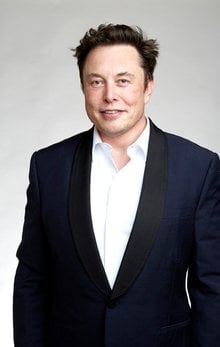
Elon Musk
Tesla CEO
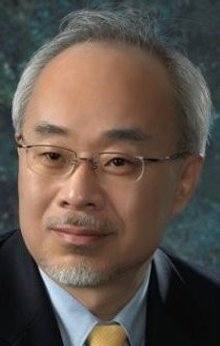
Joo Sun Choi
CEO

Kim Dong-Myung
Director
Wang Chuanfu
CEO
Zeng Yuqun (Robin Zeng)
CEO

Zhen Li
CEO