How BYD Beat Tesla to Become the World's Top EV Seller
After almost a decade on top of the EV market, Tesla lost the global sales crown to Chinese automaker BYD at the end of 2025.
Tesla sales fell 8.6% in 2025 and the company reported a 16% decrease in fourth quarter deliveries.
BYD outsold Tesla for the calendar year as its battery electric vehicle sales increased by 28%.
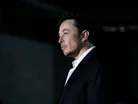
Tesla’s CEO Elon Musk appears focussed on autonomous technologies above EVs, with the company launching robotaxi trials and humanoid robots
In the company’s third quarter earnings call, he said: “People just don't quite appreciate the degree to which this will take off… it’s going to be like a shock wave.
“We have millions of cars out there that, with a software update, become full self-driving cars and, you know, we’re making a couple million a year.”
EV leaders through history
Based in Ohio, US, Baker Electric was the largest EV manufacturer in the world for several years in the 1900s, outselling gasoline cars in some places.
Detroit Electric also produced more than 13,000 electric vehicles, but gasoline cars became more convenient with cheap oil being widely available.
The Mitsubishi i-MiEV was the first highway-capable, mass-produced EV of the modern era in 2009.
It had a range of around 62 miles and was the only option available for around 18 months.
The Nissan Leaf launched in December 2010 and was the first electric car to cross the 100,000 and 200,000 sales milestones.
Tesla first claimed the global EV lead around 2015, surpassing the Nissan Leaf.
For most of the decade, Tesla’s main challenge was production capacity rather than demand.
As of 2026, the EV crown has moved to China where BYD is finding success in its vertical integration and a wide variety of models at different prices.

How BYD beat Tesla
BYD has expanded into Europe and Southeast Asia with low priced models like the Seagull.
The company began as a battery manufacturer, becoming the world’s largest producer of nickel-cadmium batteries by 2003 which were often used in mobile phones.
It launched its first plug-in hybrid model in 2008 and has since taken off as an EV manufacturer.
BYD has been making its lithium iron phosphate “Blade Batteries” for its own cars and other automakers since 2020.
According to Electrive, Tesla has even made use of these cells in its Model Y cars.
Tesla’s sales still rely almost entirely on the Model 3, released in 2017, and Model Y, released in 2020 with the models S, X and the Cybertruck also available.
BYD offers dozens of models across a variety of price brackets, from budget hatchbacks to luxury SUVs.
Global EV markets
China is the world’s largest EV market and BYD holds a 15% share of all passenger cars sold there.
In December 2025, Tesla recorded nearly 97,000 wholesale deliveries in China, its second-best month on record.

Despite strong numbers, the company’s market share has declined as brands like BYD, Xiaomi and Geely introduce newer and more tech-heavy models at lower prices.
In Europe, Tesla offers four models of vehicle while BYD offers at least seven.
While BYD has overtaken Tesla globally, Elon Musk’s business remains the US market leader where BYD has zero passenger car sales.
The US government maintains a 100% tariff on Chinese-made EVs, which effectively doubles the price of BYD cars.