
Will Trump's Executive Orders Impact US ZEV Mandates?
Governments worldwide are increasing their adoption of global zero-emission vehicle (ZEV) mandates to accelerate the transition to EVs. The mandates set specific targets for the percentage of new vehicle sales that must be zero-emission, typically increasing over time.
For example, the UK has implemented a ZEV mandate requiring 80% of new cars and 70% of new vans sold to be zero-emission by 2030, reaching 100% by 2035. The European Union, meanwhile, has proposed voluntary ZEV targets linked to compliance offsets for manufacturers.
Additional policies, such as consumer incentives, charging infrastructure deployment and stringent CO2 standards, generally complement the mandates to drive the necessary reductions in greenhouse gas emissions from the transport sector. But ZEV mandates bring hurdles for automakers and unintended consequences, including in US states like California.
Brian Maas, president of the California New Car Dealers Association, expresses doubts about the mandate's feasibility: "The data don't lie. The demand doesn't match what the mandate requires. It's just that simple."
EV sales growth slows dramatically
According to the California New Car Dealers Association, 387,368 zero-emission vehicles were registered in the state in 2024, accounting for approximately one in four new cars sold.
While the results appear promising, the growth rate tells a different story. Compared to the previous year, when EV sales surged by 46%, 2024 saw a marginal 1% increase.
Overall, total new-car sales in California remained stagnant at 1.75 million vehicles.
The slowdown is particularly concerning for automakers, which struggle to align their production and inventory strategies with California's regulatory framework. Aside from Tesla, which exclusively manufactures EVs, no other major automaker is currently on track to meet the state's 35% ZEV threshold.
Automakers face tough choices
Failure to comply with the mandate comes with significant financial implications. Automakers falling short of the required EV sales percentage could face fines of US$20,000 per non-compliant vehicle. However, industry insiders suggest manufacturers tend to resort to inventory control strategies rather than paying hefty penalties.
"Automakers won't pay the fines," Brian highlights. Instead, companies may restrict the availability of gasoline and diesel vehicles in California to maintain compliance. The result could lead to an oversupply of internal combustion engine (ICE) vehicles in neighbouring states such as Arizona and Nevada, potentially making it more difficult for California consumers to find the vehicles they prefer.
"Arizona and Nevada dealers could be flooded with internal combustion vehicles," warns Brian, adding that the supply constraint could drive up vehicle prices in California.

Calls for a pause in the mandate
The California New Car Dealers Association advocates for a temporary pause in the EV sales mandate amid the growing concerns. However, state officials remain steadfast in their commitment to the transition toward zero-emission vehicles.
When asked for a comment, Governor Gavin Newsom's office did not provide a direct response but deferred to state agencies. The California Energy Commission reaffirmed its commitment to reducing emissions and fostering market transformation.
"California is proud to lead the country in zero-emission vehicle sales as the global market continues to innovate and surge," the commission stated. "The rapid pace of EV adoption worldwide has become a building block of a new industrial policy shaping California's future economy."
Meanwhile, the California Air Resources Board (CARB) dismissed concerns over manufacturers' ability to meet the target.
"It's premature to say the target will not be met and that manufacturers' planning is inadequate to continue to grow the market," the agency added. CARB pointed out that the option to purchase state-issued emission credits remains available for automakers that struggle to meet the mandate.
Policy and market challenges ahead
California's EV sales mandate falls under the Advanced Clean Cars II programme, a policy framework established by the California Air Resources Board. The programme requires automakers to sell a minimum percentage of EVs but does not obligate consumers to purchase them. Governor Newsom initially announced the state's EV phaseout plan in 2020, with the regulatory framework finalised in 2022.
In December 2023, the Biden administration granted California a waiver under the Clean Air Act, allowing the state to enforce its stringent emissions standards.
However, waning consumer enthusiasm for EVs prompts automakers to reassess their strategies. While many manufacturers continue to voice support for electric mobility, several have scaled back EV production plans, delayed launch timelines and even withdrawn from agreements to build battery manufacturing facilities in the US.
Future uncertainty in California's EV market
The future of EV adoption in California remains uncertain. While state agencies project optimism, automakers grapple with shifting market dynamics, infrastructure challenges and consumer hesitancy.
With the 2026 deadline approaching, the coming months will be critical in determining whether California's ambitious ZEV targets can be met—or whether further policy adjustments will be necessary to accommodate the realities of the market.
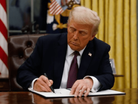
President Trump's recent executive orders do not directly affect existing ZEV mandates. Still, they signal a significant shift in federal policy that could impact the future of EV adoption in the US.
The executive orders signed by President Trump in January 2025 primarily focus on:
- Rescinding Biden's 2021 executive order that set a goal of 50% of new light-duty vehicle sales being zero-emission by 2030.
- Halting funding disbursements for EV charging infrastructure from the Inflation Reduction Act and Bipartisan Infrastructure Law.
- Expressing intention to weaken vehicle tailpipe emissions standards.
While these actions do not immediately nullify existing ZEV mandates, they could indirectly affect them in several ways:
- State-level mandates: President Trump's order includes language about terminating state emissions waivers that limit sales of gasoline-powered automobiles. It could impact California's 2035 ICE vehicle ban and similar policies other states adopt.
- Federal regulations: The administration has directed agencies to review and potentially revise emissions standards and fuel economy requirements. The changes could make automakers' compliance easier without relying heavily on ZEVs.
- Market incentives: The orders signal an intention to review and eliminate subsidies and tax credits for EVs. The result could slow EV adoption rates, making it more challenging for automakers to meet ZEV mandates.

It's important to note that implementing these changes will require a lengthy process of agency rulemaking, public comment periods and potential legal challenges.
Additionally, many existing incentives and regulations established by law cannot be amended by an executive order alone.
Therefore, while President Trump's executive orders do not directly nullify ZEV mandates, they set the stage for potential future changes that could significantly impact the regulatory and economic landscape for zero-emission vehicles in the US.
Stay informed and inspired with the EV Magazine community by signing up for our free weekly newsletter. Each week, receive in your inbox the latest industry news and in-depth insights into the world of electric vehicles, sustainability and cutting-edge innovations.
Subscribe now, don’t miss the opportunity to stay ahead in the fast-evolving EV industry.
EV Magazine is a BizClik brand.