
Trump, the EV Industry & Panama Canal: A Complex Connection
The connection between EVs and the Panama Canal is multifaceted, involving intricate supply chain dynamics and geopolitical tensions.
As global trade routes become increasingly significant to the EV industry, the Panama Canal stands as a vital passage for transporting key components and raw materials.
In 2024, 31% of automotive business leaders reported canal delays, a statistic highlighting their importance in the global EV supply chain. Disruptions could significantly impact the production and distribution of EVs, especially as demand for sustainable transportation continues to rise.
Trump's threats and geopolitical tensions
President Donald Trump has brought renewed attention to the canal with what many would consider controversial claims regarding its ownership and management.
In his inaugural address, President Trump declared: "China is operating the Panama Canal and we didn't give it to China; we gave it to Panama and we are taking it back!"
Panamanian officials have firmly rejected the assertion.
President José Raúl Mulino responded: "The canal belongs to Panama."
Trump's concerns appear to be driven by fears of Chinese influence in the region.
US Secretary of State Marco Rubio elaborated: "The president has been quite explicit about wanting to regain control of the canal. Clearly, the Panamanians are not particularly supportive of that notion. That message has been communicated very clearly."
Potential impacts on the EV industry
If the Panama Canal's operations were to be disrupted, the EV industry could face significant challenges:
- Supply chain delays: Interruptions in the canal's functioning could worsen existing bottlenecks, affecting EV production and delivery.
- Raw material transportation: Essential battery materials like lithium and cobalt, often shipped from South America, rely on the canal for efficient transit.
- Rising costs: Alternative shipping routes could drive transportation expenses, potentially leading to higher EV prices for consumers.
Controversy over Chinese influence
Trump's claims about Chinese control of the Panama Canal stem from multiple factors:
- Chinese investments: Hong Kong-based Hutchison Ports operates ports at both ends of the canal, fuelling concerns about Chinese economic influence.
- Geopolitical concerns: As China's reliance on exports grows, its interest in Panama's strategic position has increased.
- Strategic importance: The Panama Canal is a major global trade hub, handling 2.5% of world maritime commerce annually.
- Political rhetoric: Trump's statements align with his "America First" agenda and his push to reassert US influence globally.
"There is absolutely no Chinese interference nor involvement in anything to do with the Panama Canal."
Similarly, China's Foreign Ministry has highlighted its respect for Panama's sovereignty over the canal.

Global reactions to Trump's statements
The international community has responded with concern to Trump's remarks:
- Panama's response: President José Raúl Mulino has taken the issue to the United Nations Security Council, arguing that Trump's rhetoric violates international law.
- China's reaction: Beijing has reiterated its respect for the canal's neutrality.
- Russia's stance: The Kremlin has urged adherence to international legal frameworks governing the canal and warned against US intervention.
- Human rights advocates: Some have described Trump's statements as "insane" and "terrifying," warning of potential regional instability.
- US Lawmakers' actions: South Dakota Representative Dusty Johnson introduced the Panama Canal Repurchase Act, allowing negotiations for the US to repurchase the canal.
- Shipping industry concerns: Any canal disruption could severely affect global trade and logistics.
The reactions highlight the situation's geopolitical complexity. Many nations advocate for Panama's sovereignty and the canal's neutrality.
US economic interest in the Panama Canal
The US has long regarded the Panama Canal as a crucial economic asset in trade and commerce. Approximately 40% of all US container traffic passes through the canal each year, making it a key facilitator of international trade.
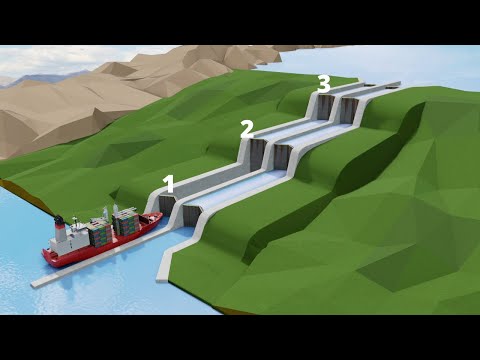
The canal significantly reduces shipping costs by providing a direct passage between the Atlantic and Pacific Oceans, allowing vessels to bypass the lengthy and expensive journey around South America.
The US-Panama Trade Promotion Agreement has further strengthened market access, enhancing trade opportunities for American businesses.
The canal is a strategic shipping route, with two-thirds of its annual transits involving US ports. Moreover, its role in economic security is undeniable, as more than 60% of goods transiting the canal either originate from or are destined for the US, reinforcing its importance to the nation's economy.
Despite relinquishing canal control in 1999, the US remains economically invested in its efficient operation and management.
A historical perspective on US involvement
The historical ties between the United States and the Panama Canal date back to the early 20th century, deeply intertwining the two nations. In 1903, the US was pivotal in Panama's independence from Colombia, facilitating the canal's construction. Shortly after, the Hay-Bunau-Varilla Treaty granted the US perpetual rights to the Panama Canal Zone, solidifying American control over the strategic waterway.
From 1904 to 1914, under President Theodore Roosevelt's leadership, the US oversaw the canal's construction, firmly establishing itself as a dominant force in the region.
Between 1914 and 1999, the canal remained under US administration for nearly a century, symbolising its influence over global maritime trade. However, the Carter-Torrijos Treaties of 1977 set the stage for the gradual transfer of the canal to Panama, culminating in full Panamanian control on December 31, 1999. Despite the transfer, the canal remains a crucial element of US economic and security interests, fuelling ongoing debates about its management and geopolitical significance.
The intersection of EVs, the Panama Canal and global politics is a developing story with profound implications. As geopolitical tensions rise, supply chain challenges increase and sustainability efforts expand, the role of the Panama Canal in the future of transportation remains a critical issue.
Whether Trump's threats materialise into concrete actions or remain political rhetoric, the canal's influence on the EV industry and global trade is undeniable.
Stay informed and inspired with the EV Magazine community by signing up for our free weekly newsletter. Each week, receive in your inbox the latest industry news and in-depth insights into the world of electric vehicles, sustainability and cutting-edge innovations.
Subscribe now, don’t miss the opportunity to stay ahead in the fast-evolving EV industry.
EV Magazine is a BizClik brand.