
Why Volkswagen is Stopping US Production of Top Selling EV
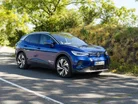
Volkswagen will end production this all-electric SUV at its US facility following a significant drop in Q4 sales, with plans to ramp up production of its ICE Atlas model instead.
ID.4 SUV production at its Tennessee plant will end in April, with the company citing challenges in the EV market as the reasoning behind the move.
The ID.4 has been Volkswagen's top-selling BEV, with 163,400 models sold globally in 2025.
The company announced its plans to shift production at its Chattanooga, Tennessee plant to ICE SUVs, focusing on the recently announced 2027 Volkswagen Atlas.
According to Cox Automotive's Electric Vehicle Sales Report Q4 2025, sales of the VW ID.4 were down 61.6% to just 248, compared to 646 in the previous year.

Shifting production to ICE vehicles
In a statement, Volkswagen said the EV market continues to challenge the industry. The company said this requires measured decisions to navigate the unpredictability.
As a result, Volkswagen will no longer assemble the ID.4 in Chattanooga starting April 2026. For EV drivers, this could mean reduced availability of one of the more accessible electric SUV options in the American market. Volkswagen said it was shifting its focus "toward higher-volume products that meet market demand".
The decision reflects market trends that have seen consumer demand for EVs fall short of industry projections. The company said it is exploring pathways for a new vehicle model to be assembled in Chattanooga.
A second-generation Atlas is set to launch in 2027, which is an ICE vehicle. Previous Atlas generations have ranked as Volkswagen's second-best-selling model for the past three years in the US.
Kjell Gruner, Volkswagen Group of America President and CEO, says: "The Chattanooga plant has been, and will continue to be, a cornerstone of Volkswagen's strategy in the United States. This strategic shift underscores the company's commitment to Chattanooga and its workforce as we position the plant for long-term success and future product opportunities."
What this means for EV adoption
In March 2026, Volkswagen announced plans to cut 50,000 jobs across its German operations by 2030 as the company grappled with a 53% decline in operating profit to US$10.4bn, its lowest since 2016.
Announcing results for the 2025 financial year, Arno Antlitz, CFO and COO of Volkswagen Group, said: "In this challenging environment, we want to keep our combustion engine vehicles technologically competitive, continue investing in exciting electric vehicles and the latest software solutions for our customers and expand our regional presence, particularly in the United States."
Policy changes affecting EVs
Major car makers are scrapping production of EVs at scale. Ford, Sony-Honda and Rolls-Royce are just a few manufacturers who scaled back or wrote off EV plans amid financial write-downs.
Porsche, a Volkswagen brand, altered its EV product plans following lower-than-anticipated demand, contributing to a 98% fall in operating profit compared to the previous year.
US President Donald Trump, in his Executive Order titled "Unleashing American Energy", vowed to "eliminate the electric vehicle mandate". The Executive Order added: "by considering the elimination of unfair subsidies and other ill-conceived government-imposed market distortions that favour EVs over other technologies and effectively mandate their purchase by individuals, private businesses and government entities alike by rendering other types of vehicles unaffordable."
Both The New Clean Vehicle Credit, Previously-Owned Clean Vehicle Credit and Qualified Commercial Clean Vehicle Credit measures all expired in September 2025.
These government incentives ended the use of tax credits towards the purchase of EVs, which seriously incentivised consumers to consider the switch from ICE vehicles to EVs. EV sales across the board are less than anticipated in the US.
As a result, some automotive manufacturers are looking to shift production back to ICE vehicles, which is likely to be costly for companies who have spent billions developing EV models and technologies.
Company portals

Executives
Arno Antlitz
CFO

Dr. Kjell Gruner
President & CEO Volkswagen Group of America