
Musk's Tesla Stock Plunge: A Perfect Storm of Factors
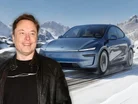
Tesla's share price has significantly hit recently, triggering widespread analysis and speculation. While US President Donald Trump has attributed the decline to a boycott by "radical left lunatics", analysts paint a far more intricate picture, highlighting economic and company-specific factors.
Sales slump and production concerns
A primary concern weighing on Tesla's stock is a perceived inability to meet production targets, coupled with a worrying dip in sales figures over the past year.
Linsay James, investment strategist at Quilter Investors, highlighted the importance of tangible data, stating, "Ultimately, the drop comes down to hard numbers." She points to a worrying trend: "When we look at new orders, for example in Europe and China, you can see that they've effectively halved over the last year."
Data from the European Automobile Manufacturers' Association (ACEA) supports this, revealing a steep 45% drop in Tesla sales across Europe in January compared to the previous year. Similar downturns in key markets like China and Australia suggest a broader weakening in demand for Tesla vehicles.
Adding to the pressure, a UBS analyst has warned that new Tesla deliveries could fall significantly short of expectations this year, triggering an initial drop in share price. Collectively, it reinforces concerns about the company's short-term growth prospects and capacity to maintain its position in the rapidly evolving EV market.
The Trump Effect: Tariffs and political fallout
While Trump has expressed his intention to "buy a brand new Tesla" as a show of support for Elon Musk, his policies and associations may inadvertently contribute to the company's difficulties.
Firstly, Trump's proposed tariffs on goods from Canada and Mexico could negatively impact Tesla's profitability, as Vaibhav Taneja CFO at Tesla noted in January since parts sourced from these countries would be subject to levies.
Furthermore, Trump's past actions to limit electric car sales, including revoking Biden's 2021 order for half of all car sales to be electric by 2030 and halting funds for charging stations, create a more challenging environment for EV adoption. As a known EV critic, Trump's potential to scrap EV subsidies and policies, adding billions to Tesla's bottom line, looms large.
Beyond policy, Musk's association with Trump is proving problematic. Demonstrations outside Tesla dealerships and EV charging points have been staged and Tesla orders in January were down 45% year on year in both Europe and China.
Overvaluation and the Chinese challenge
Before the recent slump, Tesla's stock enjoyed a premium valuation, trading at an exorbitant 112 times expected earnings after Trump's election. The lofty figure, significantly higher than competitors like Ford, reflected the market's optimistic expectations for Tesla's growth.
However, the growth is now threatened by increasing competition, particularly from Chinese EV companies like BYD. The firms are gaining market share; some are seen as outpacing Tesla in areas like self-driving vehicle technology. The absence of a new, affordable Tesla model further hinders the company's ability to penetrate price-sensitive markets like India.

Musk's distractions and autonomous vehicle delays
Elon Musk's increasingly vocal political stance and his role in Trump's administration heading up the unofficial "Department of Government Efficiency (Doge)" has raised concerns.
Some fear that Musk's focus on projects outside Tesla, including X (formerly Twitter) and SpaceX, may divert his attention from the core business. As one report noted, "Even before Mr Musk took the wheel at the US Department Of Government Efficiency (DOGE), there were already fears that he was being too distracted from the day job of running Tesla."
Tesla's future valuation is intrinsically linked to its success in the autonomous vehicle space. Despite Musk's repeated promises, fully autonomous vehicles remain elusive. Reuters reported that despite Musk's promises every year since 2016, driverless Teslas have not yet arrived. Its pivot towards robotaxis, while initially welcomed, is now viewed with increased scepticism, given the regulatory and technological hurdles that remain.
Tesla's stock price decline is a complex issue arising from multiple factors, from slowing sales and production hiccups to political headwinds, rising competition and questions about Musk's leadership.
While Trump frames the situation as a political attack, a more rational assessment points to a market correction driven by genuine concerns about Tesla's current performance and future trajectory. Tesla and its 122,000 employees face the challenge of addressing these concerns to regain investor confidence and solidify its EV and autonomous driving industry position.
Stay informed and inspired with the EV Magazine community by signing up for our free weekly newsletter. Each week, receive in your inbox the latest industry news and in-depth insights into the world of electric vehicles, sustainability and cutting-edge innovations
Subscribe now, don’t miss the opportunity to stay ahead in the fast-evolving EV industry.
EV Magazine is a BizClik brand.