
Has Stellantis Given Up on Hydrogen Fuel Cell Technology?
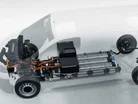
Stellantis, the automotive business behind brands such as Peugeot, Fiat, Opel and Jeep, has made the decision to pause its hydrogen fuel cell initiative.
The company says that the hydrogen market is showing no development prospect at mid term.
Jean-Philippe Imparato, Chief Operating Officer for Enlarged Europe says: “In a context where the Company is mobilising to respond to demanding CO₂ regulations in Europe, Stellantis has decided to discontinue its hydrogen fuel cell technology development programme.
“The hydrogen market remains a niche segment, with no prospects of mid-term economic sustainability.
“We must make clear and responsible choices to ensure our competitiveness and meet the expectations of our customers with our electric and hybrid passenger and light commercial vehicles offensive.”
Why has Stellantis ditched hydrogen fuel cells?
Stellantis reported limited availability of hydrogen refueling with high capital requirements.
The company says there is a need for stronger consumer incentives, as Stellantis does not anticipate the adoption of hydrogen-powered light commercial vehicles before the end of the decade.
Stellantis reports that this decision will not impact staffing at production sites and those working on the project will be redirected to other projects.
A statement from FORVIA details the impact of Stellantis' decision on three companies involved with the project, Symbio, Michelin and FORVIA.
It says that Stellantis’s orders accounted for roughly 80% of Symbio’s planned production volume.
FORVIA says: “Over the past two years, Symbio has scaled its investments, hiring, and development roadmap based on Stellantis’ stated needs for the next eight years.
“Stellantis’ decision will have irreversible operational and financial consequences for Symbio. Michelin and FORVIA are particularly concerned about the impact on Symbio’s 590 employees in France and 50 employees abroad."

How do hydrogen fuel cell cars work?
Hydrogen powered cars operate much like electric vehicles, featuring an electric drive system enabled by an electric motor.
However, unlike battery-stored electricity in EVs, hydrogen vehicles store gaseous hydrogen, which is converted onboard into electricity.
Hydrogen powered vehicles only emit water whilst driving, avoiding harmful gases or other pollutants that fossil fuel powered cars emit.
Hydrogen Fuel Cell Electric vehicles (FCEVs) produce their own electricity through a chemical reaction in an onboard fuel cell stack, unlike electric vehicles that need time to recharge.
A key advantage to a hydrogen powered car is that it can be refuelled in the space of three to four minutes, which can be done in the same way one uses a petrol pump.
Which brands are still investing in hydrogen?
BMW and Toyota are continuing to invest in and develop hydrogen technology.
BMW has currently got a pilot fleet of BMW iX5 which is not intended for sale.
The company aims to supply customers with a hydrogen powered vehicle in the second half of the 2020s.
Toyota is one step ahead, with a hydrogen car already on the market for consumers.
But with infrastructure limited to refuelling hydrogen cars at only 15 places in the UK, and it being difficult to get your hands on in the US outside of California, it has not gained a lot of popularity yet.