
What Now for Honda After Ditching EVs and First Annual Loss?
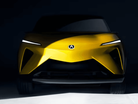
Honda Motor Co has announced a significant revision to its car electrification strategy, resulting in the cancellation of three EV models planned for North America: the Honda 0 SUV, Honda 0 Saloon and Acura RSX.
This decision stems from a change in the business environment, including a slowdown in the US EV market and intensified competition in Asia.
The company said at the release of its Annual Report that it expects to record substantial losses – the first since it went public in the 1950s – including write-offs and impairment on assets designated for these models.
Toshihiro Mibe, Honda CEO, said that proceeding with production in the current demand environment would likely result in long-term losses.
Despite these cancellations, Honda maintains its goal of carbon neutrality by 2050, but will now implement EV initiatives more flexibly while monitoring the balance between profitability and market trends.
Shifting away from the North American market
The decision to halt the Honda 0 series and the Acura RSX is a retreat from immediate large-scale EV adoption in the United States.
However, the US market has seen a slowdown due to the easing of fossil fuel regulations and revisions to EV incentives. Toshihiro explained that the outlook is "very challenging" and that demand for EVs has declined significantly in North America.
He said: "Moving forward into the production and sales phase under the current conditions would likely result in further losses over the long term. We are fully aware that many Honda associates, business partners and those who are on the front lines of sales have devoted great passion to these EV models."
He said the company will focus on its stable earnings base provided by gasoline and hybrid vehicles. This allows the firm to reorganise its strategic framework and re-establish competitive strengths in an uncertain economic climate.

Losing ground to software-defined vehicles
In the Chinese market, Honda has struggled to compete with newer EV manufacturers that use software-defined vehicle (SDV) technologies.
Toshihiro said: "In contrast, the EV market has expanded in China. However, product launches, electrification and application of more intelligent technology have progressed at a speed beyond our expectations.
"As a result, we are facing strong competition from emerging OEMs and the competitive environment has become increasingly challenging also in ASEAN (Southeast Asian) markets."
He said Honda is unable to deliver products offering better value for money than newer manufacturers, resulting in a decline in competitiveness. As a result, the company has reassessed the recoverability of its investments in China.
Maintaining long-term carbon neutrality goals
Despite current setbacks, Honda said it remains committed to achieving carbon neutrality by 2050.
Toshihiro emphasised that electrification remains a necessity: "To realise carbon neutrality by 2050, electrification is an unavoidable challenge Honda has to take on. Within this context, through the development of the Honda 0 Series, we have consistently pursued the ‘new value Honda wants to offer in the upcoming era.’"
Toshihiro added: "As of today, demand for EVs is declining in North America and other regions; however, we do not believe this trend will be permanent." For now, the company's focus is on rebuilding the mid- to long-term strategy to ensure the business is structured for growth.
Focusing resources on next-generation hybrids
As part of the revised strategy, Honda will reassess its resource allocation, shifting focus back toward hybrid models to improve near-term profitability.
Noriya Kaihara, Honda EVP, said: "First, we will reassess the allocation of our resources previously focused on EV business, and introduce new hybrid models as soon as possible toward the second half of the 2020s, through which we will improve near-term profitability and further strengthen the foundation of our automobile business."
In the US market, these new models will complement existing plans. From 2027, the company will start applying a next-generation hybrid system to key models – using the technologies amassed through years of hybrid development.
Regaining competitiveness in the Asian markets
In addition to the US and Japan, Honda has designated India as a "focus country" where market expansion is expected. Noriya explained the regional focus: "As for regional business, in addition to its main markets, namely Japan and the US, Honda will enhance the model line-up and cost competitiveness in India, where market expansion is expected."
This is a direct response to the decline in competitiveness in Asia.
Noriya added: "By increasing the competitiveness of our products and improving the model mix, we will strengthen our earnings structure in terms of both volume and profitability, with which we will transition to a business structure capable of generating profit more stably."
CEO's speech in short
Toshihiro said:
- While Honda remains committed to carbon neutrality by 2050, the business environment has changed at a speed far exceeding expectations
- The easing of US environmental regulations and the rise of newer manufacturers in China are primary factors
- Introducing the Honda 0 SUV, Honda 0 Saloon and Acura RSX without business viability could damage the brand value
- He takes responsibility for the decision, adding that management must face reality rather than justify the past
- Demand for EVs is currently declining but this trend is not permanent
- Honda will address each affected supplier with care and rebuild its strategy to ensure that, when demand resumes, the company will offer compelling products unique to the brand.