
Can Ford Transform EVs with US-made LFP Battery Cells?
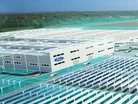
Ford has completed construction on BlueOval Battery Park Michigan in the US, a facility focussed on lithium iron phosphate (LFP) battery cells.
The company says this is the first time an American company will manufacture LFP cells and pack them domestically without a foreign joint venture.
At nearly a mile long, the site is among the largest domestic battery plants dedicated to EV production.
Production equipment used to create the final prototype cells, known as C-samples, is already operating off-site so work in the new facility can begin without delay.

Establishing US battery production
Ford's BlueOval Battery Park Michigan is purpose-built to scale up battery production in the US.
The plant’s cell facility runs 0.6 miles along the core of the site and will soon enter its next phase.
Once equipment is fully installed, the company transitions each zone into clean room status, following strict protocols.
Clean rooms are highly controlled environments designed to eliminate dust and contaminants, essential for battery production.
Floors are polished to a specific finish and the atmosphere is tightly regulated to maintain product quality.
“We remain on track to start production of these batteries next year,” says Lisa Drake, Vice President, Technology Platform Programs and EV Systems at Ford.
By manufacturing batteries domestically, Ford controls both the process and the intellectual property.
What LFP means for Ford's EV ambitions
LFP refers to lithium iron phosphate, or LiFePO4. It is a type of cathode material used in lithium-ion batteries.
This chemistry is popular for its combination of affordability, long cycle life and rapid charging capabilities.
In practice, these batteries can be charged and discharged more than 3,000 times and, in ideal conditions, more than 10,000 cycles.
Because it is safer and less expensive than other battery types, LFP has become an appealing option for electric vehicles.
Ford views this chemistry as the foundation for a cost-effective and scalable EV portfolio.
LFP batteries are not only cheaper to produce, but also improve safety and energy density while allowing for faster charging.
Ford says reducing EV costs depends on both innovation and scale.
That is why the BlueOval Battery Park Michigan is structured as a wholly owned operation.
The aim is to build technical expertise within the company while securing control over production quality and output.
With this approach, Ford plans to position itself as a leader in global battery manufacturing.
“Our industry is experiencing change at a remarkable rate and magnitude and Ford is seizing this opportunity to lead and help build a better world,” says Bill Ford, Executive Chair of Ford, in Ford’s 2025 Integrated Sustainability and Financial Report.
Impacts of the Battery Park
Ford also frames the project in terms of its economic and social impact.
The BlueOval Battery Park Michigan is backed by a US$3bn investment and is expected to generate around 1,700 jobs.
These roles range from technical and engineering positions to plant operations, offering employment in the growing clean energy sector.