
Volkswagen to Cut 50,000 Jobs Following Lower Profits

Europe's largest carmaker is facing a crisis that could reshape its electric vehicle ambitions.
Volkswagen has announced plans to cut 50,000 jobs across its German operations by 2030, as the company grapples with a 53% decline in operating profit to US$10.4bn – its lowest since 2016.
The job losses will impact operations across the Volkswagen Group in Germany, potentially affecting its premium EV brands including Audi and Porsche.
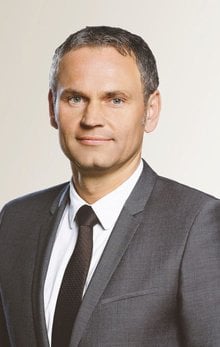
In a letter to shareholders, Oliver Blume, CEO of the Volkswagen Group, says: "In total, around 50,000 jobs are due to be cut by 2030 across the Volkswagen Group in Germany."
Oliver attributes the profit collapse to "operating in a fundamentally different environment".

Market pressures reshape EV priorities
The challenges facing Volkswagen stem from multiple geopolitical shifts that could influence the broader EV market.
Donald Trump's introduction of a 25% US tariff on car imports from Europe and Mexico has created obstacles for the company's plans to expand its electric vehicle presence in North America.
Meanwhile, the company has experienced significant market declines in China, where domestic manufacturers have gained ground with competitive EV offerings while steadily increasing their presence in Europe.
In 2025, Porsche also pivoted on its electric vehicle product plans following lower-than-anticipated demand, contributing to a 98% fall in operating profit compared to the previous year.
This shift could signal broader concerns about premium EV adoption rates and consumer readiness for electrification at higher price points.
Financial constraints threaten EV investment
For 2026, Volkswagen has forecast the group's profit margin as being between 4% and 4.5% – which could mean profits falling below the 4.6% margin achieved in 2025. The company has indicated that geopolitical conflict, including the US-Iran situation, may impact demand for its premium brands.
Oliver Blume said: "We are simply seeing how volatile and fragile our world is, with new issues arising every month."
These financial pressures come despite a previous agreement with IG Metall, Germany's largest industrial union, reached in December 2024 to cut more than 35,000 jobs by 2039.
Daniela Cavallo, Chairwoman of the General and Group Works Councils of Volkswagen AG, said of that agreement at the time: "No site will be closed, no-one will be laid off for operational reasons and our company wage agreement will be secured for the long term. We have achieved a rock-solid solution under the most difficult economic conditions."
Balancing combustion and electric futures
Arno Antlitz, Chief Financial Officer of Volkswagen, says that the company needs to reduce costs more significantly to improve its competitiveness while maintaining investment in both traditional and electric powertrains.
He says that the company wants to: "Keep our combustion engine vehicles technologically competitive, continue investing in exciting electric vehicles and the latest software solutions for our customers, and expand our regional presence, particularly in the United States.

"We can only realise this if we continue to rigorously reduce costs, leverage group synergies, reduce complexity and thus sustainably increase profitability."
For the EV industry, Volkswagen's approach could suggest a recalibration rather than an abandonment of electrification goals.
However, the need to balance combustion engine development with EV investment under severe cost pressures could mean slower progress on electric vehicle programmes at a time when Chinese competitors are accelerating their own development.
Company portals
Executives
Arno Antlitz
CFO
Oliver Blume
CEO