
Verizon & Nokia Private 5G to Power EV Innovation on Thames
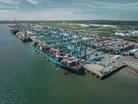
Verizon Business has teamed up with Nokia to roll out Private 5G across Thames Freeport’s major industrial sites, laying the groundwork for EV infrastructure and automation.
This marks a step forward for one of the UK’s busiest trade corridors, combining advanced networks with industrial edge computing.
The deal supports a multibillion-dollar regeneration programme aiming to modernise the Thames Estuary region – already home to manufacturing, port logistics and vehicle production.
Upgrading industrial hubs for smart mobility
Three Freeport locations are central to the rollout: DP World London Gateway and Logistics Park, Port of Tilbury and Ford’s Dagenham site. These areas play a key role in the UK’s national logistics.
Tilbury alone handles 16 million tonnes annually, operating across 31 terminals, while London Gateway moves more than three million containers each year. The sites are also vital to the UK’s EV transition, especially with Ford’s long-established presence at Dagenham.
Verizon’s Private 5G network will become the digital backbone for next-gen industrial processes. These include AI-powered predictive maintenance, autonomous vehicle control and automation systems designed for efficiency and safety.
For the EV sector, this means the ability to manage connected fleets, monitor real-time battery diagnostics and coordinate the movement of EV components from port to production line.
Jennifer Artley, Senior Vice President of 5G Acceleration at Verizon Business, says, “Our partnership with Thames Freeport and Nokia shows the full promise of private 5G at scale. Thames Freeport is developing one of the most technologically advanced commercial corridors in Europe to enable forward innovation and economic revitalisation for an entire community.”
EV manufacturing and data-led automation
Ford’s Dagenham site is central to Thames Freeport’s manufacturing role and has deep roots in vehicle production.
The arrival of private 5G adds a new layer of automation to its operations. In practice, this could enable full integration of connected systems to manage EV part supply chains, factory-floor robotics and driverless transport across the site.
The technology powering this upgrade comes from Nokia. Its Digital Automation Cloud (DAC) platform and MX Industrial Edge (MXIE) will support secure industrial IoT and edge computing. These tools allow for fast data processing on site, which is crucial for managing EV assembly lines and connected mobility services.
David de Lancellotti, Vice President of Enterprise Campus Edge Sales at Nokia, says, “Private wireless and industrial edge are the foundations for the digital transformation of industrial sites and the Thames Freeport deployment is a landmark example of the evolution at scale.
"It is one of the largest commercial private 5G rollouts in a European port incorporating the Nokia DAC platform.
“Together with Verizon Business, we’re proud to be enabling the infrastructure that will help Thames Freeport drive new efficiencies, sustainable growth and long-term economic opportunity for the region.”

Job creation, sustainability and the EV supply chain
Beyond logistics and network upgrades, Thames Freeport’s ambition includes expanding employment, attracting global investment and pushing forward with sustainability.
The project has already created more than 1,400 jobs, with aims to generate 5,000 by 2030. Many roles focus on digital and technical training, offering opportunities for communities around the Thames Estuary.
The new 5G infrastructure is designed to scale and can be tailored to specific use cases. These range from autonomous yard tractors to IoT-based monitoring of emissions and environmental data.
This supports cleaner operations and aligns with wider EV ecosystem goals – particularly reducing pollution and improving resource efficiency across the manufacturing chain.
Smart infrastructure allows shareholders – Ford, DP World and Forth Ports – to improve transparency and coordination across EV production and distribution.
From real-time diagnostics of air and water quality to circular economy practices in vehicle manufacturing, the connected framework supports a future-ready industrial zone.
Martin Whiteley, CEO of Thames Freeport, states: “Our investment in private 5G is not an incremental network upgrade—it’s the backbone of a technological transformation fueling our long-term multi-stakeholder mission… By partnering with Verizon Business and Nokia, we’re delivering the technology needed to propel our region to the front of the leading edge.”