
UK Budget Road Tax Shift: Mileage Charge for EVs Ahead
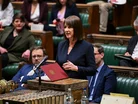
UK Chancellor Rachel Reeves has delivered the Labour government’s Autumn Budget for 2026, outlining a financial strategy amid a challenging political landscape.
The administration opted for a cautious approach, keeping both income tax and national insurance rates unchanged to stabilise the nation's finances.
“I’ve made my choices: not reckless borrowing, not dangerous cuts, but stability for our economy, security for our public finances and security for family finances too,” Reeves explained. “Those are the Labour choices.”
The budget was consequently lighter on major spending commitments than previous fiscal statements. However, it did allocate funds for renewable energy, electric vehicle (EV) infrastructure and energy efficiency projects over the next five years.
The Chancellor also addressed pressure for greater environmental spending, cautioning against the fiscal approach of political rivals.

New EV excise duty for drivers
A notable announcement for the automotive sector was the introduction of a new mileage-based charge for electric and plug-in hybrid vehicles. This policy aims to align the taxation of EVs more closely with that of traditional internal combustion engine vehicles (ICEVs).
“Because all cars contribute to the wear and tear on our roads,” Reeves said, “I will ensure that drivers are taxed according to how much they drive and not just by the type of car they own by introducing the EV Excise Duty on electric cars.”
Effective from April 2028, the new charge will be set at approximately £0.03 per mile for fully electric vehicles and £0.015 for plug-in hybrids. It is forecast to generate £1.8bn (US$2.3bn)by the 2029-2030 fiscal year.
According to the Office for Budget Responsibility (OBR), this measure could offset about 25% of the projected revenue lost from fuel duty by 2050 as the UK transitions from petrol and diesel.
The policy has drawn a mixed reaction.
Mark Caskey, MD Of Projects at Mitie, comments: “Today’s announcement is a clear signal that the UK is serious about an all-electric future.”
“However, introducing a pay-per-mile charge for EVs, on top of existing road taxes, sends a mixed message. Businesses need certainty to invest in cleaner fleets, not policies that could stall momentum and threaten jobs in UK manufacturing.”
Government support for EV infrastructure
Alongside the new road tax, the government committed £256m (US$338.5) in additional funding to speed up the deployment of EV charging infrastructure.
As a further incentive for investment, EV charge points will receive 100% business rates relief for the next ten years.
The budget also included an increase in the threshold for the Expensive Car Supplement on electric vehicles to £66,000 (US$87,271). The Chancellor claimed this policy change would save over a million drivers an average of £581 (US$768.37) annually.
Energy security and renewables funding
Addressing rising energy costs was another key focus. "One of the greatest causes of the rising cost of living is the cost of energy prices," Reeves told the Commons.
"The cause of high energy bills must be tackled at source and so we are investing in energy security in nuclear and renewable energy, and in insulation through our Warm Homes Plan."
The budget includes temporary funding for the renewables obligation, costing £3.8bn (US$5.02bn) next year and averaging £2.6bn (US$2.44bn) in 2027-28 and 2028-29, before being removed in 2029-30.
To advance the UK’s nuclear energy capabilities, the government announced plans to partner with Rolls-Royce to construct three small modular reactors at the Wylfa site in Wales. Additionally, the Warm Homes Plan will offer financial support to help low-income households improve their homes' energy efficiency.
These measures are set against a broader fiscal backdrop that will see the UK's tax burden rise to a post-war high of 38% of GDP by 2030-31.
However, some experts argue the budget does not go far enough. “Today’s announcements fall far short of what’s needed,” says Dr Sam Sinclair, Co-Founder and Director of conservation organisation Biodiversify.
“There was no talk of investment in nature innovation, no support for companies championing nature’s recovery, and no initiative forward to position the UK as a global nature leader.”
“Nature underpins productivity, food security and economic stability, yet the Chancellor offered no meaningful signal to help firms invest with confidence. Without proper support, the UK risks falling behind while nature-related risks continue to accelerate.”
Company portals



Executives

Dr Sam Sinclair
Co-Founder and Director

Mark Caskey
MD of Projects