
The UK Government's Plans to Cut Red Tape for EV Charging
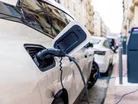
The UK Government has announced a set of sweeping reforms that will simplify EV charging system installations for renters and motorists who lack access to private driveways.
For many prospective EV drivers, having a home charging system is a fundamental requirement, meaning these regulatory changes could help to accelerate adoption throughout the UK's urban centres and areas with limited connectivity.
The measures could also democratise access to domestic charging rates for millions of UK citizens, given that home charging remains far more affordable than relying on public EV charging infrastructure.
Heidi Alexander, the UK's Transport Secretary unveiled the plans on 29 October and says that the government's focus is now on removing barriers that have prevented thousands of households from receiving the same benefits as well connected residents.
Planning permission overhaul and market rate protections
The proposals focus on consulting about eliminating planning permission requirements for installing discreet cross-pavement charging gullies, a change that could save residents up to US$315 in application fees while accelerating installation timescales.
Under these reforms, families would be enabled to charge their vehicles at domestic electricity rates as low as £0.02 per mile, making a journey from London to Birmingham cost approximately US$3.15.
According to the Department for Transport, new covered car parks will be mandated to include charging point installations, expanding infrastructure in locations where renters and leaseholders typically park their vehicles.
Beyond planning reforms, the Government confirmed it will collaborate with energy regulator Ofgem to strengthen protections preventing landlords from overcharging tenants for home charging above market rates.
"Wherever you park your car, we're making it fairer, easier and cheaper to make the switch to electric," Heidi says.
"These reforms will improve infrastructure for the EV revolution, increase charge-points across the country and open up affordable home charging to thousands more households."
The government plans to launch a consultation, providing industry stakeholders with opportunities to shape implementation of the proposed changes.
The UK's broader EV investment strategy
The announcement builds upon the US$820m Electric Car Grant programme launched earlier in 2025, which offers discounts reaching US$4,725 on 39 vehicle models and has supported more than 25,000 drivers in buying EVs.
These new reforms complement a US$31.5m scheme that was announced in July, which is designed to help local authorities install discreet cross-pavement channel charging solutions for residents without driveways.
Elsewhere, the government is also investing US$480m to deploy more than 100,000 local public chargers across England, addressing concerns about charging availability beyond domestic installations.

Is the UK leading Europe in the electrification of transport?
The UK secured the top position in Europe's EV market in 2024, with sales increasing nearly one-third in 2025 so far.
The charging network has expanded to 86,021 charging points across the country, though access remains uneven between homeowners with driveways and those relying on street parking.
The Government acknowledges that upfront costs and charging anxiety remain significant barriers to adoption, prompting the dual approach of purchase subsidies through the Electric Car Grant alongside infrastructure reforms.
The Department for Transport confirmed it will work with Ofgem to ensure operators provide high-quality connections and rapid installation for public charging infrastructure.
This coordination aims to ensure the electricity network can support the ongoing rollout without compromising reliability as demand increases.
"It's good news for drivers and a big boost for the growing British EV industry – cutting costs and supporting jobs to deliver our Plan for Change," Heidi explains.